
The traditional housing ladder, where buyers trade up to larger homes as families grow, is breaking down in Portland, according to Carey Hughes, Principal Broker at Carey Hughes Homes. The d...

San Antonio Luxury Home Prices Drop as Cash Buyers Dominate the Market

Written by:
Date:
10 Aug 2026
Share via Facebook

Share via Linkedin

Share via X

Copy to clipboard


A gap is forming in San Antonio’s luxury home market. Homes that listed near a million dollars just a few years ago are now trading in the $700,000 to $760,000 range. These are sharp discounts that would normally attract a rush of buyers. But the buyers who can actually act on those prices are almost exclusively those who don’t need a mortgage, according to Brayson Verzella, Founder / Team Leader of Team Infinity Real Estate Group. For everyone else, the same affordability wall that plagues the rest of the market makes these deals unreachable.
Verzella works listings across the San Antonio and Austin markets. He has tracked a meaningful price drop at the top of the market, which coexists with price stabilization in the mid-range.
Where Discounts Are Emerging
The correction isn’t uniform. Verzella says “you might see a home that was a million dollars just a few years ago and now is 700,000.” This is a roughly 25 to 30 percent drop driven by motivated sellers who can no longer wait for a buyer pool that has shrunk. These are individual sellers, not banks, who have decided that holding costs or personal circumstances outweigh waiting for a higher price.
But not every luxury property is discounting. Some owners are sitting and waiting for conditions to improve, unwilling to accept less than their 2021 or 2022 expectations. The listings that are moving tend to belong to sellers with genuine pressure, such as a military transfer, a financial shift, or a property that has already sat without offers.
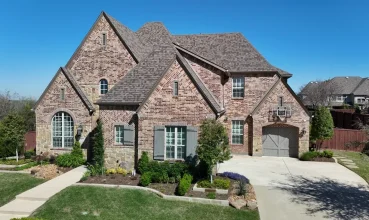
Properties with rare combinations of features, such as acreage, privacy, strong landscaping, a pool, and good interior condition, continue to sell well relative to their peers. “If a property is on land and has privacy and it has a beautiful yard and landscaping and the home is beautiful inside and out, it’s priced right, has a pool,” Verzella says, those listings still attract buyers. The correction is punishing average luxury listings, not exceptional ones.
Why Financed Buyers Struggle
Mortgage rates are hovering near 6.75 percent, according to Verzella. A financed buyer purchasing at $750,000 now faces monthly costs that have risen dramatically compared to what the same loan would have cost when rates were under 4 percent a few years ago.
“The buyer pools in certain niches across the city and certain price points across the city are smaller,” Verzella says, and cash buyers hold the leverage as a result.
This affordability gap creates an unusual moment for investors or relocating buyers with cash on hand. A cash offer eliminates the rate problem and removes conditions that let a buyer cancel the deal if their loan doesn’t come through, which make sellers nervous in a slow market. But the opportunity is structurally unavailable to most primary-residence buyers who would need a loan.
Building an Investor Cushion
For investors considering San Antonio’s upper tier, Verzella advocates building cushion on multiple sides of a deal: buy below market value, budget conservatively on renovation, and price the eventual resale conservatively. “Creating cushion everywhere that you can is probably the smartest way to invest” in a rate environment this volatile, he says.
The risk he flags is time. Rates have swung from above 7 percent down to 5.99 and back up to 6.75 in the span of months, according to Verzella. A renovation that takes six months exposes the investor to mortgage rate conditions that could shift against them before they list the finished product. Verzella says shorter turnaround times, closer to 60 days, reduce that exposure. A flip completed in that window avoids the worst of rate volatility.
By Verzella’s analysis, current conditions for buying, renovating, and reselling homes rate a 3 out of 10 nationally, on a scale where 1 represents the most unaffordable conditions and 10 the most affordable. Even with discounted purchase prices, the margin of error is thin.
Investors who buy properties to rent out long-term face a different calculation. Verzella says holding and renting a property for five to ten years is “probably a pretty good market” for that strategy, based on historical data showing upward price trends over multiple decades.
For buyers with cash or near-cash resources, the current market offers entry prices on luxury homes that haven’t been available since before the pandemic-era run-up. For financed buyers, the same discounts exist on paper but remain out of reach until rates fall enough to bring monthly payments back into a range where they can qualify for a loan.
About the Expert: Brayson Verzella is Founder and Team Leader of Team Infinity Real Estate Group, serving the San Antonio and Austin, Texas markets since 2005.
This article is intended for informational purposes only and does not constitute legal, financial, or investment advice. The views and opinions expressed herein reflect those of the individuals quoted and do not represent an endorsement of any company, product, or service mentioned. Readers should conduct their own due diligence and consult qualified professionals before making any investment decisions.
Similar Articles
Explore similar articles from Our Team of Experts.