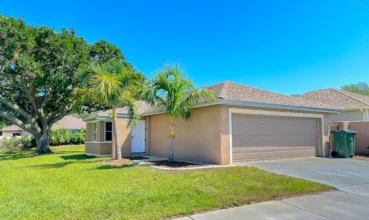
The traditional housing ladder, where buyers trade up to larger homes as families grow, is breaking down in Portland, according to Carey Hughes, Principal Broker at Carey Hughes Homes. The dramatic gap between pandemic-era mortgage rates and current rates has created a financial barrier so steep that a whole segment of would-be sellers is simply staying put, reshaping which buyers are active, which neighborhoods are moving, and what the market’s underlying demand actually looks like.
The Lock-In Math That Stops Move-Up Buyers Cold
The move-up buyer, historically the engine of suburban housing activity, has largely vanished from Portland’s market unless circumstances force a sale.
“We have lost that move-up buyer,” Hughes says. “People are not doing that unless it’s an absolute necessity, and that’s because they own their existing home with an amazing interest rate, and their monthly costs are manageable.”
The calculation is particularly punishing in Portland, where property taxes are already elevated. Hughes notes that buyers today run detailed monthly cost analyses on every property they consider, factoring in principal, interest, taxes, insurance, and HOA fees before making any decision. For a homeowner sitting on a 3% rate, financing a larger home at current rates while absorbing higher taxes and rising utility costs is simply unworkable for most households.
With utilities, taxes, and insurance all climbing simultaneously, most families cannot absorb the additional burden of a higher mortgage rate on a more expensive home. The result, Hughes says, is that people are staying in their homes longer and moving only when life demands it.
A Contested Theory With Visible Market Consequences
Hughes acknowledges that the lock-in effect is not universally accepted. Some economists argue that because transactions are still occurring nationally, the constraint is overstated. Hughes pushes back on that framing, pointing to the composition of her team’s current client base.
Her business has tilted heavily toward buyers aged 60 and older, people downsizing or relocating to be near family, rather than the growing families who would traditionally be trading up. First-time buyers are present but fewer than in prior cycles. The buyers who are active are largely those whose moves are driven by life circumstances rather than financial opportunity: a death, a divorce, a job relocation, a health situation. Discretionary move-up activity has, in her view, largely stalled.
The downstream effects extend beyond any single brokerage’s pipeline. If the move-up segment is dormant, the inventory that those sellers would normally free up, starter and mid-range homes in established neighborhoods, isn’t entering the market. Inventory has grown in Portland, Hughes notes, but she attributes that to new construction and longer days on market rather than a wave of existing homeowners choosing to sell.
What This Means for Neighborhood Dynamics and Investor Strategy
The absence of move-up buyers is quietly reorganizing which parts of Portland see activity and which remain stagnant. Hughes observes that the east side of the city, northeast, southeast, and north Portland, is seeing renewed buyer interest and even occasional multiple-offer situations. These are neighborhoods with more affordable price points, where the monthly cost math is more manageable even at current rates.
The west side suburbs, by contrast, are softer. Homes sell when priced precisely to market expectations, but even a $20,000 to $30,000 overshoot on list price produces silence. “Gone are the days when you can just hedge price up a little bit to test the market,” Hughes says. “Buyers won’t pay it.”
For investors, Hughes sees opportunity in older, established neighborhoods with larger lots and ranch-style homes, properties that offer the space and character that new construction can’t replicate, at prices that still pencil out. These neighborhoods are becoming more attractive to the downsizer demographic currently driving a meaningful share of Portland transactions. That buyer profile, financially stable, need-driven, often paying cash or carrying significant equity from a prior sale, is less sensitive to rate lock-in dynamics and more focused on lifestyle fit.
A Community-Rooted Approach to a Constrained Market
Hughes and her team have responded to the market’s reorganization by focusing specifically on Beaverton, where Hughes has lived and worked for most of her career. Rather than chasing transaction volume across a broad geography, the team is investing in community presence, hosting neighborhood events, supporting local schools, and building long-term relationships with residents who may not be ready to move today but will be when necessity eventually arrives.
“I just know that if we treat people well and offer professionalism and expertise, the business comes,” Hughes says.
The strategy reflects a broader bet: in a market where discretionary moves have slowed, and buyers act only when they must, agents who maintain deep community trust will be positioned to capture transactions when life events finally force the hand of locked-in homeowners. As rates remain elevated and the gap between existing mortgage costs and new financing persists, that patient, relationship-driven approach may prove more durable than volume-focused models built for a faster market.
Whether Portland’s move-up segment recovers depends largely on rate movement, a scenario Hughes doesn’t predict but clearly watches. Until that gap narrows, the market she describes will continue to run on necessity rather than aspiration.
About the Expert: Carey Hughes is Principal Broker at Carey Hughes Homes, focused on residential real estate in Portland, Oregon, with particular concentration in Beaverton, where she has lived and worked for most of her career. Her practice spans buyer and seller representation across Portland’s eastside neighborhoods and west side suburbs.
This article is intended for informational purposes only and does not constitute legal, financial, or investment advice. The views and opinions expressed herein reflect those of the individuals quoted and do not represent an endorsement of any company, product, or service mentioned. Readers should conduct their own due diligence and consult qualified professionals before making any investment decisions.