
Naples, Florida, has long carried a reputation as a playground for the ultra-wealthy, but the reality on the ground in mid-2026 tells a more layered story. While beachfront properties along ...

South Florida's Inland Communities Are Outselling Coastal Metros

Written by:
Date:
29 Jul 2026
Share via Facebook

Share via Linkedin

Share via X

Copy to clipboard

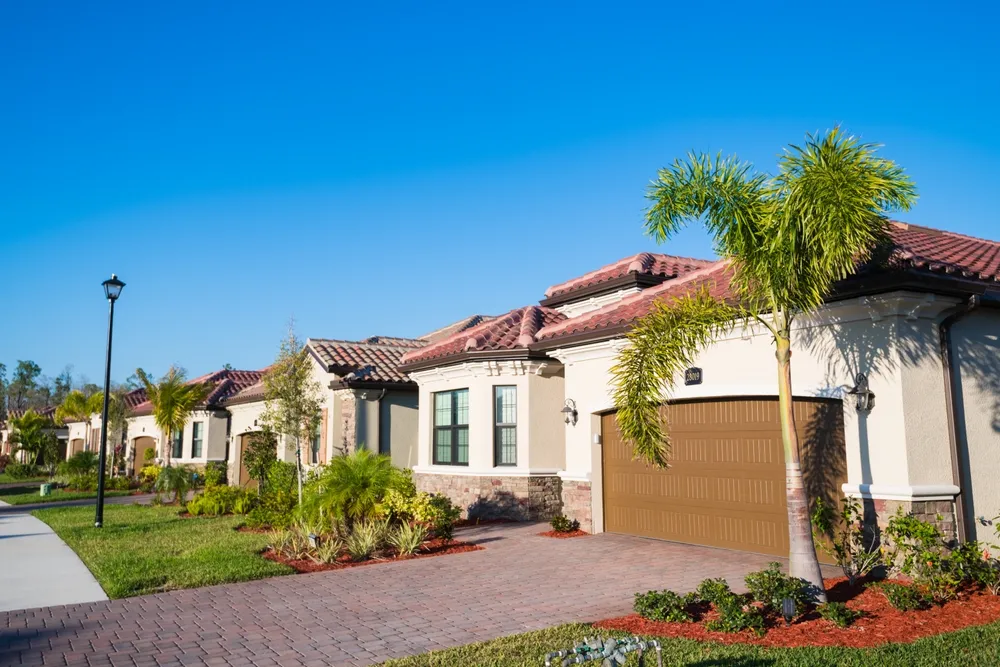
The conventional narrative about South Florida real estate centers on coastal wealth migration, billionaires relocating from California, trophy homes trading at nine figures, and vertical development climbing ever higher along the waterfront. But a parallel movement receives far less attention: middle-income residents and families are leaving coastal metros for inland master-planned communities where new single-family homes still sell for less than $400,000.
Miami-Dade County has lost population over the last five years, driven largely by cost of living and congestion. Ed Miranda, CEO of ELISIUM, a development company planning a master-planned community in Hendry County, Florida, describes the imbalance starkly: “For every one of those people,” he says of high-profile newcomers like tech billionaires, “we have about 100 people that are leaving Miami. Why? Because they can’t afford to live there anymore, because they’re sick and tired of the traffic.”
The Affordability Gap
The clearest evidence of this shift is already built and selling. Communities like Babcock Ranch, roughly 33 miles inland from the Gulf shore, about 15 miles northeast of Fort Myers, and Ave Maria, about 25 miles inland from the shore at Bonita Springs, and 25 miles northeast of Naples, offer buyers a new three-bedroom, two-bath home with a two-car garage for under $400,000. On the coast, a comparable house, likely decades old and in a less desirable neighborhood, starts at $500,000 or more.
Babcock Ranch sold over 1,100 homes last year and ranked fourth nationally among fastest-selling master-planned communities, according to Miranda. “It’s already been proven that if you build it right, people will come and they will populate your community.”
The buyers moving inland are working families whose paychecks cover rent and groceries on the coast but leave nothing for discretionary spending, households where a paycheck covers rent and food but can’t stretch to a family trip to Disney World. That gap between coastal cost of living and inland affordability is what’s driving the migration, independent of any single development.
Developers Are Looking Inland
Assembling contiguous land at scale is functionally impossible in built-out coastal metros. Miami, Fort Lauderdale, Boca Raton, and West Palm Beach offer no path to large, contiguous parcels of developable ground, one of the reasons large-scale master-planned development has moved inland rather than to the coast itself.
Miranda, a Miami native who now lives in Southwest Ranches in Broward County, points to infrastructure constraints as a second driver behind the shift. Coastal cities continue building vertically but lack space for additional roadway capacity, he argues, creating a mismatch between population density and transportation capacity that worsens with each new high-rise. “We keep building vertically with these towers, but we don’t have any additional space to put any more roadways in,” he says.
The population loss is flowing north and inland, to Port St. Lucie, Fort Pierce, and as far as Orlando, where commute times, housing costs, and daily quality of life improve measurably over coastal metros, according to Miranda’s read of the market.
Betting on the Pattern Continuing
ELISIUM is one of several projects betting that this pattern will continue. The company is planning a roughly 5,500-acre community in Hendry County, still in early planning stages, with entitlement, infrastructure, and financing work ahead of it, built on the same basic premise that has already worked at Babcock Ranch and Ave Maria: affordable new construction, positioned inland, at a scale only available on undeveloped land.
Miranda frames inland land availability as an underappreciated asset for developers pursuing this model. “There’s plenty of land out there, believe it or not, if you’re willing to go inland,” he says.
Whether ELISIUM specifically succeeds at that scale remains to be seen. But the underlying migration it’s betting on is already measurable: Babcock Ranch and Ave Maria demonstrate that demand exists for new, affordable, master-planned communities built on former agricultural land well inland from the coast, a pattern that predates any single project and is likely to shape where South Florida’s population growth actually happens in the years ahead.
About the Expert: Ed Miranda is CEO of ELISIUM, a development company planning a master-planned community in Hendry County, Florida, with a background rooted in the South Florida market.
This article is based on information provided by the expert source cited above. It is intended for general informational purposes only and does not constitute legal, financial, or real estate advice. Readers should conduct their own research and consult qualified professionals before making any real estate or financial decisions.
Similar Articles
Explore similar articles from Our Team of Experts.