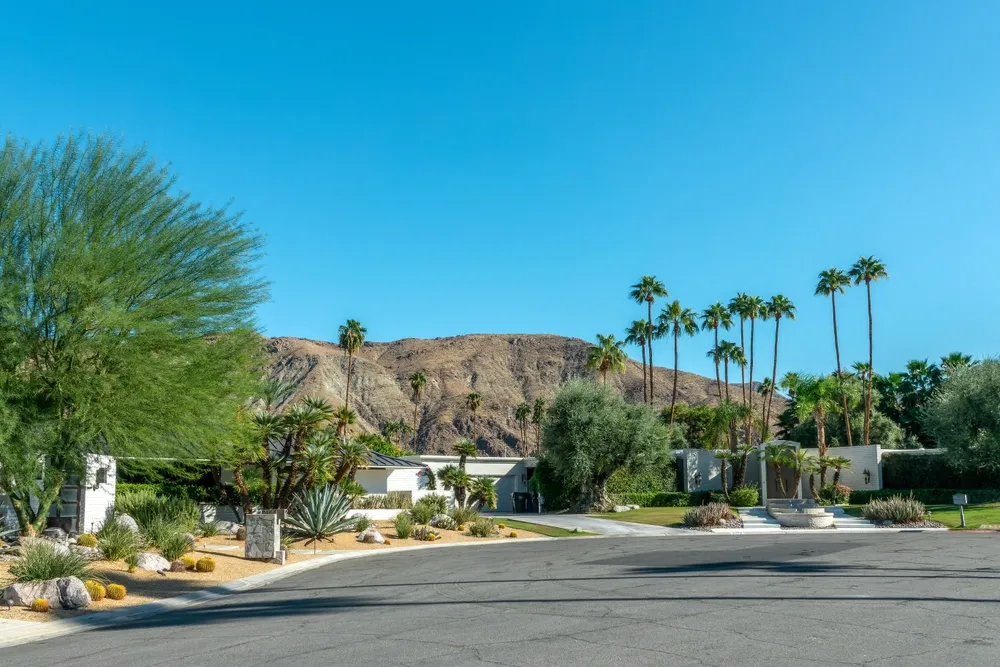
The Coachella Valley has long attracted second-home buyers seeking winter sun two hours from Los Angeles. But the market entering mid-2026 is sorting itself along a line that has little to do with location or architecture: condition. Buyers across price tiers are refusing to take on work, and the gap between move-in-ready homes and everything else is widening.
According to Troy Kudlac, Broker, President of KUD Properties, a brokerage and development firm active across the valley, buyers are demanding homes where every system functions and every surface is finished. “People aren’t buying a house and taking on putting on a new roof,” Kudlac says. “That hasn’t been happening very often.”
A Market That Rewards Completeness
The pattern cuts across architectural styles and neighborhoods. Whether the home is a restored mid-century modern or new construction, what matters is whether a buyer can move in without calling a contractor. Some buyers will take on a full renovation if they can control the entire scope, but homes that need a handful of expensive fixes are the hardest to move.
Pricing plays a role. Listings priced aggressively from the start tend to sell; those where sellers set prices too high often require repeated reductions before attracting interest, and by then, sellers resist offering additional concessions because they feel they’ve already given ground.
At middle and lower price tiers, concessions like closing cost help or rate buydowns are becoming more common. Above a million dollars, concessions tend to be limited to inspection-related repairs. “A lot of our higher end tends to be cash purchases right now since interest rates have gone up so much,” Kudlac notes. For sellers below that threshold, the implication is direct: buyers expect financial assistance on top of a competitive price.
The Luxury Segment
While condition matters everywhere, the high-end tier has been the valley’s most consistent performer over roughly the past three and a half to four years, according to Kudlac. He attributes this to a buyer pool that isn’t rate-sensitive and purchases based on lifestyle preference rather than affordability math.
“Most high-end buyers that want to be in a place they want to be, they have the wherewithal and interest rates don’t really affect them as much as people in the other tiers,” he says.
Developers Have Pulled Back
On the development side, the calculus has shifted. Four or five years ago, builders were willing to move forward on deals with enough room to absorb uncertainty. Now, Kudlac says, developers are scrutinizing every detail before committing to a lot purchase rather than accepting more risk upfront.
Infrastructure is compounding this caution. The East Valley faces power capacity limitations, the Imperial Irrigation District is overloaded, which is freezing development on land that would otherwise be buildable. “They have land that’s great land to build on, but no power,” Kudlac says. “So it’s not worth much without power.”
Workforce is another constraint he’s watching. The valley needs more specialized tradespeople – electricians, HVAC technicians, plumbers, framers – at a time when fewer workers are entering those fields. On the white-collar side, Kudlac sees the local university as needing to reach a higher level of output to generate the professional employment base that would support long-term property values.
For buyers considering new construction in the East Valley, these constraints mean fewer projects will break ground in the near term, limiting supply in areas that might otherwise see development.
Mid-Century Homes
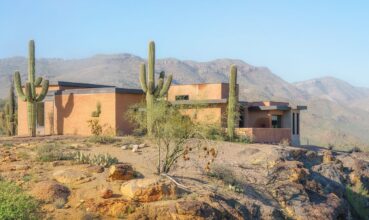
Architectural mid-century homes have historically commanded premiums concentrated in Palm Springs. Over the past three to four years, according to Kudlac, that demand has migrated south into Palm Desert, Indian Wells, and Rancho Mirage. Buyers now search specifically for architectural homes in those cities who previously would have looked only in Palm Springs.
The premium holds when renovations are executed well, but out-of-market investors sometimes miss. Buyers from colder climates purchase properties and renovate them the way they would at home, producing results that don’t match local preferences. “They missed the mark because they did it the way they would do it at home, and it’s not really what the buyers here are looking for,” Kudlac says.
That pattern reinforces the broader condition divide: a poorly executed renovation sits just as long as a home that hasn’t been touched at all.
What Outsiders Still Get Wrong
The valley spans roughly 45 minutes of driving distance and includes distinct cities with different characters: La Quinta for golf, Rancho Mirage for larger lots and privacy, Palm Desert for families, Indian Wells for central access. Kudlac says awareness of these distinctions has improved over the past six years, but the region is still sometimes collapsed into “Palm Springs” by buyers unfamiliar with it.
Understanding which city matches a buyer’s lifestyle matters because each area carries different pricing, lot sizes, and proximity to amenities. A buyer who defaults to Palm Springs without exploring down-valley options may overpay for a location that doesn’t match how they actually plan to use the home.
What’s Next
KUD Properties is close to releasing additional “Desert Eichler” homes – a mid-century-inspired new construction line of which 12 have already been built and sold – pending the same site and power constraints facing other developers. The firm is also working on a corporate retreat development in the Yucca Valley and Joshua Tree area and preparing to break ground on a property in Idaho.
“We’re kind of expanding out to different areas and doing some different things and trying to be creative,” Kudlac says, “while also just providing good solid service here for our commercial and residential clients in the Valley.”
The valley’s near-term trajectory depends on whether infrastructure and workforce capacity catch up to demand. Until power access improves in the East Valley and trade labor becomes more readily available, the supply of new finished homes will remain constrained, keeping the premium on move-in-ready properties intact.
About the Expert: Troy Kudlac is Broker and President of KUD Properties, a brokerage and development firm active across the Coachella Valley in Southern California.
This article is based on information provided by the expert source cited above. It is intended for general informational purposes only and does not constitute legal, financial, or real estate advice. Readers should conduct their own research and consult qualified professionals before making any real estate or financial decisions.