


While much of the country’s housing market is cooling, the San Gabriel Valley stands out for its continued strength. In this region east of Los Angeles, multiple offers remain common, and ...

Orange County, California's Condo Market Is Diverging From Single-Family Homes

Written by:
Date:
29 Jul 2026
Share via Facebook

Share via Linkedin

Share via X

Copy to clipboard

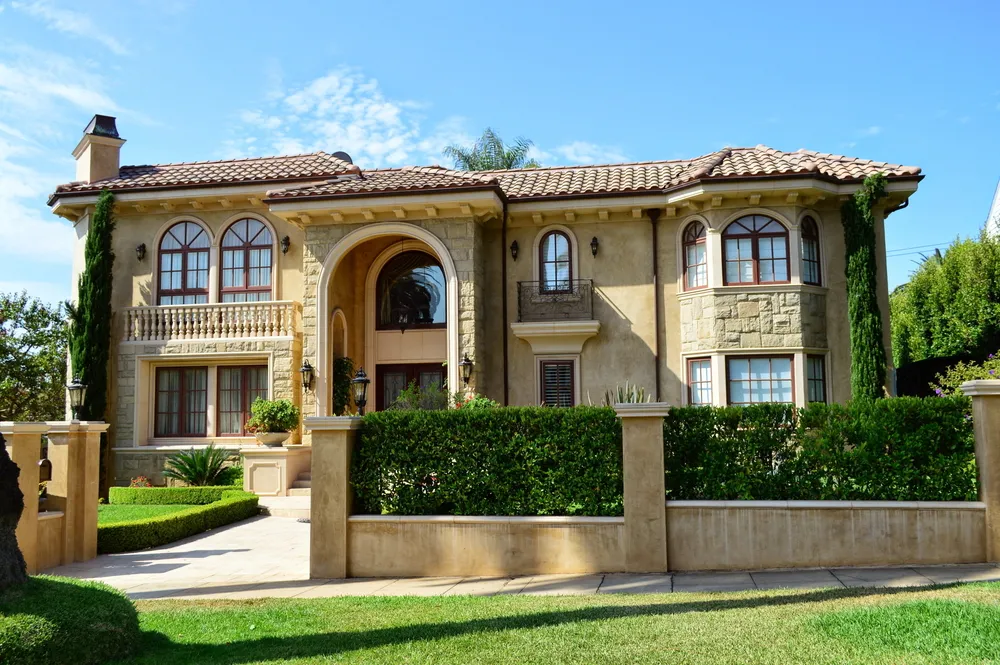
Orange County’s residential real estate market has held its value through cycles that punished other Sun Belt markets. But beneath that headline stability, a structural split is forming between single-family homes and condominiums, two segments that used to move in rough tandem.
Well-priced single-family listings still draw multiple offers and sell above asking. Condos, meanwhile, are accumulating headwinds: insurance cost increases, reserve shortfalls in associations, and a state balcony inspection mandate triggering expensive repairs. The result, according to Jordan Bennett, team lead at Jordan Bennett & Associates Real Estate Team operating under Regency Real Estate Brokers in south Orange County, is that financing on condos is getting harder to secure, and the segment is starting to behave like a separate market.
“We’re seeing issues with insurance in California. We’re seeing issues with condo associations not having enough reserves,” Bennett says. “We’re having a lot of issues now getting financing on condos.”
Inventory Is Still Below Normal
The broader Orange County market remains supply-constrained. Inventory sits roughly 40% below pre-COVID levels, according to Bennett, largely because homeowners locked into mortgages at 3% to 5% have little incentive to sell into a market where replacement financing costs six and a half percent or more.
That constraint has kept prices from declining, even as other markets that boomed during the pandemic have pulled back 15% to 30% from peak. Orange County has continued to appreciate, though growth has slowed and in some areas plateaued.
The sensitivity is concentrated at the top of the rate range. When rates hover in the low sixes, Bennett says, the market keeps moving. As rates approach 7%, activity stalls. On high-ticket loans common in a market where mortgages routinely reach seven figures, even a quarter-point move produces a meaningful change in monthly payment, enough to push marginal buyers to the sidelines.
Condition and Pricing
Within the single-family segment, the market rewards preparation and punishes complacency. Bennett describes a recent pair of transactions involving the same client: a home listed at roughly $2.95 million drew three offers and sold approximately $75,000 over asking, while that client’s own home, listed at $2.8 million with similarly competitive pricing and strong presentation, attracted two offers and also closed above list price.
Both properties sat in a price tier where average days on market typically run four to six months. “Even in some cases those homes that are above the median sales price, that should take longer to sell, if they’re positioned correctly and they show well and they’re priced right, they’re selling quickly,” Bennett says.
The corollary is less forgiving. Homes that need work or carry inflated asking prices sell at discounts. Bennett attributes price reductions to two causes: mispricing relative to the market, or unaddressed condition issues.
A Pre-Sale Investment Model
Rapid appreciation paired with high cost of living has created a specific seller profile in Orange County: homeowners sitting on substantial equity but lacking the cash, time, or expertise to prepare a property for market. Bennett’s team runs a program that funds cosmetic improvements before listing, with reimbursement at closing through escrow.
The typical investment runs $10,000 to $25,000, covering paint, flooring, landscaping, and minor repairs. Bennett estimates the return on that spend frequently reaches two-to-one, spending $20,000 to capture $50,000 to $75,000 in additional sale price.
The approach has a clear boundary. When a home needs a full gut renovation, kitchen, bathrooms, windows, doors, and mechanical systems, Bennett recommends listing as-is rather than attempting cosmetic fixes that won’t recoup their cost. The sweet spot is a home that’s 60% to 80% of the way to turnkey condition, where targeted finishing work can bridge the gap without requiring a full overhaul.
Thin Margins but a Different Thesis
Orange County presents a challenge for traditional flippers. The county’s housing stock is largely master-planned, which makes exit values easy for any buyer to calculate, and makes it difficult to find acquisition discounts that aren’t quickly bid away by competing investors.
Bennett frames the county as a capital preservation and appreciation play rather than a cash flow market, citing roughly 8% average annual appreciation over the past 20 to 30 years compared to a national average he places at 3% to 4%. The tradeoff is that deep margins on individual deals are rare. Investors need to cover the entire county rather than targeting specific tracts, and patience matters more than speed.
One area where Bennett sees underpriced opportunity is in oversized lots. California’s ADU laws now allow homeowners to convert a garage into a junior accessory dwelling unit and build a separate unit in the backyard. A double lot might trade at only 15% to 20% more than a standard lot next door, a gap Bennett considers too narrow given the rental income a backyard ADU can generate in a high-rent market.
“I think there’s a lot of value in that yard because you can put an accessory dwelling unit back there, rent it for top-of-market rents,” he says. “There can be a pretty interesting idea there as far as maximizing your return and decreasing your cost of ownership.”
For buyers weighing where to enter, the split between condos and single-family homes carries practical consequences. Financing difficulties in the condo segment may push prices lower there, but the uncertainty around insurance costs, reserve assessments, and mandated repairs makes the discount harder to underwrite. Single-family homes on larger lots, by contrast, carry a clearer path to value creation, particularly as ADU regulations make that land productive in ways it wasn’t five years ago.
About the Expert: Jordan Bennett is team lead at Jordan Bennett & Associates Real Estate Team, operating under Regency Real Estate Brokers in south Orange County, California.
This article is based on information provided by the expert source cited above. It is intended for general informational purposes only and does not constitute legal, financial, or real estate advice. Readers should conduct their own research and consult qualified professionals before making any real estate or financial decisions.
Similar Articles
Explore similar articles from Our Team of Experts.




Master Mind Realty's Kevin Burgos on Building a Strategic Real Estate Presence in Medellín, Colombia
Real estate runs in Kevin Burgos’s blood. As the son of Colombian immigrants in the United States, he witnessed firsthand how the industry could create opportunities when his father be...

