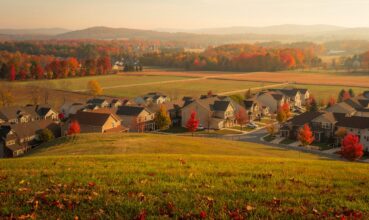
The South Jersey real estate market is moving toward a more balanced environment after several years heavily favoring sellers. Nicholas Christopher, team leader at Christopher Property Group (RE/MAX Community) and a nearly 20-year veteran of the region, says the current landscape is the most even-handed he has seen in years.
“The market is as balanced as it’s been in the past five or six years,” Nicholas says. This marks a clear departure from the recent period when buyers faced intense competition, limited negotiating power, and homes routinely sold above asking price with few contingencies.
Interest Rates Prompt Buyer Recalibration
The main driver of this new balance has been a sharp rise in interest rates. When rates approached 8% in mid-2024, Nicholas saw a marked change in buyer behavior. Many buyers put their searches on hold, discouraged by the combined impact of high home prices and steep borrowing costs. “Buyers just became fatigued once rates hit that 8% number. People put a pause on things,” he explains.
As mortgage rates have begun to moderate, activity is picking back up. Nicholas describes a slow but steady return of buyers as rates eased off their peak. This gradual comeback has created what he considers a healthier, more sustainable market dynamic.
Drawing on his own experience, Nicholas points out that today’s rates are not historically high. “When I first bought my house, my rate was seven to seven and a quarter. Eventually that rate came down, and I refinanced to probably under 3%.” He believes rates in the 5–6% range are manageable for most buyers and could support continued market stability.
Negotiation Dynamics Shift
The change in market momentum is visible in how deals are now negotiated. Buyers are more willing to request repairs or concessions after home inspections, and appraisers are no longer automatically matching contract prices. “You’re seeing a lot more fall-through than we saw in previous years due to cancellation of contract, home inspection, appraisal issues,” Nicholas says.
This trend reflects buyers’ renewed willingness to negotiate. With less urgency and more options, buyers are less likely to waive contingencies or accept homes as-is. “Buyers feel that pendulum has shifted back in their favor, so they can start to ask for more,” he observes.
Appraisers are also taking a more cautious approach after years of rapid price gains. Nicholas attributes some of the appraisal challenges to sellers whose expectations remain anchored to last year’s peak prices. “I think sellers got a little greedy. If I sold your house for X, then your neighbor was like, ‘My house has this, so we can get Y.’ Everybody kept trying to up each other.”
Builders Reintroduce Incentives
The new construction sector offers a clear example of how the market has changed. During the pandemic boom, builders often refused to work with buyer agents or pay commissions, confident that homes would sell regardless. Now, Nicholas reports, builders are again offering commissions and reaching out to agents, a return to pre-pandemic practices.
Builders have also brought back incentives like closing cost assistance and upgraded finishes to attract buyers. These changes signal that even new construction is no longer immune to market forces and must compete for buyers in a less frenzied environment.
Geography Remains a Key Selling Point
Despite the recent cooling, Nicholas is optimistic about South Jersey’s long-term prospects. The region’s proximity to major cities gives it a lasting appeal. “We’re 15–20 minutes from Philadelphia, about two hours to New York City, two and a half hours to DC or Baltimore. You can ski in a couple of hours, be at the beach in an hour,” he says.
This location advantage is drawing more buyers from Philadelphia who want more space and better value. “You are seeing more people than ever come from Philadelphia because the proximity is so close that you’re getting more space,” Nicholas explains.
He believes South Jersey was long undervalued, given its location and amenities. “I feel like it’s been a sleeper for all these years, and finally it’s gotten its due,” he says.
Market Realities
Nicholas’s approach is rooted in client education and transparency rather than chasing short-term trends. He estimates that 90–95% of his business comes from referrals and attributes this to a focus on honest conversations about pricing and market conditions.
He stresses the importance of setting realistic expectations, especially for sellers who remain anchored to pandemic-era prices. “You need to be a strong agent and educate that consumer,” he says. “The facts are the facts. If I’m coming to your house and it’s in a neighborhood where I have three others that sold for this price, how can I get you more? It’s physically impossible.”
When sellers ignore advice and list at unrealistic prices, Nicholas often sees them “chase the market with price reductions” and spend unnecessarily on marketing before eventually giving up and taking the property off the market.
Seasonal Trends
Looking ahead, Nicholas expects a return to more typical seasonal patterns. Recent snowstorms have delayed some activity, but he anticipates a strong spring as pent-up demand is released. “I think there’s pent-up demand right now. As this snow starts to melt, we’re going to see a real push in the spring market,” he predicts.
He expects days on market to increase modestly as inventory grows, including some bank-owned properties re-entering the market for the first time in years. Nicholas sees this as a healthy development: “Let’s get some more inventory and keep the market balanced, because we still have a surplus of buyers.”
He cautions against hoping for a rapid drop in interest rates, warning that a sudden decline could reignite bidding wars and destabilize prices. “We shouldn’t see a quick decline in rates because that’ll spike prices again, and you’ll see bidding wars. It should be a slower, gradual decline — a quarter point, half point — that’ll keep the market in balance,” he advises.
Investment Remains Viable
Despite the market’s changes, Nicholas continues to see opportunities for investors. He notes that many are still buying, whether to hold properties or flip them. The key, he says, is focusing on the numbers. “It’s a simple math equation. What can we get it for? What’s it going to cost us to fix it? What’s our ARV at the end? It either works or it doesn’t work.”
For those interested in rental properties, Nicholas recommends multifamily buildings as a practical choice. “If you’ve got to do repairs, everything’s under one roof. If one tenant is late or not paying, maybe the other two are still keeping that property afloat,” he explains.
Caution and Opportunity
The South Jersey market is settling into a new phase defined by greater balance and more deliberate decision-making. Buyers have regained some leverage, sellers are adjusting expectations, and builders are responding to a more competitive landscape. Agents like Nicholas, who have navigated multiple cycles, see this as a positive development that should support healthier, more sustainable growth.
Looking forward, the region’s geographic advantages and strong demand from nearby urban centers should continue to attract buyers seeking value and convenience. As seasonal momentum builds and inventory slowly increases, both buyers and sellers will need to adapt to a market where negotiation and realistic pricing matter more than ever.
For investors and end-users alike, South Jersey now offers a landscape where diligence and flexibility are rewarded. The frenzied pace of the past few years has given way to a market that favors informed decisions over speculation — a change that may prove beneficial for the region’s long-term stability.