

The North Alabama real estate market has moved past the volatility of the pandemic years and is settling into a more stable, sustainable rhythm. While the days of weekend sales and bidding w...

Scottsdale's Real Estate Market Is Split Into Three Price Tiers Moving in Different Directions
Share via Facebook

Share via Linkedin

Share via X

Copy to clipboard

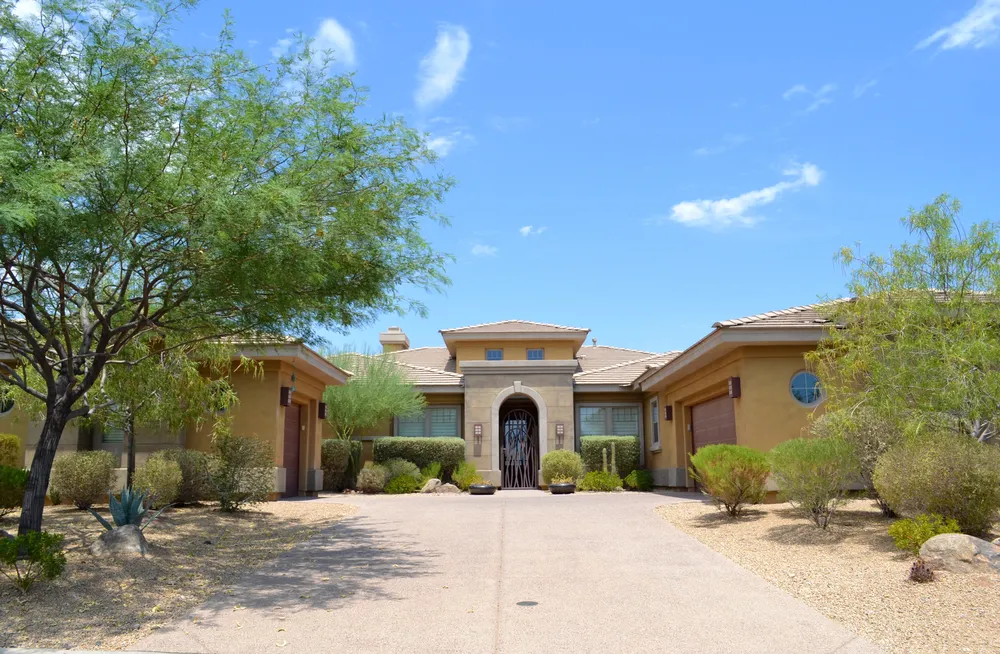
The assumption that a metro area’s housing market moves as a single unit rarely holds up under scrutiny, but in Scottsdale and Paradise Valley, Arizona, the divergence between price segments has become unusually pronounced. According to Brad Kimmelman, Team Leader and Senior Global Real Estate Advisor with The Hômanity Team at Russ Lyon Sotheby’s International Realty, homes priced below $700,000 are generally taking longer to sell, buyers in the $1 million to $2 million range are showing measured activity, and select properties above $2 million are experiencing strong demand, particularly from cash buyers. The result is a market where median prices are climbing, not because conditions are uniformly strong, but because higher-priced transactions are contributing disproportionately to the region’s median sale price while activity at lower price points remains restrained.
A Flat Entry-Level Market
Kimmelman describes the sub-$700,000 segment as lacking urgency. Interest rates hovering around six and a half to seven percent, combined with broader economic uncertainty – rising prices, geopolitical conflict, and fluctuating financial markets – have made first-time and lower-price-point buyers cautious. “We’re not seeing a lot of urgency in the up to six, seven hundred thousand dollar range,” he says. “People are taking their time.”
Homes between $1 million and $2 million are showing more stability and moderate activity. But conditions in the $2 million-plus tier look markedly different. “We’re actually seeing price increases and more activity in the upper end,” Kimmelman says. Cash is the distinguishing factor; affluent buyers are transacting regardless of the rate environment or geopolitical uncertainty, though they remain selective about condition, finishes, and community fit. When all of those align, Kimmelman says, buyers are willing to pay prices consistent with the increases the market has seen over the past seven years.
Golf Memberships And Buyer Behavior
One of the more specific dynamics shaping demand in certain private golf communities, particularly in North Scottsdale, is the near-impossibility of securing a golf club membership independently. Memberships at many of the area’s most desirable private clubs have become so scarce that buyers are filtering their home searches exclusively by whether a property offers an immediate or transferable membership opportunity.
“It is almost impossible to get a golf membership at some of these clubs unless the house itself has a golf membership opportunity available with the purchase,” Kimmelman says. Buyers who want immediate access to the lifestyle are ignoring properties, even well-appointed ones, that don’t come with a pathway to membership. For sellers who can provide an immediate membership opportunity, this scarcity creates a distinct pricing advantage. “They’re not looking to wait three, five, seven years to start playing the golf that they want,” Kimmelman says. “They want easy access.”
Sellers Offer Rate Buydowns
In the segments below $1 million, extended days on market, often 60 to 120 days or longer, are pushing sellers toward concessions. Some are lowering asking prices. Others are getting more creative. Kimmelman describes offering temporary first-year mortgage rate buydowns on several of his listings, aimed at buyers who are backing into a monthly payment number and walking away from anything that doesn’t fit.
The logic is straightforward: a temporary buydown can give a buyer a lower payment during the first year of ownership. If mortgage rates subsequently decline, that buyer may also have an opportunity to refinance, although future rates and refinancing eligibility cannot be guaranteed. “There is an expectation among many economists and consumers that interest rates could come down,” Kimmelman says. “We’re offering that temporary rate buydown for the first year to give them the opportunity to get into a house and then watch mortgage rates.” If rates do decline and the buyer qualifies, the buyer may be able to refinance at a lower rate.
Frustration Is the Prevailing Mood
The emotional tenor of the market has shifted from the frenzy of the pandemic era to what Kimmelman calls “frustration,” on both sides. Buyers are frustrated because they’re waiting for the right property at the right price and not finding it quickly. Sellers are frustrated because listing a home no longer guarantees a fast sale, particularly after experiencing a market where 15 offers on a single property were routine.
“Navigating the journey of 60 to 120 to sometimes longer on the market to attract the right buyer for the price that they’re looking for, that is the biggest frustration for sellers right now,” Kimmelman says. The adjustment is as much emotional as financial. Agents who entered the business during the pandemic boom are leaving because the current environment demands more education, patience, and psychological navigation than many anticipated. “If you really don’t have the grit for it, you’re not going to persevere and survive,” Kimmelman says.
Micro Markets Require Micro Analysis
Rather than watching a single set of indicators, Kimmelman treats each community and price segment independently. Chandler and Gilbert behave differently from Desert Mountain in North Scottsdale, which behaves differently from hillside properties in Paradise Valley. “How Chandler and Gilbert are doing is very different than how Desert Mountain Scottsdale is doing,” he says.
His current pipeline reflects the breadth of the market: one client searching for a luxury estate in an exclusive golf community and another closing on a $460,000 condo, each requiring segment-specific research rather than broad market generalizations. Kimmelman says he puts the same level of attention into a $460,000 condo transaction as a multimillion-dollar purchase because, for each buyer, the deal represents the full extent of their buying power. “Each one deserves its own bit of research so that we can analyze the segment of the market that they’re interested in and help them make educated and intelligent decisions,” he says.
For buyers whose purchasing power in the sub-$700,000 segment is being constrained by interest rates and monthly payment sensitivity, the decision hinges on whether the temporary buydown math works for their budget now. The possibility of refinancing in the future may be part of the consideration, but buyers should make purchasing decisions based on what they can comfortably afford today. For sellers in that same tier, the gap between listing and closing continues to widen unless they’re willing to meet buyers where affordability allows.
About the Expert: Brad Kimmelman is Team Leader and Senior Global Real Estate Advisor with The Hômanity Team at Russ Lyon Sotheby’s International Realty, serving Scottsdale, Paradise Valley, Phoenix and communities throughout the greater Phoenix metropolitan area.
This article is based on information provided by the expert source cited above. It is intended for general informational purposes only and does not constitute legal, financial, or real estate advice. Readers should conduct their own research and consult qualified professionals before making any real estate or financial decisions.
Similar Articles
Explore similar articles from Our Team of Experts.