

California’s housing market highlights the challenges first-time homebuyers face. In the 1990s, Josh Lewis, owner of BuyWise Mortgage and host of The Educated Home Buyer podcast, closed hi...

In New Jersey's Ocean County, 55-Plus Communities Face a Governance Problem

Written by:
Date:
10 Jul 2026
Share via Facebook

Share via Linkedin

Share via X

Copy to clipboard

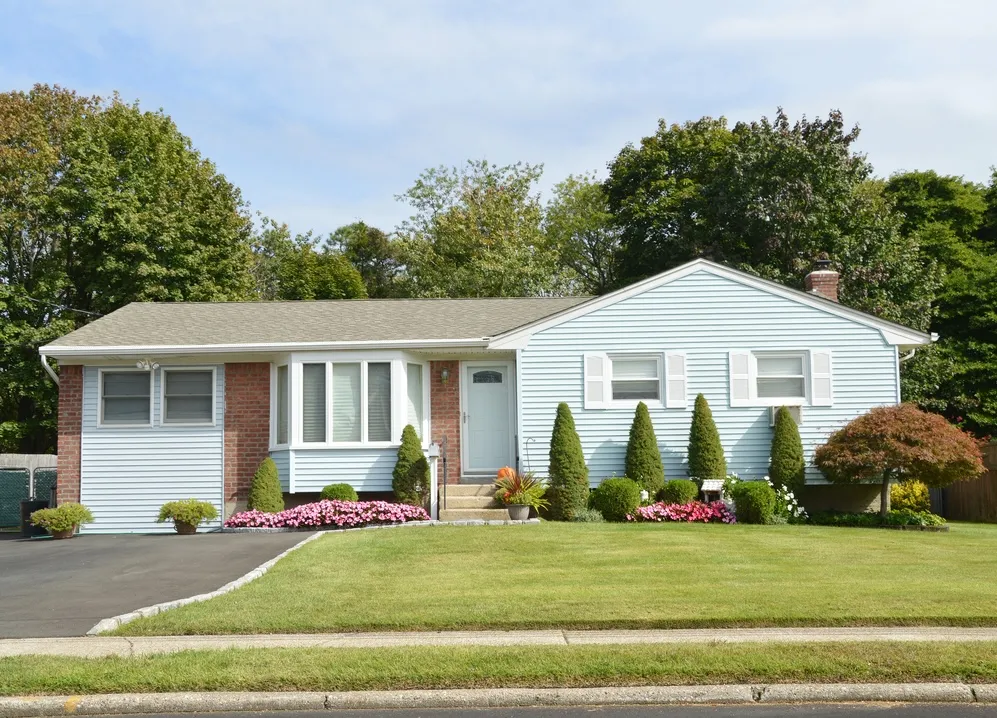
The usual story about senior housing markets involves inventory, pricing, and interest rates. In Ocean County, New Jersey, one of the state’s densest concentrations of age-restricted communities, a less visible problem may be shaping the market just as much: the people running the communities themselves.
Many of Ocean County’s 55-plus developments are self-managed or governed by volunteer boards whose members lack formal training in community management. The result, according to Kenneth Freeman, a Broker Associate / Senior Housing Specialist with Heart of Gold Realty who has worked in the Ocean County senior market for decades, is a pattern of governance failures that alienate residents, generate legal costs, and erode the appeal of communities that are otherwise well-positioned on price.
“Board members run for the board because they have good intentions, but the biggest problem is a lack of education,” Freeman says. “They’re coming from a profession that has no resemblance to how to run a corporation or how to manage the infrastructure.”
Governance As a Market Factor
The effects are tangible. Freeman describes communities where residents have largely disengaged from participation. In developments with over 1,000 homeowners, monthly Sunshine meetings draw 30 or 40 attendees. The rest have given up.
“They’re saying, ‘I’m tired of being abused, you don’t listen to me, you’re disrespectful to me, I’m just going to stay home,'” Freeman says.
One community he works with spent $68,000 on legal action after, in Kenneth Freeman’s experience, board members failed to comply with state law. Those costs were ultimately borne by homeowners through their fees. Freeman points to the Radburn Law, a New Jersey statute governing community association elections and procedures, as a frequent source of conflict. In his experience, some boards do not fully comply with the law, and the resulting legal costs may ultimately be borne by the residents who challenge those actions.
For buyers, these governance failures represent real costs that never appear on a listing sheet. In a market where affordability is the primary draw, unexpected legal assessments and dysfunctional management can erase the savings that brought buyers there in the first place.
The Affordability Equation
Ocean County’s core appeal for senior buyers remains intact. The area offers ranch-style homes in communities where the HOA handles roofing and exterior maintenance, allowing owners to carry only an HO-6 policy for interior and belongings. Property taxes are dramatically lower than in northern New Jersey; Freeman cites his own single-family home at $1,800 annually, compared to $14,000 for a comparable property in Essex County.
Buyers are primarily downsizers from multi-story homes who can no longer manage stairs or large properties. They are purchasing for themselves, not as investments for family members. The primary decision factor between communities, Freeman says, is almost always price rather than amenities.
“A lot of people move in with the amenities, and they don’t use them, but they can brag to their friends,” he notes. Buyers willing to forgo pools and golf courses can stretch their fixed incomes further by choosing communities without those services.
A Market Frozen by Uncertainty
The broader transaction environment has stalled. Freeman describes a market where inventory is down, open houses draw no visitors, and listings sit with price reductions. He has one property that listed at $239,000, dropped to $232,000, and still is not generating strong interest.
Part of the freeze is structural: owners locked into 3% mortgages are reluctant to sell into a roughly 6% rate environment. But Freeman also points to a more diffuse anxiety about living costs – food, insurance, and utility bills that hit all-electric communities hard last winter, with some seniors seeing electric bills reach $500 per month.
“People are afraid to invest in something because they don’t know whether they’re going to be able to survive,” he says.
The pricing tension is compounded by what Freeman sees as an ethical problem among listing agents. He describes some agents who inflate comparable market analyses to win listings, then force price reductions weeks later. Properties with original kitchens and bathrooms get priced against fully upgraded homes, creating expectations sellers cannot meet, particularly when appraisals reveal the gap between asking price and actual value.
Freeman says he takes a different approach: telling sellers and buyers the full picture upfront, even if it costs him a listing. “I’m not going to go into a seller and tell them, oh, I can get you $500,000 just to get the listing,” he says.
A Legislative Gap
Freeman recently met with a group of realtors and state legislators to raise community governance concerns. The legislators, he says, “committed to look into it.” But elected officials are reluctant to challenge community boards whose members also vote.
The Department of Community Affairs, the state agency that would theoretically oversee these issues, has limited staff and a narrow scope of authority. Residents’ only real recourse is litigation, an option most seniors on fixed incomes cannot afford, and one that, when pursued, often produces costs that flow back to the very homeowners it was meant to protect.
This creates a circular problem: boards face little accountability, residents disengage, and the communities’ livability depends on whether individual boards happen to govern well. Freeman also notes that some boards overstep federal law on age restrictions, requiring buyers to be 55 to purchase rather than to occupy, a distinction courts have upheld but that communities continue to violate.
For buyers evaluating Ocean County’s 55-plus market, due diligence on governance, meeting minutes, legal history, and reserve fund health may matter as much as the home inspection itself. The house might be priced right, but the community behind it could carry costs no listing sheet will show.
About the Expert: Kenneth Freeman is a Broker Associate and Senior Housing Specialist with Heart of Gold Realty, serving the Ocean County, New Jersey senior and age-restricted community market for decades.
This article is intended for informational purposes only and does not constitute legal, financial, or investment advice. The views and opinions expressed herein reflect those of the individuals quoted and do not represent an endorsement of any company, product, or service mentioned. Readers should conduct their own due diligence and consult qualified professionals before making any investment decisions.
Similar Articles
Explore similar articles from Our Team of Experts.




From Military Housing to Boutique Hospitality: How Blake Dailey Built a $25 Million Resort Portfolio
The boutique hotel industry is undergoing rapid change as more travelers seek distinctive, experience-driven stays instead of standardized accommodations. Blake Dailey, CEO and founder of St...

