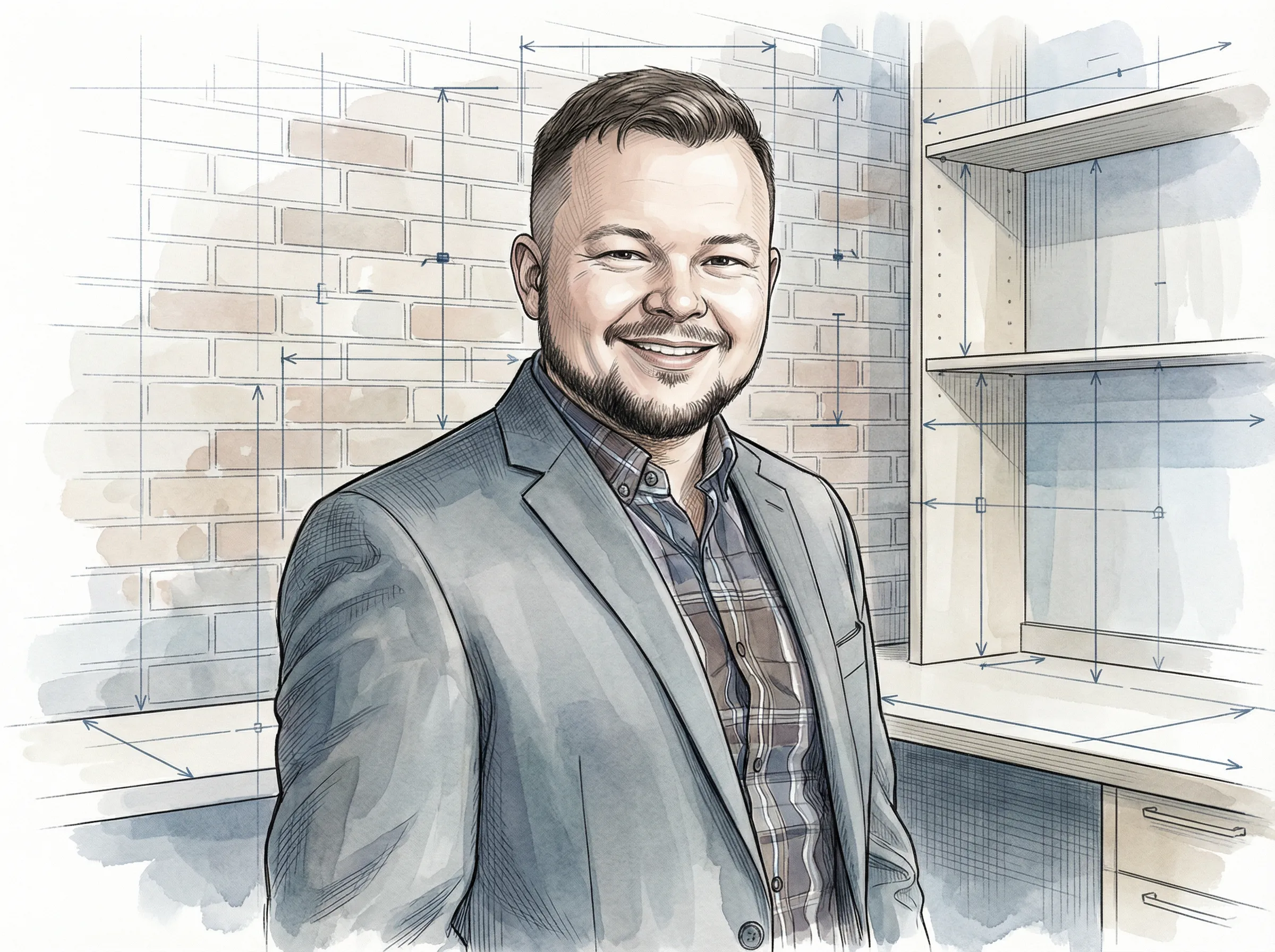
The Chicago residential market is changing, shaped by evolving buyer expectations, rising rents, and shifting neighborhood appeal. For Kirk Hudson, a broker associate with Baird & Warner, real estate remains rooted in people and relationships — not just closing deals.
Hudson’s route to real estate was unconventional. While managing a Starbucks, a friend who was a licensed real estate agent focused on investing offered blunt advice: real estate might not be his passion, but he’d but it would be a better outlet for his abilities than slinging lattes. That conversation, over a decade ago, was the catalyst for Hudson’s full-time career. Today, he focuses on first-time homebuyers and rental clients, with a particular emphasis on serving the LGBTQ+ community.
A Relationship-Driven Practice
Hudson’s business is built on what he calls a “start to finish” approach, offering hands-on client support at every stage. He describes his philosophy simply: treat clients as you would want to be treated. This approach, he says, has led to strong results. In the past year, Hudson completed 74 transactions, placing him in the top 1% at Baird & Warner and 11th in productivity volume. About 80% of his business comes from rentals, with the rest from sales and a small share in commercial deals.
Hudson attributes his steady flow of referrals to the way he treats clients. “The testimonials I get back, the consistent cycle of referral opportunities — that tells me whatever I’m doing is working,” he says.
How Buyer Behavior Has Changed
Hudson has seen buyer behavior shift significantly since the pandemic. During the frenzied market of 2021–2024, buyers often made hasty decisions out of fear of missing out, even overpaying or waiving contingencies. Now, he says, buyers are more cautious and informed. “They know what they want, they know how much they can afford, and they know what they want to pay,” Hudson explains. This more deliberate approach has replaced the impulsiveness of the recent boom.
While many in the industry focus on low inventory, Hudson argues the issue is more about buyer expectations than an actual shortage. He often finds dozens of listings for clients at any given time, suggesting the real challenge is helping buyers look beyond recently renovated, contractor-flipped homes. “A lot of agents don’t educate their buyers that opportunities exist outside of a contractor-flipped condo or home,” he says. Hudson encourages clients to consider properties with good structure that may need cosmetic updates, noting that these homes can offer significant savings and the opportunity to add personal value.
Neighborhood Value and Investment
The city’s core neighborhoods — downtown and the Loop — have seen prices rise, pushing more buyers to explore outlying areas. Hudson sees value in neighborhoods like Bridgeport, Hyde Park, and Bronzeville, as well as communities further west and south of the city center. “The further west, south, or north you go, the more value you get for your money,” he notes.
Unlike some agents who avoid certain areas, Hudson believes there are opportunities across the city. He cites West Garfield Park, East Garfield Park, Belmont Cragin, Portage Park, and Irving Park as neighborhoods showing movement and potential for both buyers and investors. He emphasizes that while some areas are still recovering from past disinvestment, many are attracting new residents and seeing increased activity.
Rental Market Pressures
Hudson’s business is heavily weighted toward rentals, a segment that faces increasing challenges in Chicago. Cook County property tax reassessments have driven up costs for landlords, many of whom pass these increases directly to tenants. As a result, rents have risen sharply. In Hudson’s own Edgewater neighborhood, studios that once rented for $900 now cost $1,500 to $1,600, and one-bedroom units have jumped by similar margins.
This rapid rent escalation has priced many qualified renters out of their preferred neighborhoods. “Unit values have increased enough to knock a lot of even qualified renters out of their specific and preferred neighborhoods,” Hudson says. The shift also affects his business model, since renters are often future buyers. If a client can’t find a suitable rental, it’s harder to maintain a relationship that could eventually lead to a home purchase.
Serving the LGBTQ+ Community
A significant part of Hudson’s practice is helping LGBTQ+ individuals and families relocate to Chicago from other states. He notes a noticeable increase in such moves over the past year, driven by concerns about representation, safety, and legal protections elsewhere. “I moved a lot more people from out of state last year than I usually do,” Hudson says.
Chicago’s reputation as a welcoming city continues to attract LGBTQ+ newcomers, but Hudson observes a shift in their approach. Many now choose to rent for a year or two before buying, wanting to test the city and its neighborhoods before making a long-term commitment. “Let me rent first. Let me see how the first year or two goes, and then I’ll buy,” he explains, reflecting a more cautious attitude among relocating buyers.
Market Outlook
Looking ahead, Hudson expects another strong year for Chicago real estate, with signs of market stabilization. He sees prices starting to plateau, which gives buyers more confidence. “Our prices are starting to plateau a bit, which makes it more comfortable for people who aren’t sure about moving to the city,” he says.
Lower interest rates — now below 6% — have brought more qualified buyers into the market. Hudson notes that spring activity began earlier than usual this year, with buyers starting their searches in January rather than March. “We are seeing more buyers who can qualify for higher price mortgages because of those lower rates,” he reports.
He believes Chicago’s steady market sets it apart from more volatile regions. “I don’t think we’re going to see any form of dip. We are stable. I don’t think we’ll experience the same volatility as other states,” Hudson says. That stability, he contends, makes the city an attractive destination for buyers and investors seeking long-term value.
The Core of the Business
Throughout his career, Hudson has emphasized the human side of real estate. He believes genuine service and relationship-building set agents apart in a crowded industry. With over 30,000 registered agents in Illinois, Hudson says the difference comes down to integrity and a true desire to help clients. “This is a relationship-based business, and a lot of agents lose sight of that in favor of higher numbers,” he observes.
He notes that while some agents enter the business for the right reasons, others focus solely on volume or marketing. For Hudson, success is measured not just by transactions but by the strength of the relationships he builds and the communities he serves.