Walk through an open house in Northeast Portland on a Sunday afternoon, and you might see something that’s been rare for a while: a handful of serious buyers, genuine competition, mayb...

In Sarasota, Florida, Older Flood Zone Homes Are Becoming Teardown Candidates
Share via Facebook

Share via Linkedin

Share via X

Copy to clipboard

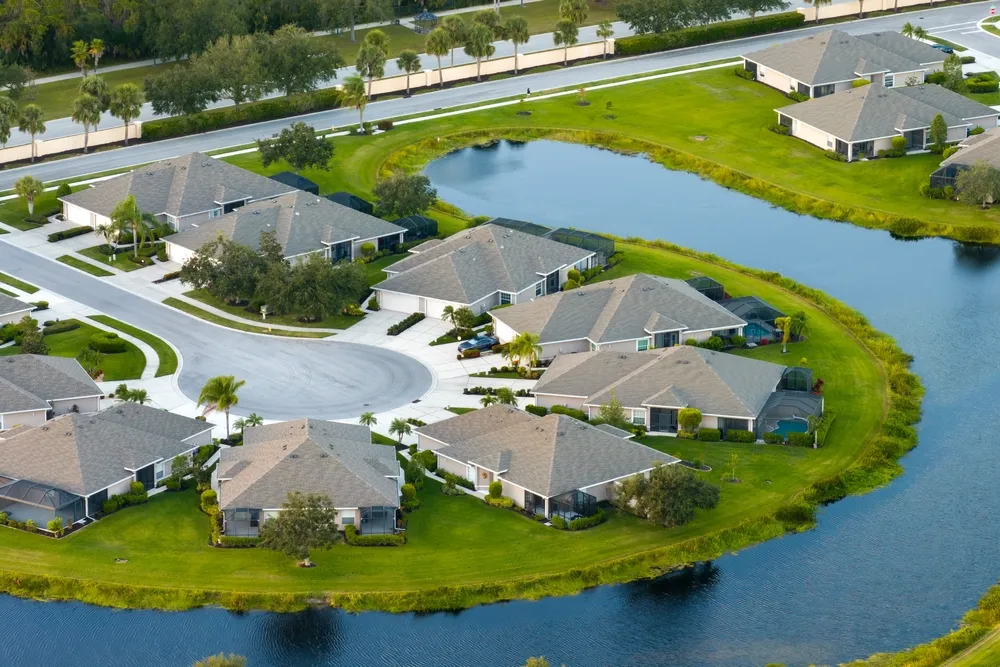
Out-of-town buyers who purchased older barrier-island homes during the COVID boom are discovering that renovation costs and flood-compliance requirements make their properties nearly impossible to improve economically.
Florida’s barrier islands have long attracted buyers drawn to waterfront access and established neighborhoods. But a federal regulation that many buyers overlook is reshaping the economics of older homes in flood zones, creating a growing class of properties worth more as vacant land than as residences.
The rule is FEMA’s 50 percent threshold: if a property within a designated flood zone undergoes renovations exceeding 50 percent of the tax-assessed value of the structure – not the land, just the structure – the entire building must be brought into compliance with current flood codes. For a 1970s or 1980s home on Siesta Key or Lido Key, that typically means raising the structure to meet current finished-floor elevation standards. This process can cost upward of $100 per square foot just for the lifting work before any renovation begins.
Matt Strauss, a Sarasota-based developer and realtor with Ob Portu Ventures, says the cost of raising these older homes routinely exceeds the value of keeping them. “It’s better just to turn those into land deals,” he says.
Out-of-Town Buyers
Many buyers who purchased older barrier island homes during the 2020 to 2022 demand surge were not from Florida and did not fully understand the regulatory constraints they were inheriting. They saw waterfront or near-water properties at prices that felt reasonable relative to comparable coastal markets in the Northeast or California. They moved quickly in a competitive environment that did not reward due diligence.
What those buyers may not have appreciated is the elevation gap between their newly purchased 1970s home and the new construction going up next door. FEMA updates its floodplain maps on a roughly 10-year cycle, and builders constructing to current standards must set finished floors to a specified height above the median flood level. The difference between an older home built to 1970s standards and a new home built to 2026 standards can be six to eight feet of elevation, a gap that becomes catastrophically consequential during a storm surge event.
Strauss frames this as straightforward physics rather than market opinion. If a home sits four feet above grade and the neighboring new build sits at twelve feet, a six-foot storm surge puts two feet of water inside the older home while leaving the newer one untouched. “That’s pure math,” he says.
The insurance market has already priced this in. Flood insurance costs for older, lower-elevation homes in designated flood zones have risen sharply, and Strauss notes that the financial burden has pushed many buyers to avoid flood zone properties altogether when searching in Sarasota.
Barrier Islands
The combination of the FEMA 50 percent rule, elevated insurance costs, and the physical obsolescence of older structures has produced a counterintuitive outcome on Sarasota’s barrier islands: significant new home building in areas that appear fully built out. Strauss points to Siesta Key and Lido Key as examples where demolition and new construction have become the dominant activity – not because the locations are undesirable, but because the existing housing stock cannot be renovated economically.
The financial logic is straightforward. Spending upward of $100 per square foot just to raise a 1970s structure – before any interior work begins – rarely makes sense when the alternative is selling to a builder who will demolish the site and construct to current standards. Strauss says the more economical route for most owners is to treat the property as a land deal rather than trying to preserve a structure that no longer meets modern codes.
For sellers of older flood zone properties, this means the most realistic buyer may not be an end-user at all, but a developer who will price the acquisition as land and factor in demolition costs. That typically means accepting a lower price than the structure’s condition or location might otherwise suggest, a reality Strauss says many current owners have not yet internalized.
Coastal Properties
For buyers and investors navigating Sarasota’s coastal market, the practical question is which properties can still be improved without triggering the FEMA threshold, and which ones cannot. Strauss argues that elevation, flood zone designation, and the gap between current structure value and FEMA compliance costs should be primary underwriting inputs, not afterthoughts. Properties already elevated to current standards, or sitting outside designated flood zones, carry a meaningful premium in both insurance costs and renovation flexibility that older, lower-elevation homes cannot match.
Strauss’s firm, Ob Portu Ventures, manages projects from land acquisition through construction and sales, evaluating coastal sites with explicit attention to flood zone status, elevation, and compliance costs. He notes that buyer awareness of these factors has increased significantly since recent storm seasons. “I do think it is a smarter buyer in general today as compared to what it was a few years back,” he says.
Whether that increased sophistication translates into more accurate pricing of older flood zone properties – or whether sellers continue to resist the math – may determine how quickly the teardown-and-rebuild cycle on Sarasota’s barrier islands accelerates. For now, the gap between what owners believe their homes are worth and what the regulatory and physical realities allow remains wide enough to slow transactions but not wide enough to halt the broader trend toward demolition and replacement.
About the Expert: Matt Strauss is a Sarasota-based Realtor and founder of Ob Portu Ventures, a vertically integrated residential development platform serving the Sarasota market.
This article is intended for informational purposes only and does not constitute legal, financial, or investment advice. The views and opinions expressed herein reflect those of the individuals quoted and do not represent an endorsement of any company, product, or service mentioned. Readers should conduct their own due diligence and consult qualified professionals before making any investment decisions.
Similar Articles
Explore similar articles from Our Team of Experts.