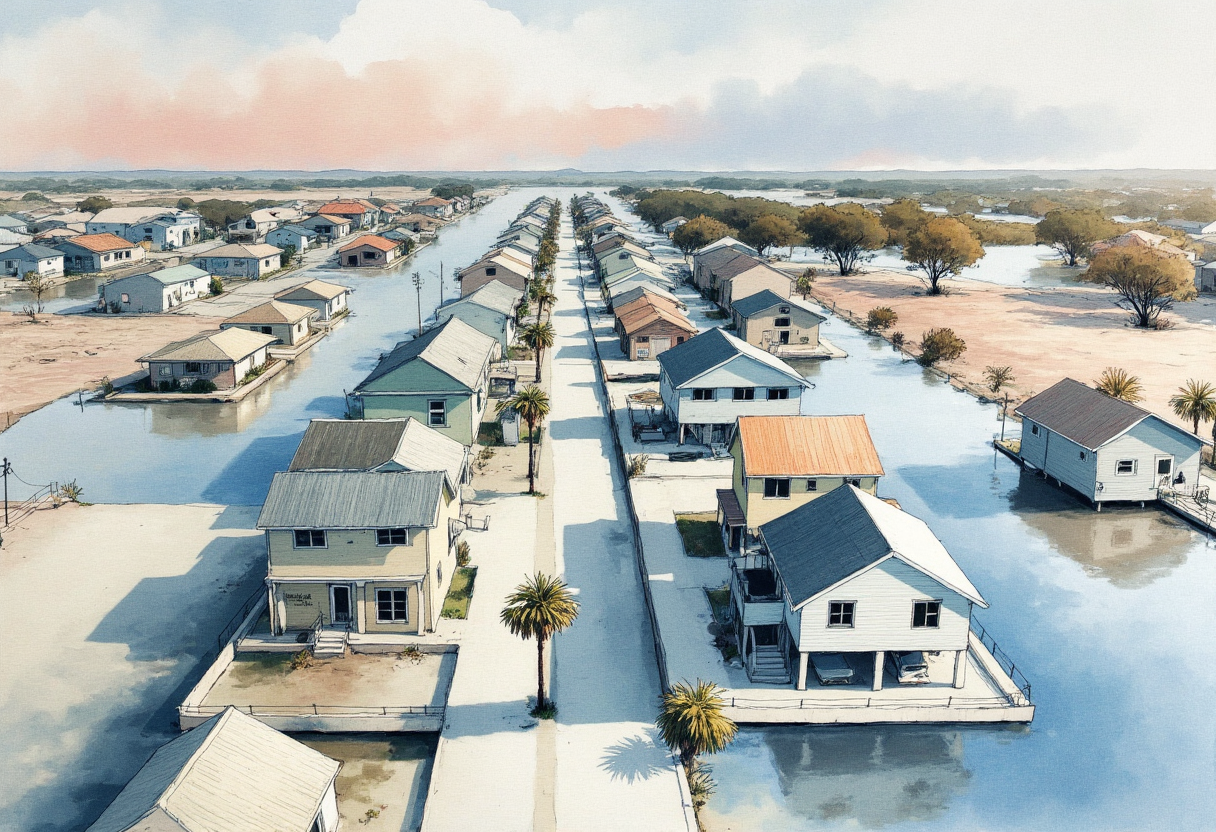
A growing wave of homeowners in Florida’s coastal communities are abandoning properties not due to market conditions, but repeated flooding events, according to a veteran real estate broker who sees climate impacts reshaping neighborhood dynamics.
“A lot of people in Port Orange and Daytona Beach have flooded two, three times, and they’re saying ‘You know what? I’m not doing this again,'” says Garrett Decker, Broker Associate at NextHome At The Beach, who serves markets from Flagler County through St. Johns and Duval.
The Weather-Driven Exodus
While national attention focuses on interest rates and affordability, Decker argues a more fundamental shift is occurring in some Florida coastal communities, where repeated flooding is forcing difficult decisions.
“FEMA has come in and said ‘Hey, you guys need to elevate your homes,’ and they’ve given grants to have people elevate their homes,” Decker explains. “It’s just that’s a lot of work. And some people, in their minds, just don’t want to have to go through that again.”
Rather than tackle expensive home elevation projects, many residents are opting to relocate entirely, even if it means taking financial losses. According to Decker, this creates a complex dynamic where life changes often align with weather-related moves.
“Let’s get away from the flooding area. Let’s get to the smaller house or family moved away,” Decker says, describing the thought process of sellers in repeatedly flooded zones. “A lot of these older homes that are in these flood zones, people are downsizing and just getting away from the issues.”
Market Ripple Effects
“The flooding-driven relocations are creating distinct patterns in local markets,” Decker notes. While overall inventory varies by county – from 2,632 active listings in St. Johns County to 3,500+ in Volusia County – the flood risk factor is increasingly influencing both buyer and seller behavior.
This trend coincides with broader market shifts. “You’ve got 30% of home sales…are new construction,” Decker says. “These builders are offering closing costs incentives, they’re offering lower interest rates on the mortgages and existing homes can’t compete.”
The combination of flood risks and new construction competition is reshaping traditional market dynamics. Decker, who serves on the Planning and Land Development Board for Palm Coast, sees developers carefully weighing these factors.
“A lot of people talk about moratoriums…they blame new construction for the flooding problem,” he notes. “It’s flooding in the areas that aren’t new construction. So it’s just people want to blame somebody.”
Solutions and Adaptation
The real estate industry and local governments are working to address these challenges through various approaches. FEMA grants for home elevation represent one solution path, though Decker notes many homeowners find relocation more practical than major construction projects.
Some developers are responding by carefully selecting build sites and incorporating flood mitigation features in new construction. Meanwhile, local planning boards like Palm Coast’s are weighing how development decisions impact community resilience.
“These developers are sitting on these deals,” Decker explains, noting that many approved projects remain unstarted as builders assess market conditions and environmental factors. This cautious approach suggests the industry recognizes climate impacts as a long-term market force rather than a temporary disruption.
For buyers considering coastal Florida properties, Decker emphasizes the importance of thorough due diligence regarding flood history and mitigation requirements. As weather patterns continue evolving, understanding these risks may prove as crucial as traditional market factors in real estate decisions.