
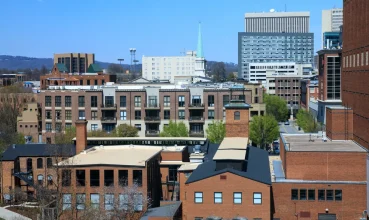
The commercial real estate market in Greenville, South Carolina’s upstate region, is not frozen, but the velocity of transactions has slowed enough that a different kind of legal work ...

In South Florida, Real Estate Conditions Vary Block by Block – and Investors Who Miss That Are Losing

Written by:
Date:
10 Jun 2026
Share via Facebook

Share via Linkedin

Share via X

Copy to clipboard


South Florida’s real estate market has never been easy to read from the outside. National headlines tend to paint it in broad strokes, either a pandemic boomtown or a market cooling under the weight of rising insurance costs and condo legislation. The reality on the ground is considerably more layered, shaped by building-level financial health, hyperlocal supply constraints, and a rental market that’s adding thousands of new units in concentrated corridors.
Andrey Rossin, Owner and Licensed Real Estate Broker at Cash Flow in Miami Realty, has been navigating this market through multiple cycles, from the depths of the 2008 crash to the post-pandemic run-up. His focus spans land, single-family homes, condos, commercial properties, and net-listed assets across South Florida, with a growing footprint in rural and inland markets. That breadth gives him a vantage point that cuts across price points and buyer profiles in ways most specialists don’t have.
A Market That Defies Simple Labels
Conditions in South Florida vary dramatically from one building to the next, let alone from one neighborhood to another. Rossin describes the pattern plainly: “I call it like a zebra, like zigzags.”
The condo segment illustrates this clearly. High HOA fees have become a meaningful drag on pricing and buyer appetite in certain buildings. A one-bedroom, two-bathroom unit in Pompano Beach that recently closed at $155,000 initially carried a monthly maintenance fee of $959. Even after modest reductions, the deal required the right buyer with the right circumstances to close.
Contrast that with Coconut Grove or Coral Gables, where inventory is so constrained that well-priced properties attract immediate interest regardless of broader market sentiment. “There’s no land for sale,” Rossin notes of those submarkets. Demand isn’t the issue; supply is.
One practical signal he uses to assess a building’s health before diving into the financials is the ratio of active listings to total units. A 250-unit building with 40-plus condos listed signals financial trouble. The same building with only eight units for sale suggests a healthy market. It’s a simple heuristic, but one grounded in years of watching how financial mismanagement eventually surfaces through listing volume.
The Hidden Cost of Oceanfront Living
One of the more consistent patterns Rossin sees is buyers underestimating the true carrying cost of oceanfront condos. Many buyers focus only on taxes and maintenance when calculating affordability, overlooking the compounding effects of rising insurance premiums, recurring special assessments, and capital improvement cycles.
Rossin points to several oceanfront buildings in Broward County that have carried persistent assessment cycles for as long as he’s been in the market. For buyers drawn primarily by the lifestyle, the financial reality often arrives as a surprise.
His advice is literal: moving one block back from the water can mean a significantly lower purchase price, reduced maintenance obligations, and a more predictable cost profile over time.
Land as a Long-Term Play
While much of the market conversation centers on condos and single-family homes, Rossin’s primary focus is land, and the reasoning is straightforward. In a market defined by constrained supply, raw land in the right locations offers appreciation potential that built product often can’t match.
A recent transaction captures the logic well. A six-and-a-half-acre parcel on Card Sound Road in Florida City, on the border of Monroe County, closed at $325,000, roughly $54,000 per acre in South Dade. The buyer is a long-term hold investor who intends to use the site for construction equipment rental while the surrounding area undergoes infrastructure development. “An acre for $54,000 in South Dade, as a gift,” Rossin says.
At the other end of the price spectrum, a buildable quarter-acre lot in Lake Placid sold for $14,500, a price point that opens the door to a complete home build for well under $200,000 in an area with growing demographic interest.
The buyer profile for land varies considerably. Local buyers tend to have specific plans and local knowledge. International buyers, including a Canadian investor who simply holds land without developing it, are often motivated by currency stability and long-term capital preservation rather than near-term yield.
Where the Opportunity Is
For investors looking to deploy capital in South Florida, Rossin draws a clear distinction between short-term and long-term plays. His preferred areas for long-term holds reflect the convergence of infrastructure investment and demographic pressure.
The Little Haiti and Buena Vista corridor benefits from its proximity to the expanding Design District and Edgewater. “Anywhere in the border of Little Haiti and Buena Vista, you’re golden,” he says. He also points to the 79th Street Corridor, West Little River, and South Miami as areas where significant institutional capital is already moving in.
Supply-constrained markets like Sunny Isles, Golden Beach, which has just 395 homes and no room to expand, and Eastern Shores round out a list of areas where limited inventory and steady demand are likely to support continued price appreciation.
The Rental Market Is Softening
A trend that doesn’t get enough attention in national coverage is the softening of the rental market at mid and entry-level price points. A surge of new purpose-built rental communities is adding meaningful supply in areas that previously had very little.
In North Miami Beach alone, Rossin recently found 57 affordable condos available for rent simultaneously, a level of choice that gives tenants real negotiating power. New developments are offering two to three months of free rent to attract tenants, competing not just with each other but with the broader secondary market.
In West Aventura, more than 2,000 new rental units are expected to come online in the near term. “There’s always takers,” Rossin acknowledges, “but for them to attract the tenants, they will have to give two to three months’ rent, and they will need to slash the price for sure.” For renters, this is a favorable moment. For investors holding rental assets in oversupplied submarkets, the pressure is real.
Expanding Beyond Florida
Cash Flow in Miami Realty is opening an office in Santo Domingo, Dominican Republic, a move driven by a growing portfolio of large-scale land listings there. Two properties stand out: a 550-acre parcel with two kilometers of beachfront and a 172-acre site suitable for development as an eco-village, wellness retreat, or retirement community.
The expansion reflects where international capital is flowing. The Dominican Republic’s relative economic stability within the Caribbean, combined with growing interest from buyers seeking large-format development opportunities, makes it a natural extension of the firm’s existing client relationships.
Persistence Over Timing
Rossin has been through enough cycles to take the long view. He recalls selling a Miami condo for $12,500 during the 2008-2009 downturn, a short sale on a unit that recently rented for $1,500 per month. Even then, he encouraged buyers not to wait for a lower bottom.
That perspective shapes how he approaches the current market. Conditions are uneven, and certain segments face genuine headwinds – particularly mid-tier rentals in oversupplied corridors and oceanfront condos carrying heavy assessment loads. But in a city defined by constrained land supply, consistent international demand, and ongoing infrastructure investment, the fundamental case for South Florida real estate remains intact.
“There’s definitely opportunity in absolutely any market,” he says. “You have to make a lot of offers, you have to be really persistent, but there’s definitely opportunity.”
The investors most likely to succeed here are those who understand that South Florida isn’t one market but dozens, each with its own supply dynamics, cost structures, and risk profiles. Reading the zebra stripes correctly matters more than timing the cycle.
About the Expert: Andrey Rossin is the Owner and Licensed Real Estate Broker at Cash Flow in Miami Realty, working across land, single-family homes, condos, commercial properties, and net-listed assets throughout South Florida, with a growing footprint in rural and inland markets. The firm is also expanding into the Dominican Republic.
This article is based on information provided by the expert source cited above. It is intended for general informational purposes only and does not constitute legal, financial, or real estate advice. Readers should conduct their own research and consult qualified professionals before making any real estate or financial decisions.
Similar Articles
Explore similar articles from Our Team of Experts.