Every real estate market comes with a built-in excuse. Rates are too high. Inventory is too low. The rules just changed. It’s easy to look outward when business is hard — but the agents who build lasting careers never do. Across five decades of shifting markets, the ones who last share one trait: they stopped waiting for better conditions and started building better skills.
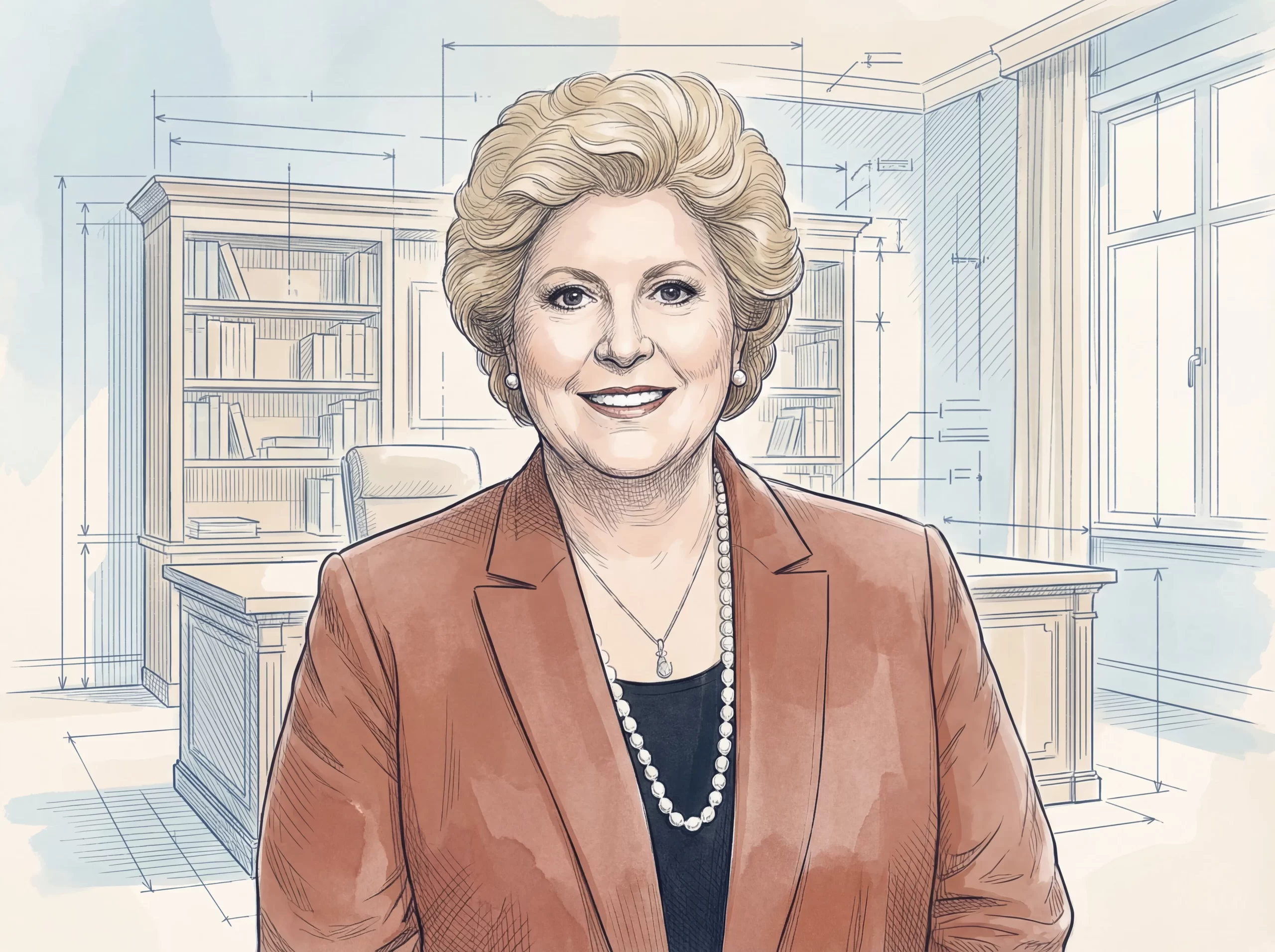
Few illustrate that better than Alexis Bolin, a broker at Alexis Bolin Group at KW Gulf Coast. In 1977, she arrived in Pensacola as a single mother with no real estate experience and told a stranger she was going to sell homes. Nearly 50 years later, she still is — closing 55 units last year, at 81, almost entirely on referrals. She’s worked through 18% interest rates, a global pandemic, and an AI revolution. The market has never been the point.
Every market feels uniquely hard
Every generation of real estate agents inherits a market that feels broken. In the 1970s, it was stagflation. In the early 1980s, mortgage rates climbed to 18% and transaction volume collapsed. The 2008 financial crisis wiped out entire brokerages. More recently, a pandemic reshaped buyer behavior overnight, and a historic inventory shortage pushed affordability to its limits. Each cycle arrives with new conditions and a familiar sense that this time is different — that the market itself is the obstacle.
For agents who lived through several of those cycles, the pattern looks different. Bolin started her career in 1977 and has watched each disruption play out the same way: agents who focused on their own skills found a way through, while those who waited for conditions to improve often didn’t. When rates hit 18% in the early 1980s, she focused on prospecting, knocking on 50 doors a day to find motivated buyers and sellers. “Your success in your market is completely dependent upon your skills and nothing else,” she says. The rate environment was a challenge — but it wasn’t the deciding factor.
That mindset has proved durable. The August 2024 NAR settlement required agents to use buyer-broker agreements more consistently, prompting difficult conversations about value. For agents who had never needed to articulate what they offer, it was a wake-up call. For Bolin, it was familiar territory — another moment where the agents who had invested in their communication skills adapted smoothly, while those who hadn’t found themselves struggling. The regulation changed. The underlying skill requirement didn’t.
Immunity over adaptation
Most agents build their business around the market, and when the market shifts, they scramble to keep up. They adjust their pitch, chase new leads, and wait for conditions to turn in their favor. It works, until it doesn’t. The agents who stay productive through every cycle tend to operate differently: instead of adapting to the market, they build something the market can’t easily disrupt.
Bolin’s business is a useful example of what that looks like in practice. She has been selling real estate in the Pensacola area for nearly 50 years, and today almost all of her transactions come from repeat clients and referrals. She hasn’t run a single ad in five years, yet closed 55 units on her own last year. That kind of pipeline doesn’t come from marketing but from trust built steadily over decades.
She traces the principle back to an earlier job waitressing. If something on the menu wasn’t worth ordering, she’d say so and point customers toward something better. She carried that same honesty into real estate. When clients raise concerns about Florida’s insurance costs — a common hesitation for out-of-state buyers — she doesn’t sidestep the question. She helps them look at the full picture: a $5,000 insurance premium feels different when you’re no longer paying $15,000 in state income tax. When hurricane risk comes up, she walks through how it compares to earthquakes or tornadoes, risks that come without warning or time to prepare. The conversations are direct and practical, and they’re why clients come back and send others her way.
Technology amplifies; it doesn’t replace
Artificial intelligence has entered nearly every industry, and real estate is no exception. Agents are using AI to write listing descriptions, generate marketing content, analyze contracts, and automate client communication. The tools are powerful, accessible, and improving quickly — and for many agents, they’ve become a competitive necessity. But as adoption grows, a more important question is emerging: what separates agents who use these tools effectively from those who don’t?
The answer, increasingly, is what the agent brings to the table before the technology gets involved. AI tools are only as useful as the judgment, relationships, and creativity directing them. In the hands of an agent with deep client knowledge and a clear sense of what works, they become a genuine advantage. In the hands of an agent without that foundation, they tend to produce output that looks polished but feels generic.
Bolin’s approach illustrates the difference. At 81, she has been using AI for several years, writing property descriptions, analyzing contracts, and building marketing materials. She participates in AI implementation groups and actively looks for new applications. But the most revealing example isn’t the time she saves on routine tasks. It’s a listing video she created using an AI music program: a custom song written about the property, paired with photos, designed to stand out in a crowded market. The technology executed the idea, but the idea came from decades of knowing what captures a client’s attention. For agents who haven’t built that instinct, the same tools are available. The results, though, aren’t the same. Technology amplifies a trusted voice rather than creating one.
Preparation, not luck
Real estate markets move in cycles, and most agents know another shift is coming. After several years of historic volatility, marked first by pandemic-driven demand and then by a sharp rate increase that froze inventory, the market appears to be finding its footing. The question for agents isn’t whether conditions will improve. It’s whether they’ll be ready when they do.
The broad outlook points toward gradual stabilization. Mortgage rates are unlikely to return to the historic lows of 2020 and 2021 — a more realistic settling point is closer to 5.5%, according to Bolin, who has watched enough cycles to be skeptical of predictions that favor wishful thinking over pattern recognition. At that level, affordability remains a challenge, but it’s a workable one. Builder incentives are already bridging the gap in many markets, with rate buydowns, paid closing costs, and upgrade allowances giving motivated buyers a practical path forward.
The larger opportunity is demographic. A generation of older homeowners — many of whom have stayed in large family homes long past the point of needing them — is beginning to move. Some are downsizing to smaller properties; others are transitioning to retirement communities. Bolin refers to it as a “silver tsunami,” and expects it to release a significant wave of inventory over the next several years, easing supply constraints and creating openings for buyers and investors who have been waiting on the sidelines.
For agents, that wave represents an opportunity but only for those who have spent the quiet years preparing for it. “You’re either ripe and rotten, or you’re green and growing,” Bolin says. The market will shift. It always does. The agents who benefit won’t be the ones who got lucky with timing, but the ones who kept building when there was no immediate reason to.