
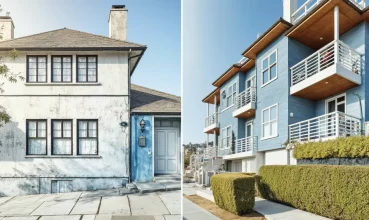
The Bay Area housing market has split into two sharply different tracks. Single-family homes priced above $2 million are now selling for more than their 2022 peaks, while condos and townhome...

Southwest Florida’s Discretionary Market Leads to Unexpected Pricing Trends

Written by:
Date:
13 Nov 2025
Share via Facebook

Share via Linkedin

Share via X

Copy to clipboard

Southwest Florida’s real estate market is confounding expectations, with luxury properties over $1 million selling more easily than mid-range condos, according to Mike Newes of John R. Wood Christie’s International Real Estate. This trend highlights a market shaped almost entirely by discretionary purchases, rather than necessity.
“Interestingly, the high end properties have actually sold more than the lower end,” Newes said. “The properties over a million dollars are easier to sell than the condos in the $250,000 to $500,000 area. There’s so many on the condo market that people are just looking and looking.”
With 25 years of experience in Southwest Florida real estate, Newes attributes this pattern to the region’s economic foundation in hospitality, medical care, and aging services, rather than job-centric markets. The area primarily attracts second-home buyers and retirees, whose financial motivations differ from typical homebuyers.
The luxury market’s strength comes down to a straightforward reality, “at the high end, people have the money and they want to buy it,” Newes said. These buyers are not limited by financing concerns or employment uncertainties that might affect other segments.
In contrast, the middle market faces a unique challenge unrelated to interest rates or housing inventory. Newes points to the stock market’s ongoing gains as a key reason buyers are pausing on real estate purchases.
“Right now the stock market continues to go up for no good reason, and people are well invested in the stock market,” he said. “They make the decision, should I pull some money out of the stock market to invest in real estate right now? I know real estate is going to be a better investment long term, but jeepers, I’m making this much money every day.”
This dynamic creates a waiting period where buyers recognize real estate’s long-term potential but hesitate to leave profitable stock positions. “They’re waiting for that roller coaster to kind of get to where they see at the top, so they can pull their funds out and put it into the more stable idea of real estate,” Newes said.
Because Southwest Florida’s market is driven by discretionary purchases, traditional distress signals don’t apply. Most sellers are not under pressure to sell and can simply hold onto their properties if the timing isn’t right. This changes the nature of pricing negotiations and market timing.
For sellers, Newes stresses the need for competitive positioning over simply matching comparable sales. “In a seller’s market, you price to the comparables. In a buyer’s market, you price against the competition,” he advised. Sellers need to create the best value proposition by considering price, location, and condition, rather than just following recent sales.
The discretionary character of the market also means that government uncertainty and economic volatility have an outsized impact on buyer activity. “Discretionary buyers don’t like to rush into things. They like peace and quiet,” Newes said, noting that political and economic instability can halt activity even when the underlying fundamentals are solid.
This distinct market structure suggests that Southwest Florida’s recovery may continue to diverge from national patterns, with luxury properties leading any rebound while mid-range activity remains closely tied to investment sentiment and stock market trends.
Similar Articles
Explore similar articles from Our Team of Experts.