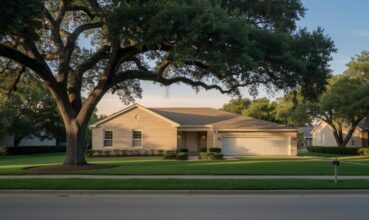
Two office buildings of 20,000 square feet, in the same city, with similar tenancy, can price very differently. On a spreadsheet, they look like the same investment. In practice, they frequently are not, and the reasons are identifiable if you know which ones to check.
For investors underwriting Hawaii commercial property, four variables account for most of the spread.
Condition, And The Number Behind It
Physical condition is the most common explanation, and what it really measures is future capital expenditure.
A buyer looking at two similar assets is calculating what each will require to bring up to standard, to lease, and to keep in good order. Elevators, roofing, plumbing, and electrical systems all sit behind that number, and with construction costs where they are, the figure moves quickly.
“You can quickly spend lots of money on any of these assets,” says Mark D. Bratton, CCIM, of The Bratton Team at Colliers International Hawaii. That expected spend is priced into the offer, which is why two buildings with identical income can attract materially different bids.
Newer product carries a related premium. A building one, two, or three years old is highly desirable for the straightforward reason that its capital requirements sit years out rather than immediately.
Leasehold And Fee Simple Interest
The largest single driver of spread in Hawaii is whether the buyer is acquiring fee simple interest or a leasehold position.
More than half of investors will not consider leasehold under any conditions. That alone narrows the buyer pool enough to move pricing. As a working rule, Bratton puts the differential at roughly 200 basis points: where a fee simple building prices at 6.75 percent, the leasehold equivalent might begin around 8.75 percent.
He is careful to frame that as a starting point for investigation rather than a conclusion. Leasehold is not one thing. A building with two years remaining before reversion and a building with 99 years at nominal rent are entirely different propositions that share a label.
Reading The Lease Itself
For leasehold assets, the terms that matter most concern when and how the ground rent resets.
The conventional Hawaii structure runs about 60 years, with the first 30 years fixed and known, and renegotiation to fair market value at ten-year intervals thereafter. That structure exists for a practical reason: a lessee constructing a building needs a term long enough to amortize the cost, repay the lender, and earn a return.
Shorter terms suit different situations. Bratton points to a current listing where an owner-user intends to sell and lease back, with a ten-year term on offer and flexibility to extend if that is what attracts the right investor. The building already exists, so the tenant is simply converting real estate equity into working capital for the business.
The analytical question in every case is the same: are the returns adequate for the risk the structure creates? Assets of both kinds appear across current Hawaii commercial inventory.
The Size Paradox In Multifamily
One Hawaii pattern runs counter to mainland expectations, and it catches out investors who assume scale improves pricing.
Multifamily is among the most desirable asset classes in the state, because most investors understand it. They can drive past the building. They could lease the units or fix a toilet themselves if it came to that. Broad comprehension means a deep buyer pool, and a deep buyer pool compresses cap rates.
That logic reverses at scale. A recently traded 23-unit building in town, in excellent condition, priced at about a five cap on a roughly 10 million dollar basis. A 400-unit building that sold earlier this year traded at a considerably higher cap rate, because a 200 million dollar transaction has far fewer possible buyers.
For investors operating in the middle of the market, that is a useful piece of information: the competitive advantage sits with the smaller check.
Risk Profile By Asset Class
Cap rate comparisons across asset classes tell you less than they appear to, because each class carries a different risk structure.
A hotel reprices every night and depends on tourism volume and airlift. A building let to a creditworthy tenant on a 20-year leaseback with guaranteed monthly payment requires almost nothing of its owner. Those are different businesses, and the yields reflect it. Multifamily sits at the lower end of the range, office at the higher end, for reasons rooted in how investors perceive the risk rather than in the buildings themselves.
Comparisons are most useful within an asset class, or drawn explicitly between them with the risk difference stated.
The Step Most Buyers Skip
The item Bratton returns to is the least technical and, in his account, the most frequently underweighted.
“Go touch them, go feel them, go walk them,” he says of buildings that look equivalent on paper. Access and egress, circulation, road conditions, how the site actually functions: these are the differences that separate two apparently identical assets, and they do not appear in an offering memorandum.
Sight-unseen acquisitions still happen, though far less than in the 1980s, and most buyers now send a representative or arrange a video walkthrough at minimum. Bratton’s position is that the visit repays the time, because being on site surfaces details nothing else does. Having walked a building five years ago and again today is its own form of information, and it is the practical case for local representation over remote.
For anyone pricing Hawaii assets, the composite lesson is that the spread between two similar buildings is rarely arbitrary. It is condition, tenure, scale, and what the walkthrough revealed. Recently closed transactions show how those variables resolve in practice.
About the Expert: Mark D. Bratton (R), CCIM, leads The Bratton Team at Colliers International Hawaii in Honolulu, specializing in hotel, resort, and commercial investment sales.
The Bratton Team is a Hawaii commercial real estate and investment sales group, exclusively contracted to Colliers International HI, LLC. Led by Mark D. Bratton (R) CCIM and Mike Perkins (S), the team has advised buyers and sellers across all Hawaii asset classes for 40 years.
This article is based on information provided by the expert source cited above. It is intended for general informational purposes only and does not constitute legal, financial, or real estate advice. Readers should conduct their own research and consult qualified professionals before making any real estate or financial decisions.