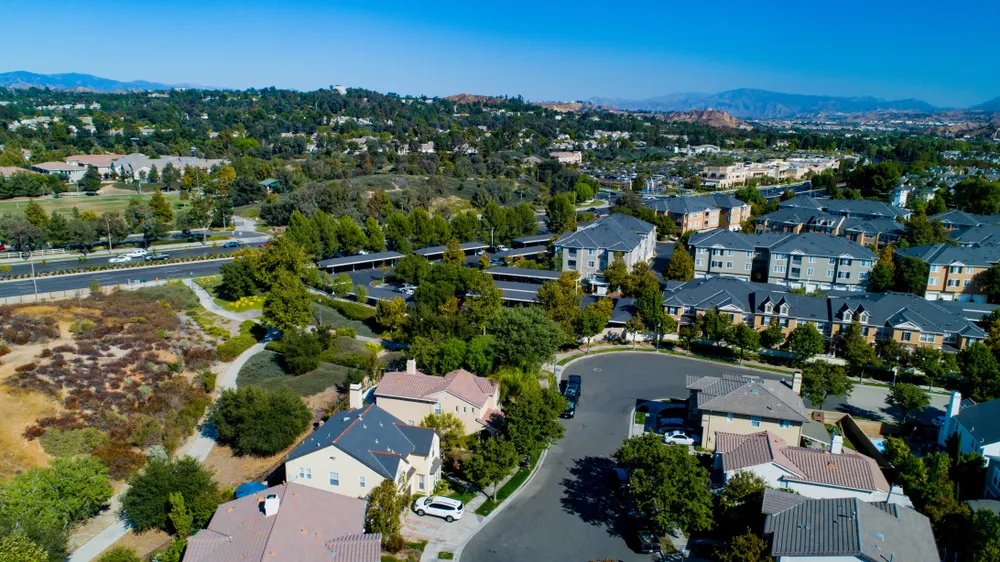
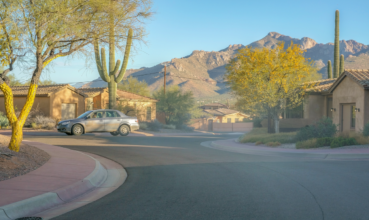
Roughly 30 miles north of downtown Los Angeles, the Santa Clarita Valley sits at a useful intersection: close enough to the city to make commuting manageable, yet far enough removed to offer the kind of space, schools, and community infrastructure that urban neighborhoods rarely provide at comparable price points. For families priced out of LA proper or the San Fernando Valley, it has become an increasingly logical destination.
Craig Martin, Team Leader at Martin Realty Group under Pinnacle Estate Properties, has been selling homes in the area for over 25 years. His read on the market is grounded in that long view, and right now he sees genuine demand held back by external headwinds that have kept many buyers on the sidelines longer than most expected.
Built Around Families
The valley encompasses six distinct communities – including Valencia, Saugus, Canyon Country, and Stevenson Ranch – and carries a population approaching 380,000. What sets it apart from other LA suburbs is the density of family-oriented infrastructure packed into a relatively affordable geography.
The area offers 178 miles of dedicated bike paths, more than 34 public parks, four golf courses, an aquatic center, and consistent top ratings across its school system from elementary through high school. College of the Canyons and CalArts both operate within the valley. Six Flags Magic Mountain is essentially a neighborhood amenity.
“It’s a family community that is absolutely safe, feels like that, feels good,” Martin says. “It’s close to LA, but it’s still affordable.”
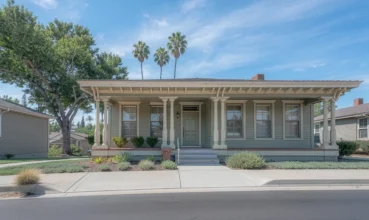
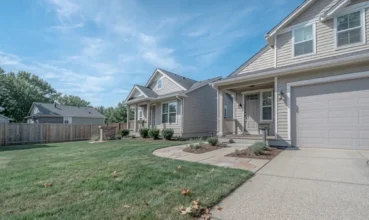
That affordability is relative. The median home price is around $800,000 for a four- to five-bedroom single-family home. Entry-level condos and townhomes start in the $400,000 to $500,000 range, while pool homes with views and larger lots push toward $1 million. The upper end extends to $2 to $3 million for golf course properties in communities like West Ridge and Sand Canyon.
For buyers coming from LA or the San Fernando Valley, where comparable space often costs considerably more, those numbers still represent meaningful value.
Why the Market Is Stalling
The typical buyer arriving in Santa Clarita today is often a renter or condo owner from the broader LA metro who has started a family and needs more room, better schools, and a yard. Remote and hybrid work arrangements have made the move easier. “A lot of people don’t work from the city as much,” Martin notes. “That has changed a lot, where people can move a little more to the suburbs.”
But the market is not moving at the pace that underlying demand would suggest. The rate environment from 2020 through early 2022 drew a significant wave of buyers, many of whom locked in mortgages in the 2.5 to 3 percent range. When the Federal Reserve began its rapid tightening cycle in March 2022, activity dropped almost immediately. “We went from getting $70,000 to $80,000 over asking price to getting $70,000 to $80,000 under asking price within four months,” Martin recalls.
Since then, the market has been waiting for relief that has not consistently arrived. Rate cuts anticipated in 2023 and 2024 were delayed or smaller than expected. Early 2025 showed promise, with averages briefly touching below 6 percent, but geopolitical developments pushed inflation and rates back up. Martin describes open house attendance dropping from 20 groups to two following that escalation.
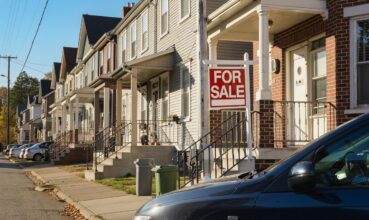
The result is a market with more sellers than active buyers, significant fence-sitting, and widespread price reductions. Martin estimates roughly half of current listings have seen at least one price cut, less a reflection of overpriced homes than a market that did not move in the direction sellers anticipated.
What the Slowdown Means for Buyers
For buyers willing to act in the current environment, the dynamics have reversed from just a few years ago. Bidding wars have largely disappeared. Sellers are more willing to negotiate on price, and buyers are in a stronger position to request repairs and concessions during escrow. Martin notes that buyers are routinely securing $5,000 to $15,000 in repairs and fixes, and walking away if sellers refuse.
For first-time buyers in particular, the absence of competitive pressure changes the experience considerably. Homes that are well-priced and in good condition still move, but the urgency that defined 2020 to 2022 is gone. “Right now, what you’re getting – price per square foot, what your payment is, is probably the best you can get for a while,” Martin says.
His broader philosophy on homeownership informs how he frames this moment for clients. Having guided buyers through multiple cycles over 25 years, he counsels patience and a long horizon. He describes working with one client over two decades, starting with a $5,000 down payment on a condo and ultimately guiding them through a sequence of properties that culminated in a $2.5 million golf-course home, each step funded by equity from the previous one.
Investor Activity and the Flip Market
The current environment also presents opportunities for investors who are comfortable with properties requiring significant work. Martin is actively pursuing acquisitions himself, with offers out on homes that are not attracting conventional buyers. The strategy depends on market timing: a renovated property can be sold if conditions improve, or rented for a year or two while waiting for a better exit window.
The insurance landscape deserves attention from any buyer evaluating the area. Santa Clarita’s proximity to the mountains means fire risk is a factor, and premiums have increased meaningfully across California. Martin flags this in every due diligence conversation, alongside solar considerations, HOA structures, and Mello-Roos assessments, where applicable.
Looking Ahead
Whether the next spring selling season delivers stronger activity will depend heavily on where rates land and whether the broader economic picture stabilizes. The seasonal window Martin identifies, roughly March through mid-July, is when Santa Clarita historically sees nearly half its annual transactions, driven largely by families moving between school years.
For investors and families evaluating Southern California’s suburban markets, Santa Clarita presents a case worth examining closely. The fundamentals, schools, infrastructure, proximity to LA, and relative affordability have not changed. What has changed is the negotiating environment, and for buyers who have been waiting, that may matter more than the rate environment alone suggests. The question is whether current conditions represent a window or a new baseline, and the answer will likely depend on how long rates remain elevated and how quickly seller expectations adjust.
About the Expert: Craig Martin is Team Leader at Martin Realty Group under Pinnacle Estate Properties, with over 25 years of experience selling homes in the Santa Clarita Valley north of Los Angeles.
This article is based on information provided by the expert source cited above. It is intended for general informational purposes only and does not constitute legal, financial, or real estate advice. Readers should conduct their own research and consult qualified professionals before making any real estate or financial decisions.