The idea that vacant office buildings can be easily turned into apartments has become a common refrain in real estate discussions. With office vacancies rising, the supposed solution is to convert underused buildings into much-needed housing. But according to Carlo Batts, Principal & CEO of Reduxx Group and a commercial appraiser specializing in Philadelphia, the reality is far more complicated. Most of the city’s empty offices cannot be converted to residential use without prohibitive costs and technical obstacles.
Older Buildings Offer Some Flexibility
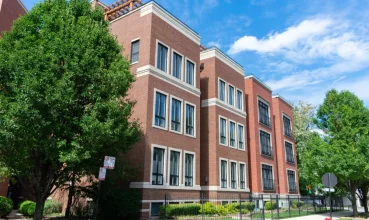
Batts draws a clear distinction between older office buildings and those constructed after the 1970s. “When you look at older office buildings that were constructed before the 1970s, there were more masonry, brick masonry constructed buildings,” Batts says. “They offered a format that was more leaning towards the ability to be converted into multifamily apartments.” The design and structure of these early office properties—smaller floor plates, ample window lines, and simpler mechanical systems—mean they can sometimes be reworked as residential units without extensive reconstruction.
The 1970s Construction Divide
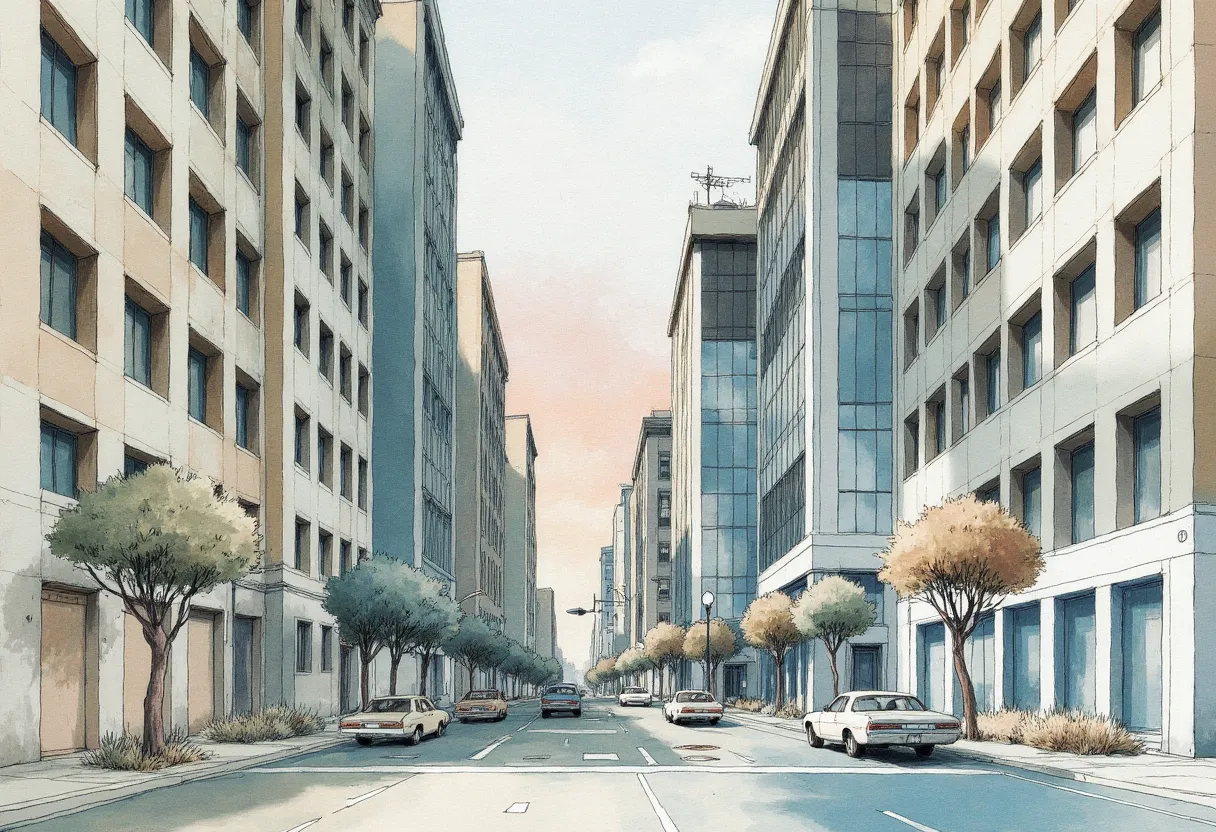
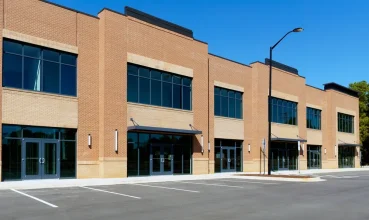
But the story changes for the majority of Philadelphia’s office inventory, especially buildings put up from the 1970s onward. “When you get to stuff that was built in the 70s, 80s, and forward, those assets were built in a way just to be office buildings,” Batts explains. “The conversion and the dynamics of what it takes to convert those are a little more cost-inhibitive to make the multifamily product.”
Office buildings from this era were designed specifically for business use, with large, deep floor plates, robust structural systems, and utility infrastructure tailored only for offices. Retrofitting these spaces for apartments isn’t just expensive—it often makes no financial sense. “You’re going to have to buy at a rate to get those back stabilized at an office value, because your lease-up time, or release-up time, is going to be a little longer,” Batts says. The costs of adding plumbing, reconfiguring mechanical systems, and carving up vast open spaces into livable units can exceed any potential gains.
Alternative uses like hotels might seem more viable, but Batts is skeptical. “You may be able to get hotels there, or something like that, but you can’t do a multifamily build,” he says. “And even a hotel is going to be a little challenging because of the floor plate and getting plumbing and all that stuff to move right.”
Why Philadelphia’s Office Problem Is Manageable
These constraints mean that most vacant Philadelphia office buildings can’t be “saved” by converting them to housing. Distressed owners aren’t sitting on untapped apartment gold mines—they face the prospect of either stabilizing their properties as offices or accepting steep losses. However, Batts argues that Philadelphia is better positioned to handle this situation than some other cities.
“Philadelphia never was a primary office market, even before the pandemic, which is kind of a saving grace, if you think about it, at this stage,” he says. Unlike New York, Chicago, or Houston, Philadelphia’s office stock is relatively limited. “The buildings that are now vacant are fine. It’s a finite amount as compared to other cities across the country.”
Batts also points out that Philadelphia’s much-cited 28% office vacancy rate may not reflect the true picture. “When you really look at that 28% vacancy, that’s probably skewed somewhat by older product that wasn’t going to get leased up or was already phasing out when the pandemic hit,” he says. In other words, some of what’s counted as vacant was likely obsolete even before the recent downturn.
What Happens to Core Office Assets
For the city’s core office buildings—newer, well-located properties that draw institutional investment—Batts anticipates a slow but eventual return to stability. “When you look at core office assets, you’re probably talking about three or four buildings that, given enough time and enough development of everything else around Philly that’s happening, those are going to stabilize one way or another,” he says. This suggests that patient ownership, rather than wholesale conversion, will be key for the city’s most valuable office real estate.
Implications for Investors and Lenders
Batts’s experience, shaped by his banking background and years as an appraiser in Philadelphia, leads him to caution against blanket optimism about office conversions. The Reduxx Group, which he founded in 2011 after leaving Wilmington Trust, routinely evaluates commercial properties for their true conversion potential. He advises investors and lenders to be highly selective, distinguishing between buildings that can be realistically turned into apartments and those that will need to be repositioned as offices at lower values.
As Philadelphia’s office market continues to grapple with high vacancy rates, Batts’s analysis underscores the need for a grounded, property-by-property approach. For most of the city’s vacant office space, conversion to housing is not a feasible solution—meaning owners and policymakers must look elsewhere for answers.