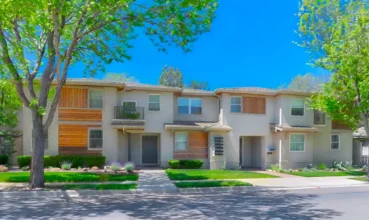
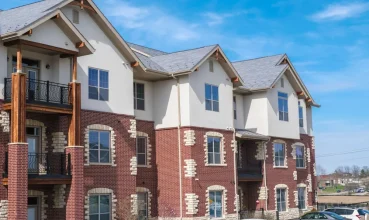
A critical financing bottleneck is threatening the progress of affordable housing developments in Florida, according to a leading construction lender. The problem is not construction costs or a lack of demand, but a disconnect between how construction lenders and government-sponsored enterprises (GSEs) underwrite the same projects—specifically regarding property tax treatment under Florida’s Live Local Act.
J.C. de Ona, Southeast Florida Division President at Centennial Bank, says the issue centers on property tax assumptions for projects using Live Local incentives. Construction lenders like Centennial can underwrite loans based on the sharply reduced or eliminated property taxes that the law provides for qualifying affordable housing developments. But when it comes time to secure permanent financing from agencies such as Fannie Mae, those agencies are still underwriting as if full property taxes will be due.
“If the agencies aren’t accepting the Live Local property taxes in their underwriting, it creates a problem because then we have to underwrite to that if that’s going to be our exit,” de Ona says. “I can’t use your numbers based on seventy-five percent of property taxes, while Fannie Mae is calculating them at today’s full rate. That project may not work the same, and your proceeds may not be the same. So where does that leave me on an exit?”
Why Property Tax Assumptions Matter
Property taxes are often the make-or-break factor in affordable housing deals, de Ona explains. The Live Local Act, passed to spur affordable housing construction in Florida, provides significant property tax exemptions for projects that include designated affordable units. For construction lenders, the resulting tax savings boost operating cash flow and improve debt service coverage ratios, making projects that might otherwise be marginal appear financially sound.
But this creates a structural problem at the transition from construction to permanent loan. If the construction lender plans to sell the loan to Fannie Mae or another agency after the project stabilizes, but the agency refuses to recognize the reduced property taxes in its underwriting, the permanent loan amount may be much lower than the original construction loan. This leaves a gap that someone must fill—either the developer must bring in more equity, the construction lender must hold the loan longer than planned, or the project falls through.
“This is not a minor technicality,” de Ona says. “Having reduced or eliminated property taxes is often what makes these projects pencil out.”
Developers Face a Financing Cliff
This underwriting mismatch creates significant uncertainty for developers, especially as more projects incorporate affordable units to qualify for Live Local benefits. According to de Ona, some developments include only 10% or 20% affordable units, while others are 100% affordable. Centennial Bank has financed projects across this spectrum, including a recent deal with the Hialeah Housing Authority that was “true affordable housing.”
But the pipeline is at risk. If agencies won’t recognize the tax benefits in permanent financing, construction lenders may be reluctant to fund new projects, and developers could abandon otherwise viable plans. “There’s a huge gap in the amount of affordable housing that’s needed,” de Ona notes. “We’re definitely going to see more of these projects proposed this year because the need is so great.”
The scale of the problem is growing as more developers seek to leverage Live Local incentives. If construction lenders can’t confidently exit loans through agency takeout, the entire model becomes unstable.
Broader Context: South Florida’s Affordability Crisis
This financing bottleneck is surfacing at a time when South Florida faces an acute shortage of affordable housing. Wealth migration to the region, primarily since the pandemic, has driven up real estate prices and widened the gap between high-end development and housing for the general population.
“When I look at homes in the neighborhood I grew up in, it’s hard to believe what’s happened to affordability,” de Ona says, recalling his own experience growing up in South Florida. “We can’t just build luxury condos and ignore the majority of people.”
Policies like the Live Local Act aim to address this divide by incentivizing affordable construction. However, these policy solutions only work if the underlying financial infrastructure supports them. If agencies responsible for permanent financing fail to adapt their underwriting to reflect the new tax benefits, they risk undermining the intended impact of these incentives.
Seeking a Solution
Industry participants acknowledge the problem and are actively seeking solutions, though none are finalized. One possibility is for agencies like Fannie Mae to revise their underwriting guidelines to account for property tax reductions under Live Local and similar programs. Another is for construction lenders to develop alternative exit strategies that do not depend on agency takeout, or for developers to adjust project structures to bridge the financing gap.
De Ona is cautiously optimistic that clarity will come soon. “I think there’s going to be some clarity on that this year, which I think will be helpful,” he says. “Live Local is definitely a good thing overall, and I think it’s going to provide opportunities.”
But the urgency is rising as more projects move through the development pipeline. If construction lenders hesitate to finance affordable components due to uncertainty around loan exits, these financing mechanics could undermine the policy intent behind Live Local and similar incentives.
What’s at Stake
Whether the agencies adapt their underwriting standards to align with state and local affordable housing incentives, or the market develops alternative financing structures, will determine how much affordable housing actually gets built in high-cost markets like South Florida over the next several years.
Without a solution, the underwriting gap could stall or shrink the pipeline of new affordable housing projects just as demand is peaking. The future of these developments — and the effectiveness of policies like Live Local — hinges on resolving this financing disconnect. For now, developers and lenders are left in limbo, waiting to see whether the agencies will adapt or whether new models will be needed to keep affordable housing deals viable.