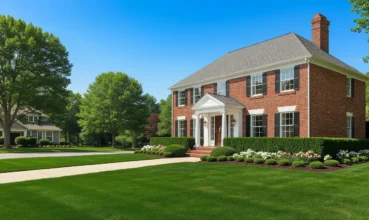
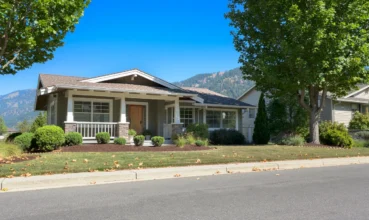
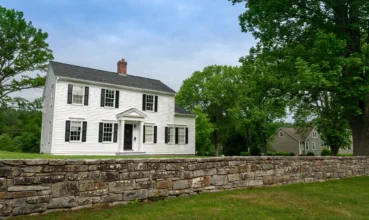
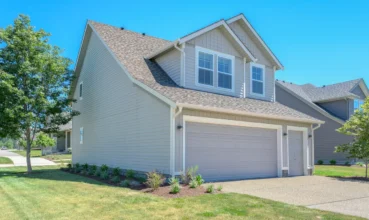
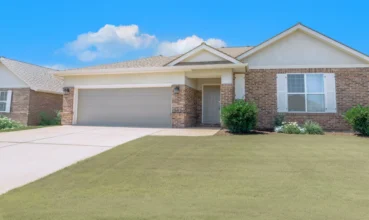
Last spring in Linwood, New Jersey, homes priced under $650,000 sold almost immediately, often with multiple offers and little time on the market. Just blocks away, properties listed between $700,000 and $900,000 lingered for months. Despite their similar size and location, these homes faced dramatically different markets.
This pattern isn’t limited to Linwood. Across South Jersey Shore communities in Atlantic and Cape May counties, homes in certain price ranges move quickly while others stall. The slowdown is most pronounced in the $700,000 to $900,000 bracket — a range caught between buyers moving up from starter homes and those shopping for luxury. This “in-between” segment struggles because it’s too expensive for many move-up buyers but lacks the features that attract high-end buyers.
Talia Preissman, a Realtor with Platinum Real Estate, has seen this dynamic repeatedly over the past year. Understanding which price points are most challenging can help buyers and sellers avoid costly mistakes and better time their moves.
Where Move-Up Buyers Hit Their Limit
Move-up buyers — typically families selling a starter home to buy something larger — represent a major share of the South Jersey Shore market. They often bring $100,000 to $300,000 in equity for their next purchase, but their budgets are tightly defined by income and borrowing costs.
With mortgage rates in the mid-6% range, a household earning $150,000 can usually afford a home priced between $600,000 and $700,000, depending on other debts and the size of the down payment. Property taxes in Atlantic County, which can reach $15,000 to $20,000 annually, further limit affordability.
Homes priced in the low-to-mid $600,000s attract these buyers because they offer space, solid schools, and reasonable monthly payments. But once prices rise above $700,000, many move-up buyers either can’t qualify or won’t risk stretching their finances.
The Luxury Buyer Threshold
At the other end, luxury buyers — typically those shopping above $900,000 — look for distinctive features: high-end finishes, premium locations, waterfront views, or exclusive neighborhoods. Standard homes, even at $850,000, often don’t capture their interest.
This creates a pricing gap. Homes listed between $700,000 and $900,000 are often too expensive for move-up buyers and not unique enough for luxury buyers. Preissman notes that these homes may sit for months. Sellers often start in the high $700,000s or low $800,000s, then make several price cuts before finding buyers, usually after dropping into the low $700,000s.
For example, a Somers Point home listed at $799,000 saw little interest for 60 days. After the price was reduced to $749,000, it sold within two weeks. The property didn’t change — only the price matched the pool of qualified buyers.
New Construction Complicates the Picture
New construction is adding complexity to this market. Builders continue to offer homes in the $700,000 to $900,000 range, featuring modern finishes and tax abatements that temporarily lower property taxes.
While buyers are drawn to new homes and the promise of lower taxes, the abatement period typically ends after five to ten years. At that point, taxes can double or triple. A home with a $10,000 annual tax bill during the abatement might see that figure rise to $20,000 or more once the abatement expires.
Some buyers sell before the abatement ends, flooding the market with relatively new resales that compete with fresh construction but without the tax benefit. This puts further pressure on sellers in the $700,000 to $900,000 range, who must compete with both builders and other recent resales.
For Buyers
If you’re shopping in the $700,000 to $900,000 range, expect less competition and more negotiating room. Homes in this range often stay on the market longer, so sellers may offer concessions such as closing cost credits, repair allowances, or price reductions.
Take time to compare options — unlike the sub-$650,000 segment, where properties move fast, the mid- to high-$700,000s allow for more deliberation. Request inspection reports, review previous offers if available, and negotiate assertively if a home has been listed for more than 30 days.
If considering new construction, budget for the full property tax amount after the abatement ends. A $750,000 home with a $10,000 tax bill could see taxes rise to $20,000 or more. Make sure your finances can handle the increase.
For buyers stretching to reach the $700,000 mark, consider rate buydowns. Paying up front to lower your interest rate can make monthly payments more manageable. If rates fall further, refinancing is an option.
For Sellers
If you’re selling in the $700,000 to $900,000 range, pricing strategy is crucial. Overpricing by even $20,000 or $30,000 can result in months on the market with little activity.
Identify your target buyer. If your home appeals to move-up buyers, price it in the low $700,000s. If it has true luxury features, price it competitively above $900,000 to attract high-end buyers.
Avoid pricing in the middle — homes at $850,000 without luxury upgrades often miss both groups. If you don’t receive offers within two to three weeks, consider a prompt price reduction. Delaying adjustments only lengthens time on market and can discourage future buyers.
Incentives such as closing-cost credits or repair allowances can help attract buyers without requiring a major price cut.
Looking Ahead
In South Jersey Shore markets, price sensitivity is highest between $700,000 and $900,000. Homes under $650,000 still move quickly, and properties over $900,000 can attract motivated luxury buyers. But in the middle, sellers must set realistic prices and be ready to negotiate, while buyers have more leverage and time to make informed decisions.
“If a home is priced right, it’s moving quickly,” Preissman says. “If it’s sitting, it’s usually the price.”
About the Expert: Talia Preissman is a Realtor with Platinum Real Estate in Linwood, New Jersey. With 23 years of experience, she specializes in residential sales, rentals, and investment properties across Atlantic and Cape May counties, including barrier island resort communities and mainland markets.
This article is based on information provided by the expert source cited above. It is intended for general informational purposes only and does not constitute legal, financial, or real estate advice. Readers should conduct their own research and consult qualified professionals before making any real estate or financial decisions.