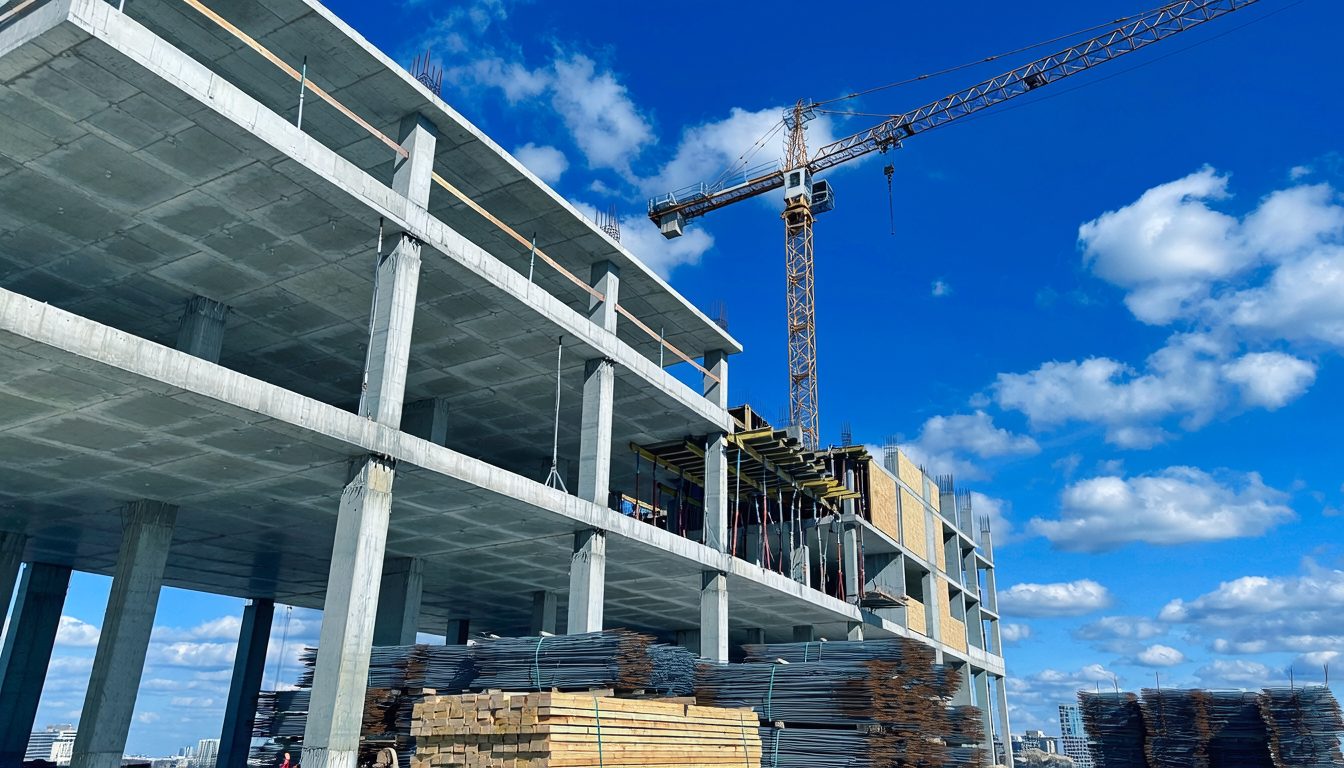
For years, the carbon footprint of a building meant one thing to most real estate investors: the energy it consumed once occupied. Tighter envelopes, efficient HVAC systems, and renewable power were the levers. A second category of emissions is now entering building codes, rating systems, and procurement rules in ways that make it harder for the investment side of the industry to leave it to architects. Embodied carbon – the emissions generated by manufacturing, transporting, and installing construction materials – is shifting from a design-phase consideration to a disclosure obligation, and in a growing number of jurisdictions, a regulatory one.
Alison Kinn Bennett, executive director of Building Transparency, a nonprofit that maintains a free, open-access database of construction material emissions data, describes the regulatory side of that shift as unfinished. “It is a patchwork, and we’re in the very, I think, early stages of regulatory movement in this space that has been a voluntary market for such a long time,” she says.
Voluntary to Required
Environmental product declarations, or EPDs, are standardized, independently verified reports on a material’s environmental impact, from extraction through manufacturing and transport. Think of them as nutrition labels for building products: because every product in a category is measured the same way, a designer can compare one supplier’s concrete with another’s. Long a voluntary tool, they are becoming a requirement.
California moved first. Its green building code, CALGreen, requires large non-residential projects, new or renovated, to address embodied carbon in one of three ways: reuse much of an existing building, whose emissions are already spent; show a reduction through a whole-building life cycle assessment; or specify materials whose EPDs fall below state limits.
Other states are following at different speeds. Massachusetts has a state plan that recommends phasing embodied carbon into its building code, starting with incentives rather than mandates. New York has pending legislation with options similar to California’s: reuse, lower-carbon materials, or a whole-building assessment.
Private standards are shifting too. LEED v5, the rating system many institutional owners use, now requires every project to measure the embodied carbon of its structure, walls, roof, windows, and paving, and rewards projects that reduce it. The European Union will soon require new buildings to report life-cycle carbon on their energy performance certificates, starting with larger buildings.
Bennett says regulators are still working out the next step. “We’re learning across the states,” she says. The open question, in her view, is how jurisdictions move from requiring transparency to setting actual carbon thresholds, and how they define industry average versus leadership.
A Federal Step Back
Not every signal points the same way. Last year, Congress clawed back most uncommitted federal funding for low-carbon construction materials, including EPA support for manufacturers producing EPDs and money the General Services Administration had reserved to buy lower-carbon materials for federal buildings. The cuts reduced both federal demand and support for the data that disclosure rules rely on.
Bennett, who previously worked on sustainable purchasing programs at the EPA, acknowledges the shift caused hesitation. “I think there was a bit of a pause in questioning and realignment,” she says. She argues that demand has since come from state governments, corporations, and international markets – a view she bases in part on continued growth in her own organization’s user base and in the number of EPDs being developed.
She also frames the issue as a supply chain question as much as a climate one. Embodied carbon, she says, is “a good proxy” for where leadership and risk sit in a supply chain.
What Lenders May Ask
As disclosure spreads, embodied carbon is becoming something lenders, limited partners, and tenants may raise with developers. Bennett expects those conversations to start at a coarse level – whether a building is steel, concrete, or timber – rather than material by material.
The industry still lacks a shared picture of what a typical building of a given size and use should look like, she says, and more published case studies are needed to establish those baselines. Readiness varies. “Some developers are at the ready to answer those questions,” Bennett says. “Others probably need some more education and data at their fingertips.”
The Cost Question
A persistent assumption in this space – that lower-carbon materials carry a price premium – is weakening for conventional product categories. According to Bennett, many lower-carbon materials are now available at the same or lower cost. Ultra-low-carbon materials still in testing and commercialization may carry a premium, she says, though institutional purchasing is expected to bring those costs down. Independent analysis points in a similar direction: findings cited by the American Institute of Architects New York chapter in support of New York’s pending legislation suggest a 15% reduction requirement is within current industry capabilities and would not impose significant cost burdens.
There is also a simpler lever. “A key part of building decarbonization is using less materials,” Bennett notes. “Let’s not forget that that’s going to save money too.”
The data to make these choices largely exists. Databases that aggregate and normalize EPDs – Building Transparency’s EC3 is one widely used example, alongside a range of commercial life cycle assessment tools – let design teams compare products within a category before specifying them. According to Bennett, choosing among available concrete products this way can cut embodied carbon by around 30%. That figure is the organization’s own, but it is consistent with NYSERDA research, cited in New York’s pending legislation, finding that specifying lower-carbon alternatives can reduce embodied carbon by up to 33%.
Large Owners Lead
The gap between large institutional owners and smaller regional developers is wide. Large owners work across more jurisdictions, face more policy regimes, and often track organization-wide climate commitments, which makes embodied carbon harder to avoid in their portfolios.
Bennett sees that activity lowering the barrier for everyone else. “They’re making it easier; they’re paving the way through lower carbon activities for the rest of the market,” she says.
Good Enough Data
One misconception Bennett encounters is that the data is not ready yet. “There’s always a risk that we are letting the perfect be the enemy of the good in data,” she says. “We have good data now to begin to take actions that can reduce emissions. So while we’re improving the data, don’t wait for the data to be perfect. Let’s get moving now.”
The trend she is watching most closely is interoperability: getting EPDs, product carbon footprints, and other reporting formats to work together rather than create friction. That pressure is coming from several directions at once, she says, including corporate scope 3 carbon accounting and carbon border adjustment reporting for construction materials traded internationally.
Where This Leaves Investors
For investors who have treated embodied carbon as an architect’s concern, the timeline is shortening unevenly. California’s requirements are already in force, LEED v5 has made measurement a baseline for certification, the EU’s disclosure rules begin in 2028, and other states are drafting their own. The federal pullback removed one source of pressure without removing the others. The practical question for owners and developers may no longer be whether embodied carbon comes up in a deal, but whether they have numbers ready when it does.
About the Expert: Alison Kinn Bennett is executive director of Building Transparency in Arlington, Virginia, focusing on construction material emissions data and environmental product declarations.
This article is based on information provided by the expert source cited above. It is intended for general informational purposes only and does not constitute legal, financial, or real estate advice. Readers should conduct their own research and consult qualified professionals before making any real estate or financial decisions.