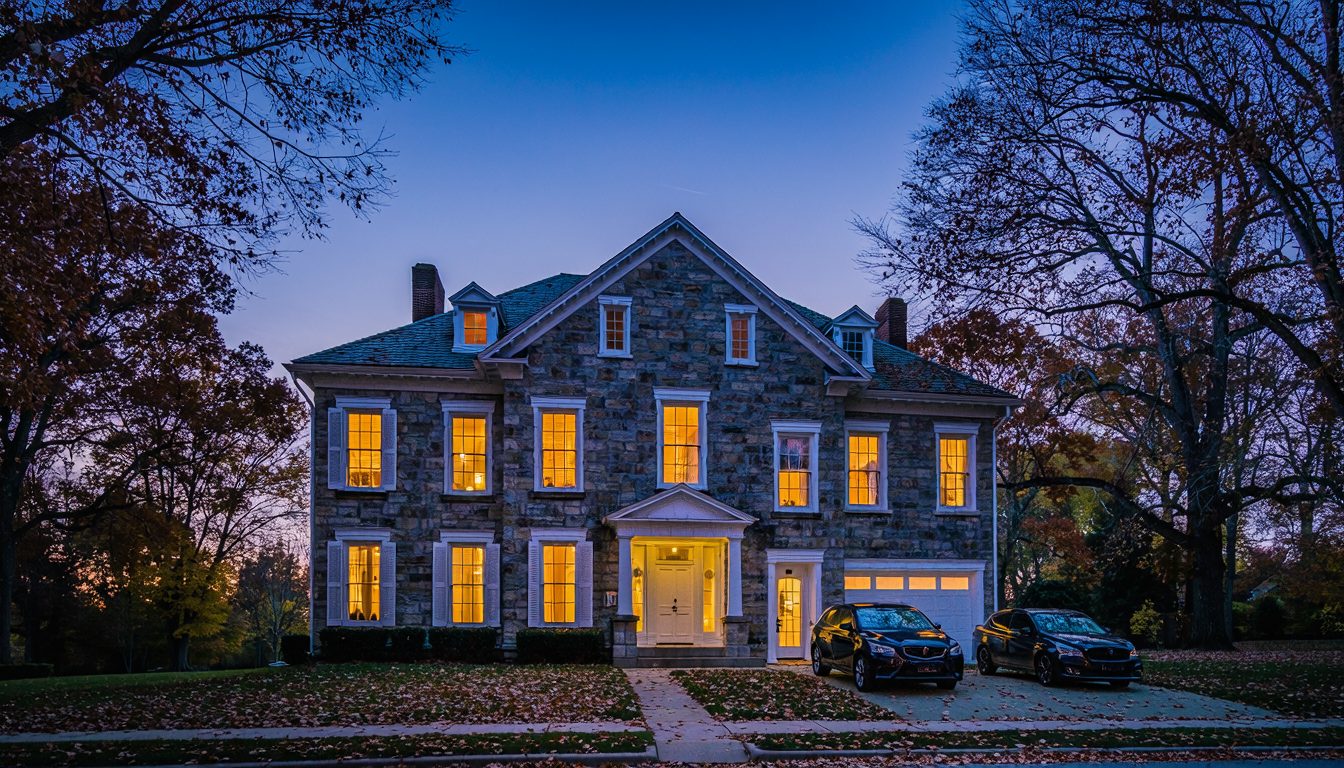
Across the Philadelphia suburbs, the decision to sell a home is increasingly shaped by who else lives in it. Philadelphia’s four Pennsylvania collar counties, Bucks, Montgomery, Delaware, and Chester, hold housing stock that ranges from historic homes to over-55 new construction, with pricing that swings sharply across school district lines. Alongside interest rates and inventory, one pressure gets less attention: households in which a single earner supports three generations under one roof, a situation that can keep homes off the market.
Craig Lerch, an associate broker who leads Craig Lerch & Team at eXp Realty in Jenkintown, Pennsylvania, sees the decision to sell becoming entangled with family obligations that have little to do with housing preferences. His team focuses on trade-up and trade-down transactions, in which sellers must coordinate the sale of one home with the purchase of another.
Three Generations, One Mortgage
Much of the region’s future supply sits with an aging generation of homeowners, a wave Lerch calls the “silver tsunami.” But many of those households are not simple to unwind. Adult children are staying home longer, aging parents are moving in, and in some cases a single working-age earner ends up carrying the costs of all of it.
“This one middle person is funding three generations of living, and that’s scary,” Lerch says.
Some of these families, he says, are holding onto their homes while they work through tax and estate planning with financial advisors rather than listing.
For those who do sell, downsizing does not always mean spending less. Many downsizers want a primary bedroom on the first floor, Lerch says, and because much of the existing stock lacks one, some move into over-55 new construction, where they can end up paying more for less space. “They’re like, hold on, I’m selling this animal over here, but I’m gonna have to go to a smaller place and pay more.”
A Broken Housing Ladder
The supply squeeze also runs from the bottom of the market. First-time buyers are older than ever, with a median age of 40, according to the National Association of Realtors. Lerch argues that many buyers who purchased during the low-rate years skipped the starter home entirely, so homes that once turned over every few years are now held much longer.
“We don’t have a home shortage problem. We have a home buyer problem,” Lerch says, a view many housing economists dispute.
He also believes agents could move more deals by looking past the 30-year fixed mortgage to the wider range of loan products available.
Pricing Discipline Still Matters
In Montgomery County, more than half of recent sales have closed above list price, according to Zillow data. Lerch says homes priced just below market value are drawing competitive bids, though the premiums are far smaller than in recent years: typically 3 to 5 percent over list, compared with the 10 to 20 percent overbids common a few years ago. Homes priced too high, meanwhile, tend to sit.
His advice is direct. If a home does not receive an offer within its first 14 to 21 days, a price reduction of at least 3 to 5 percent is necessary. He also recommends pre-listing home inspections so sellers can address condition issues before they become negotiating leverage for buyers.
“If homes are priced right, they’re going to sell. The condition is right, it’s going to sell. You can’t change the location,” Lerch says. His advice to sellers choosing representation is equally blunt: “Don’t hire the company, hire the agent.”
What Draws Buyers Here
Philadelphia’s location continues to attract relocating buyers, many of them from New York and drawn by lower costs, Lerch says. The city sits about an hour and 20 minutes from the shore and within roughly two hours of both New York and Washington by train.
Within the suburbs, school districts remain the main pricing lever. Lerch says a home in one district can cost a million dollars more than a comparable home in another. Buyers without school-age children, or those planning on private school, can buy more house for less money, and avoid higher school taxes, by looking outside the most sought-after districts.
Community amenities also shape demand. Lerch says his team’s content about dog parks, bike paths and walkable neighborhoods draws the strongest engagement. “Those are the communities that spike,” he says.
For buyers weighing the Philadelphia suburbs, Lerch’s observations suggest that local supply depends on more than rates. Some owners who might otherwise sell are tied to family obligations that a rate cut alone will not resolve.
About the Expert: Craig Lerch is an associate broker who leads Craig Lerch & Team at eXp Realty in Jenkintown, Pennsylvania. He has more than 38 years of experience and over 4,000 transactions in the Philadelphia metro area.
This article is based on information provided by the expert source cited above. It is intended for general informational purposes only and does not constitute legal, financial, or real estate advice. Readers should conduct their own research and consult qualified professionals before making any real estate or financial decisions.