Home prices across much of the Dallas-Fort Worth region have softened over the past year, but Ellis County, the fast-growing county just south of Dallas, has held roughly steady. That countywide stability hides a more cautious market at the level of individual deals. Mortgage rates have climbed this year, and everyday costs keep rising, so buyers are weighing each purchase far more carefully than they did a couple of years ago, when homes often sold quickly.
Ben Brown, designated broker of B-21 Realty Company, works with buyers, sellers, and investors across Red Oak and the rest of Ellis County, and he sees that caution in his own deals. Buyers, he says, now put affordability ahead of nearly everything else. “People are looking for affordability now,” he says. “I think people are beginning to get more conservative.” He ties that shift mainly to inflation, which has made everyday expenses, including something as simple as eating out, noticeably more costly.
In Brown’s experience, the change in pace has been sharp. A couple of years ago, he says, interested buyers would call about making an offer before a home was even entered into the MLS, the shared listing database agents use to market properties. Today, the homes he lists can sit for months before finding a buyer, and sellers have had to lower prices well below what similar homes commanded recently to attract offers. Countywide figures have held steadier than that, but his experience shows where buyers in his part of the market are drawing the line.
Two Cities Lead Growth
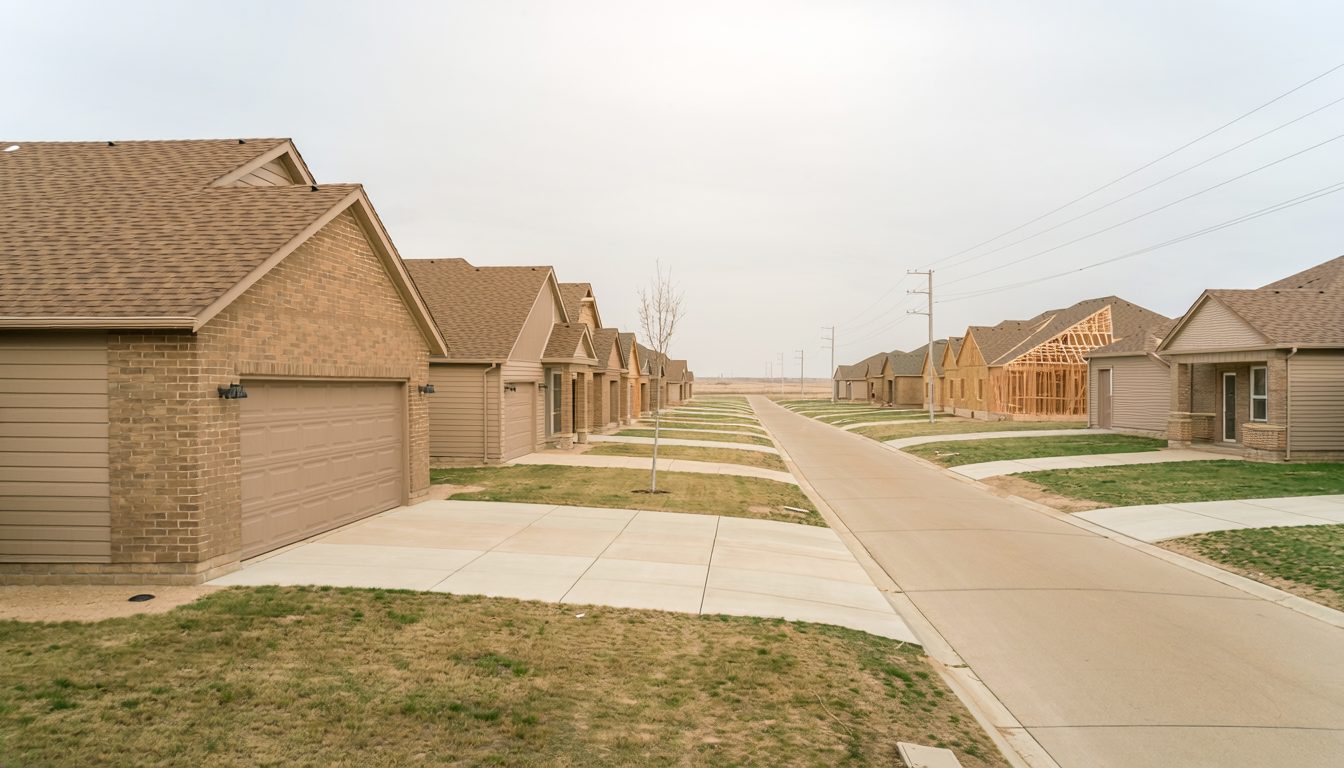
Ellis County is not moving as a single unit. Brown says new homes are selling best in Waxahachie and Midlothian, where most of the county’s new development is concentrated. Cities like Ennis, Palmer, and Ovilla are largely stable, and Red Oak is seeing little new residential growth.
Brown connects that activity to corporate investment. He points to Google’s data center campus in Midlothian, which the company has continued to expand since breaking ground in 2019, along with other data center construction in the area. Across the broader region, he names JPMorgan Chase among the major financial institutions building their presence in Dallas.
That migration feeds demand in surrounding counties. Brown says many of his clients are transplants from Florida, California, and New York relocating to the DFW area. Some who come for jobs in Dallas would rather not live in the city itself, he says, and look for homes within about 30 minutes of it.
Builders Hold the Leverage
The shift to a buyer’s market has handed builders a clear advantage. Brown says builders are offering closing cost assistance, throwing in appliances such as washers, dryers, and refrigerators, and cutting prices to move inventory.
New and resale homes are competing for the same buyers, Brown says, which puts existing homes up against packages their owners cannot easily match. For resale listings, that makes pricing to current conditions the deciding factor. “You have to price it accordingly,” he says.
Newer Homes, Aggressive Offers
For buyers, Brown sees opportunity across the market and recommends a bold approach to negotiating. With homes sitting longer before they sell, he encourages buyers to start making offers, including offers well below the asking price, rather than waiting for the perfect listing. “You never know who will accept what,” he says. His advice is simple: “I would tell buyers to be very aggressive.”
For investors, he recommends homes built in 2010 or later over older stock. Older homes are more likely to need repairs and updates, he says, while newer properties can often be bought at a good price with less money spent on fixing them up.
Brown is more cautious about fix-and-flip strategies. He sees a strong market for them in parts of Dallas and possibly in Waxahachie and Midlothian, but says he is unsure whether Red Oak, Ennis, and Palmer have enough activity to support them. “Some areas are just experiencing more growth than others,” he says. Those slower cities, in his view, are “not dying, but they’re just static right now.”
Data Centers, Uncertain Effects
Red Oak has become one of the busiest data center locations in North Texas, with seven campuses at various stages of development in a city of about 16 square miles. Residents have pushed back at city meetings, citing noise, water and power use, traffic, and property values.
Brown hears similar complaints, mainly about noise and fears that water and electric bills will rise. Whether the projects are affecting home values is less clear to him. “As far as the value of the properties, I don’t know if it’s affected those yet,” he says. Looking ahead, he adds, “It may in the future, but right now I don’t know if it has.”
So far, Brown says, data centers have not come up in his clients’ conversations about pricing or timing. Corporate relocations to the region, by contrast, have “done nothing but increase the values” over time, in his view.
Economy Drives the Hesitation
Brown traces the market’s slowdown to national forces rather than anything specific to Ellis County. He points to rising interest rates, inflation, and uncertainty over the U.S. war with Iran, which began in late February and has pushed mortgage rates higher. “I don’t think it’s anything to do with the data centers or anything like that,” he says. “I think it’s just the economy is affecting everything right now.”
The November elections added another layer of caution. “We just got through with the elections,” Brown says, and many buyers and sellers held back to see what would happen.
Looking Toward Next Year
Brown is not tracking any trend unique to Red Oak heading into 2027. In his view, the city is moving with the rest of the market, where affordability and condition decide which homes sell. “Whatever’s affordable and in pretty decent condition,” he says. “That’s what people are looking for.”
For now, that leaves the advantage with buyers willing to negotiate, investors who favor newer homes, and builders able to absorb costs to close deals. The longer-term effect of Red Oak’s data center buildout on home values remains an open question, one Brown says the market has not yet answered.
About the Expert: Ben Brown is the designated broker of B-21 Realty Company, a Dallas-based brokerage. He focuses on residential buying, selling, and leasing across Red Oak and Ellis County, Texas, handles some commercial work, and represents investors.
This article is based on information provided by the expert source cited above. It is intended for general informational purposes only and does not constitute legal, financial, or real estate advice. Readers should conduct their own research and consult qualified professionals before making any real estate or financial decisions.