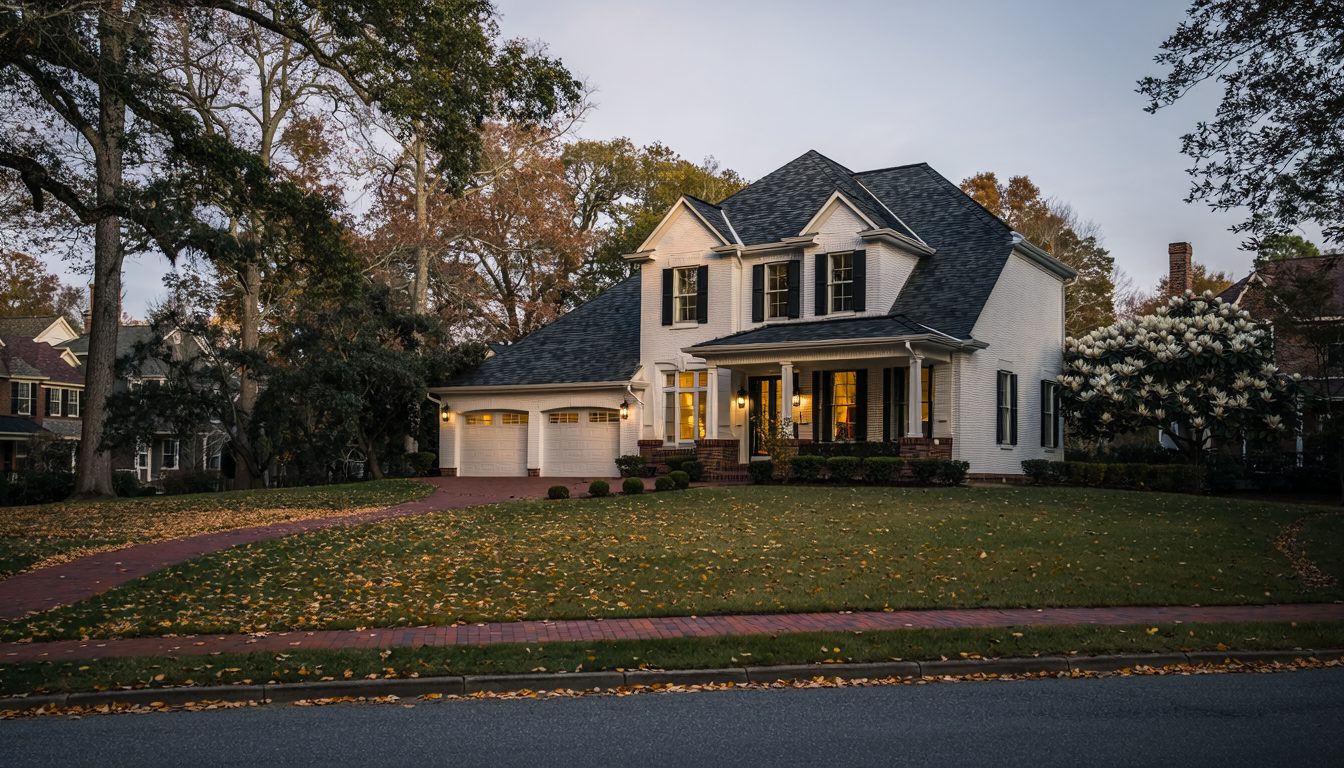
Across most of metro Atlanta, the real estate market has tilted toward buyers. Sellers are cutting prices more often, and fewer buyers are signing contracts, which means fewer sales are lined up to close in the coming months. The top of the market is moving the other way. High-end homes, especially those inside the Perimeter, the highway loop that encircles Atlanta’s core, are still seeing sales grow.
Madalyn Suits, a veteran Atlanta agent and luxury ambassador for Keller Williams in the southeastern region, says the luxury segment “is the one segment of the market that is trending upward versus every other price point is currently down.” She cautions that this strength varies by neighborhood. A high-end home she recently listed inside the Perimeter drew several competing offers within days, and the winning bid came in above the asking price. That kind of competition has become rare elsewhere. In Brookhaven, a sought-after area just north of the city, more than half of the homes listed in a popular mid-range bracket have already cut their prices, a sign that buyers there feel little pressure to act quickly.
What counts as luxury is itself up for debate. Keller Williams sets a higher luxury threshold for homes inside the Perimeter than for those in the outer suburbs, and Suits says many agents believe the bar should be raised further. Even within the luxury segment, conditions are not uniform. At the very top of the market, she says, buyers hold somewhat more negotiating power.
Where Pressure Is Concentrated
According to Suits, the strain is heaviest in the broad middle of the market, where many buyers have saved just enough for a down payment. These buyers still want to purchase, but mortgage rates, closing costs, and everyday expenses are stretching their budgets. Buyers now routinely ask sellers to help cover closing costs, the lender, attorney, and tax fees due when a sale is finalized, on top of negotiating the price itself.
Interest has not disappeared. Suits’s team tracks how often its listings are viewed on Zillow, Instagram, and the local listing service, and those views are climbing. In-person showings, however, are falling. “There’s buyers out there; they just have no sense of urgency,” Suits says, pointing in part to media coverage predicting the market will get worse.
That hesitation has raised the bar for getting noticed. Small price cuts that once revived a listing now barely register, Suits says, so sellers need meaningful reductions to bring buyers back.
Pricing Now Works Differently
The shift has changed how Suits approaches listing consultations. She has stopped focusing on which active listings a home is competing against. Instead, she looks at what buyers in a given bracket are actually spending. Her recommendation is to price at or below the low end of the expected range. The goal is to create activity rather than test the ceiling.
Her reasoning is simple: if no one makes an offer, there is nothing to negotiate. “You can never underprice a house,” she says. “The market will drive it up or down based upon what the demand is.” She used that approach on the high-end home she listed inside the Perimeter, setting the asking price below what she believed it was worth to draw several buyers at once. Her sellers also needed time to stay in the home while work on their next house wrapped up, and competing offers gave them room to negotiate that along with the price.
Even a well-priced listing can stall. One of her current listings has drawn strong online viewership week after week but has not had a showing since its first week on the market, now 16 days in. “People are viewing you, but they’re not seeing you as a value,” she says.
Suits estimates sellers have about nine to 13 days to see meaningful activity before a price adjustment becomes necessary. After that, buyers sense room to negotiate. At the upper end of the market, she says listings now average about 30 days on market. The fastest still go under contract in nine days or fewer.
Contracts Keep Falling Apart
Even after a contract is signed, keeping it together has become a large part of the work. Suits says she is seeing about 50 percent fallout. Buyers walk away after inspections, change their minds, or lose confidence. That makes preparation before listing more important: getting the home in the best possible condition, pricing it accurately from the start, and sometimes ordering a pre-inspection to avoid surprises.
Lenders are adjusting too. Suits describes one lender offering a rate buy-down, an upfront payment that lowers the buyer’s interest rate, with the lender and the seller splitting the cost. With mortgage rates still elevated, she says more buyers are also choosing adjustable-rate mortgages. These loans start with a lower fixed rate for the first few years, then reset based on market conditions, so the trade-off is that payments can rise later.
Buyers Hold More Leverage
The mood among agents is tough, according to Suits. In Georgia, home sales are closed by real estate attorneys rather than title companies, and she says that side of the business has seen some layoffs. Still, she sees an opening for buyers who are ready to act. Fewer contracts are being signed across metro Atlanta, which points to a slow stretch of closings through the end of the year. She also expects more homes to hit the market after the holidays, as sellers who waited list their properties. For buyers, that means more choice and more room to negotiate.
A recent deal shows how that leverage works in practice. A home that had already cut its asking price drew several offers, yet the winning buyer still secured it for less than the reduced price. Even competing offers no longer guarantee a seller gets what they ask.
Her advice to buyers is direct. “You can’t go back and renegotiate the price once you’re under contract,” she says, but buyers can refinance later if rates fall. Refinancing replaces the original loan with a new one at a lower rate, though it carries its own closing costs. For sellers, the takeaway is equally clear. Pricing aggressively from the start and preparing the home before listing now decide whether it sells in days or sits for weeks.
About the Expert: Madalyn Suits leads the Suits Team at Keller Williams Realty Peachtree Road in Brookhaven and serves as the Keller Williams luxury ambassador for the southeastern region.
This article is based on information provided by the expert source cited above. It is intended for general informational purposes only and does not constitute legal, financial, or real estate advice. Readers should conduct their own research and consult qualified professionals before making any real estate or financial decisions.