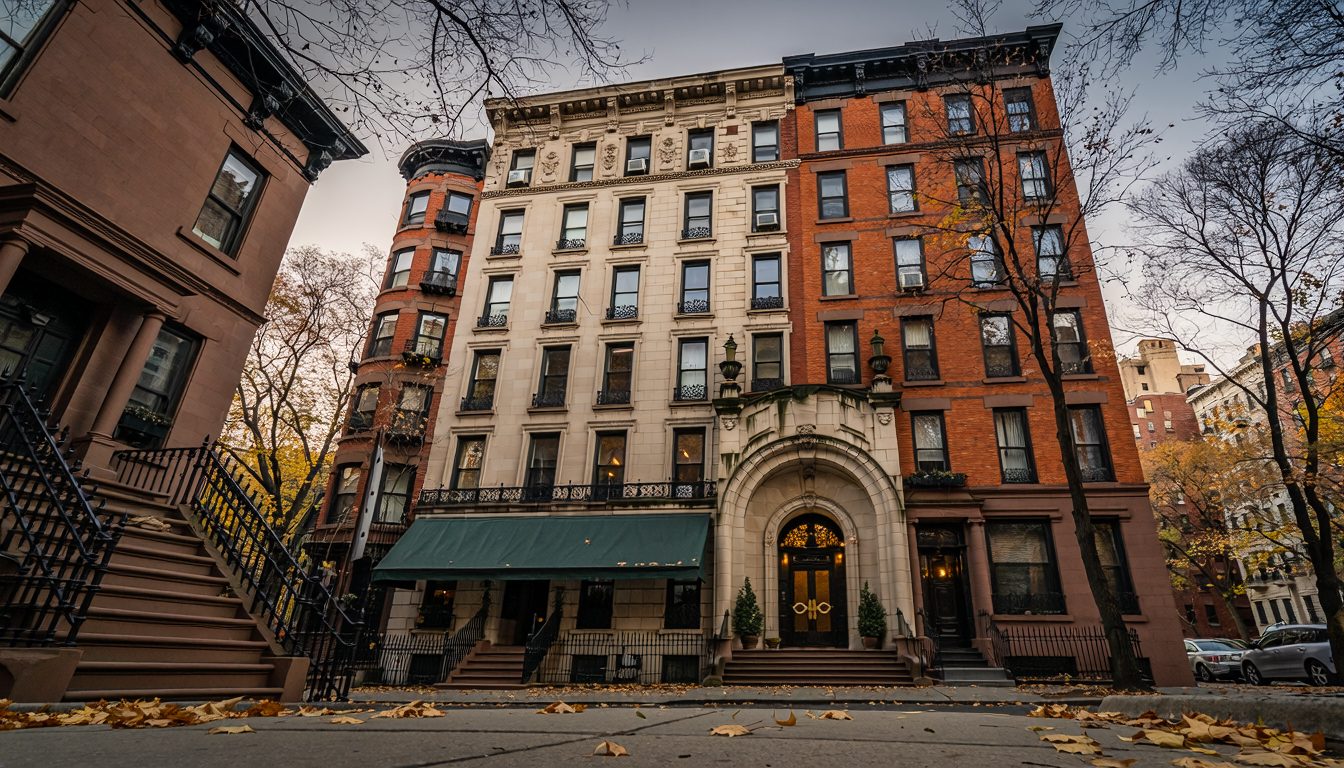
Getting approved for a mortgage is not the same as getting approved to buy. In Manhattan’s co-op market, the building’s board conducts its own financial review of every prospective buyer, and its standards are often stricter than a lender’s. That second layer of scrutiny is unfamiliar to buyers in most U.S. markets. It shapes how deals are structured, how offers are prepared, and how quickly transactions close.
Co-ops remain a defining feature of Manhattan real estate. A condominium buyer who secures financing can generally close. A co-op board, by contrast, has the authority to interview prospective buyers and reject them if it decides they are not financially qualified, or for other reasons. That is according to Richard Geiringer, founder of the RMJ Home Team at Compass and a broker in Manhattan for more than 29 years. “It’s not enough just to get a mortgage, because banks have, I would say, less stringent requirements than a co-op board,” Geiringer says.
That doesn’t make boards adversarial. Geiringer describes most as reasonable and fair in evaluating finances, and he says board turn-downs are uncommon when buyers are well prepared. The process does add a layer of complexity that most residential markets lack, and it rewards preparation that goes beyond a standard offer package.
What Boards Want
The financial review a co-op board conducts focuses on several areas buyers may not anticipate. Boards want to see consistent income, evidence of career growth, and enough liquid assets left after closing. Geiringer says boards typically want buyers to hold at least two to three years of mortgage and maintenance payments in liquid reserves once the transaction closes.
Geiringer says that post-closing reserves are the requirement buyers most often overlook. Many assume that having enough for the down payment is sufficient. When a buyer’s reserves look thin, Geiringer advises them to secure a financial gift from family before submitting the board package. That way, the application reflects a stronger asset position from the start.
Boards also have options for younger buyers on upward career paths who may not yet have deep reserves. Geiringer served as a co-op board president for more than a decade. He says a board can weigh a buyer’s full profile and approve the purchase on the condition that the buyer places one to two years of maintenance payments in escrow. Once the buyer shows a record of on-time payments, the escrow funds are returned. “To protect the co-op board, sometimes what you do is ask for money in escrow,” he says.
Some boards also reject sales when they believe the purchase price is too low. They worry that a below-market closing will pull down property values for other owners in the building. Geiringer says he has not experienced this personally, but other members of his team have. He considers it a poor reason to block a sale. “The market is the market, and if an apartment is selling for that price, there’s a reason,” he says.
Tight Supply, Hesitant Buyers
Manhattan’s current market sits in an unusual position. Inventory remains tight in both the rental and sales markets, yet buyer motivation is subdued. Geiringer describes the mood as “hesitant,” driven by elevated interest rates and broader economic uncertainty. “Uncertainty creates inertia,” he says. “People tend to put off making major financial decisions when there’s uncertainty.”
The rental market has followed a different path. Rents have risen roughly 9% a year over the past few years, according to Geiringer. He expects that could push more renters toward buying if rates and inflation ease. On the sales side, he says prices have been more stable than in many other U.S. markets. He also notes that the majority of Manhattan sales in recent years have been all-cash transactions, which he attributes to the city’s concentration of wealth in finance and technology.
On the Upper West Side, Geiringer says demand is segmented. Properties priced up to around $2 million that can work as three-bedrooms draw strong interest. Studios and one-bedrooms face softer demand. Luxury properties farther south on the Upper West Side perform well, while larger properties north of 96th Street are weaker.
Testing Prices Before Launch
Geiringer puts the average negotiated discount at roughly 4 to 5% off the asking price, though he says it varies with the property and the seller’s motivation. That makes the initial price important. The feedback comes quickly: within a couple of weeks or less, a seller can gauge how much demand exists at a given price.
To reduce the risk of overpricing in public, Compass offers private exclusives. These are listings circulated within the brokerage’s network but not posted on public websites. Geiringer says the network includes roughly 5,000 Compass brokers in the tri-state area, enough to generate meaningful feedback. If inquiries are weak, the price can be adjusted before the listing goes public. “This way it protects the seller because we don’t put an overpriced apartment publicly, because that’s only going to hurt the value in the long run,” Geiringer says.
The practice has drawn scrutiny in New York. The state attorney general’s office is reportedly examining Compass’s market position, and OneKey, the region’s largest listing service, has sued the brokerage over listing rules.
How the Surcharge Works
New York’s pied-à-terre tax took effect July 1, 2026. It is an annual surcharge on high-value New York City homes that are not the primary residence of the owner, an immediate family member, or a tenant. It is aimed at second homes worth roughly $5 million or more. During the first two years, however, co-ops and condos are measured against a lower city-assessed value.
The tax has generated significant media coverage, but Geiringer says its practical reach is limited. Investors who rent to primary-residence tenants are exempt, and primary homebuyers are unaffected. “You’re really talking about a very small segment of the market,” he says. “I think it’s been a little overblown.”
Watching Rates Into 2027
The sales market outlook for next year depends largely on borrowing costs. Mortgage rates climbed from their 2026 low as the conflict with Iran drove up oil prices and inflation, eased briefly this fall, then rose again in mid-November, according to Freddie Mac. Geiringer sees room for a stronger year if rates fall and the war ends. “If we see especially an end to the war and interest rates starting to go down, I think that there will be a stronger impact on the sales market,” he says.
Supply, meanwhile, remains scarce even as activity has cooled. Manhattan rental listings in October were down by more than a quarter from a year earlier, sales inventory has stayed lean, and contract signings have slowed. With the holidays, typically a quieter season, a clearer read on the market is likely to wait until the new year.
About the Expert: Richard Geiringer is the founder of the RMJ Home Team at Compass, an eight-broker team he formed about five years ago. He has been a broker in Manhattan for more than 29 years.
This article is based on information provided by the expert source cited above. It is intended for general informational purposes only and does not constitute legal, financial, or real estate advice. Readers should conduct their own research and consult qualified professionals before making any real estate or financial decisions.