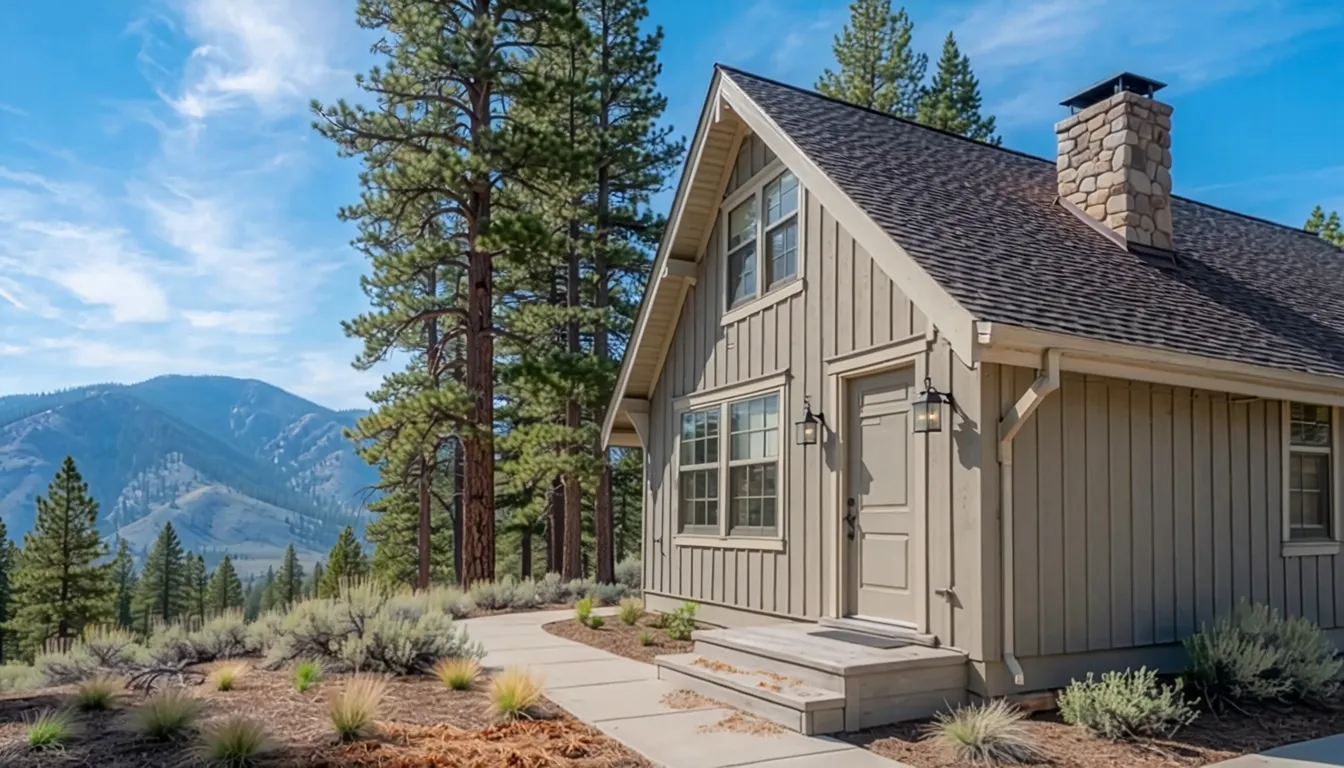
In the mountain towns around Lake Tahoe, older cabins carry a particular kind of charm – knotty pine walls, stone fireplaces, the look and feel of something that belongs in the Sierra Nevada landscape. They also carry a financial risk that many buyers wildly underestimate, according to Dave Gove, an agent with Real Broker in Truckee, California, who spent years as a licensed general contractor before moving into real estate sales and development. The assumption that renovating an existing structure is the thriftier path often collapses once walls come open and code requirements kick in, leaving buyers committed to projects that rival or exceed the cost of new construction.
The Truckee-Tahoe area has housing stock stretching back to the 1950s, much of it originally designed as summer-only cabins with minimal insulation, outdated wiring, and framing that predates modern seismic and snow-load codes. Gove described many of these structures as severely underbuilt by current standards. Some are so deteriorated that demolition makes more practical sense than renovation – except that land values are high enough to make even teardowns hard to justify financially.
When Old Walls Come Open
The core problem with remodeling in mountain communities, Gove said, is that a budget is essentially a guess. New construction allows builders to calculate costs with precision because every material and system is specified in advance. A remodel has no such certainty. Opening a wall in a home that has endured decades of heavy snowfall, freeze-thaw cycles, and moisture infiltration can reveal rot, failed structural members, or outdated plumbing that nobody knew existed.
Gove has walked buyers away from purchases for exactly this reason. He described the process of dismantling an older structure as self-perpetuating – “you start taking it apart and you’re never going to stop and it’s just a black hole of cash.” One hidden problem leads to another, and the scope of work expands far beyond what any inspection could have predicted.
For buyers who have never managed a major renovation, the sheer volume of decisions compounds the financial unpredictability. Gove noted that remodels and new builds alike involve a seemingly endless list of choices – from floor plans to finishes – and that the resulting fatigue can lead to costly mistakes or project delays.
Code Triggers That Blow Up Budgets
Beyond the unknowns hiding inside walls, Truckee’s building codes create specific financial tripwires. Gove pointed to fire sprinkler requirements as one example: if a renovation crosses a certain threshold of the home’s total volume, the entire structure must be fitted with a modern fire sprinkler system. That requirement alone can force a project down to the studs throughout the entire house, turning a cosmetic refresh into a gut renovation.
Truckee sits in a Wildland Urban Interface zone, and California’s Title 24 green energy code applies to all projects. Combined with seismic requirements and heavy snow-load engineering, these overlapping mandates mean that any substantial remodel must meet standards that did not exist when most older homes were built. The gap between what is there and what code now demands is often enormous – and enormously expensive.
When Renovation Still Makes Sense
Not every remodel is a trap. Gove acknowledged that certain properties justify the effort – particularly homes with views of Lake Tahoe that cannot be replicated on any available building lot. A location advantage that rare can make the financial pain of a full renovation worthwhile, because no new construction project can manufacture the same setting.
Even in those cases, Gove cautioned buyers to enter with clear expectations. “If you have the intestinal fortitude to take something like that on, it can be very rewarding,” he said, but only for buyers who understand the financial exposure before committing.
The Mid-Build Alternative
Several builders in the Truckee area, including projects Gove is involved with, have started marketing new construction homes at roughly the halfway point – when framing and sheetrock are complete but interior finishes have not been selected. Buyers skip the heaviest lifting of a ground-up build while still choosing countertops, flooring, stain colors, and other design elements.
Gove framed this as a middle path. Buyers avoid the stress of permitting and early-stage construction – finding the lot, finding the architect, going through multiple floor plan revisions – while still putting personal touches on the finished product. The approach sidesteps the open-ended risk that makes older-cabin remodels so unpredictable.
For anyone considering a mountain property in the Truckee-Tahoe area, Gove added one more variable: design work should be locked in by November and permits submitted by February at the latest, because the building season ends when snow arrives – and in the Sierra Nevada, that window is short.
About the Expert: Dave Gove is a broker with Real Broker in Truckee, California, covering Truckee and North Lake Tahoe. He is a former licensed general contractor involved in development projects in the area.
This article is intended for informational purposes only and does not constitute legal, financial, or investment advice. The views and opinions expressed herein reflect those of the individuals quoted and do not represent an endorsement of any company, product, or service mentioned. Readers should conduct their own due diligence and consult qualified professionals before making any investment decisions.