Most people shopping for a home start with a mortgage calculator. They plug in a price, a down payment, and an interest rate, and out comes a monthly payment. In Texas, that number is often wrong, sometimes by hundreds of dollars a month, and buyers don’t find out until they’re already deep into a transaction.
Texas does not have a state income tax. Instead, the state funds a significant portion of local services through property taxes, which run well above national averages. That trade-off is baked into the cost of homeownership in a way that buyers moving from other states, and even some first-time buyers born in Texas, don’t fully anticipate. Generic mortgage calculators use national average tax rates, producing estimates that can fall far short of reality.
John Cartee, a real estate advisor with Blair Realty Group working in The Woodlands and surrounding Houston suburbs, says the gap between what online calculators show and what Texas buyers actually owe is one of the most consistent sources of sticker shock he encounters. The difference is large enough to push buyers out of homes they thought they could afford.
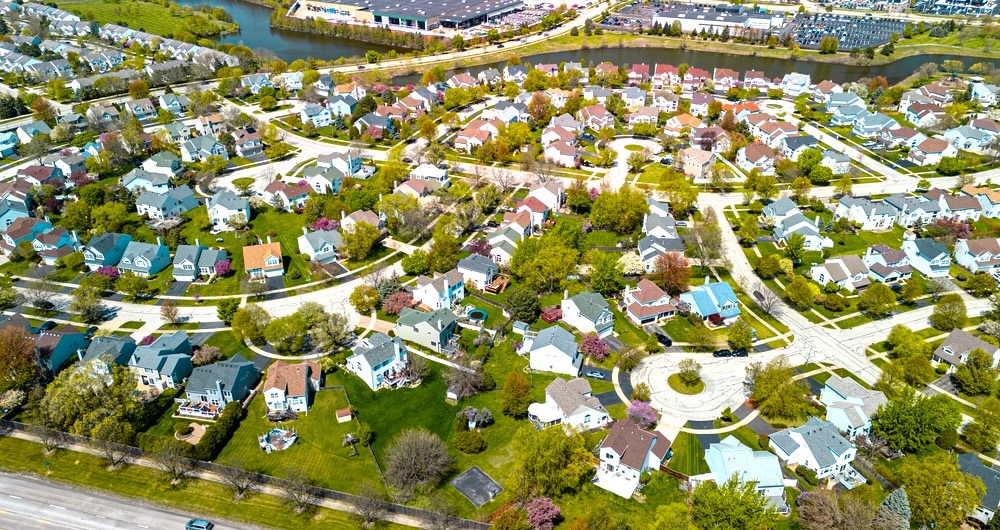
The problem compounds when buyers are shopping across different zip codes and communities. Property tax rates vary meaningfully by municipality and school district, so two homes at the same price in communities 20 minutes apart can have noticeably different monthly costs. A buyer whose lender has approved them for a certain payment can find themselves priced out of a specific neighborhood even when the home’s purchase price is within range.
Cartee describes working with lenders who explicitly flag this. Some will clear a buyer for a price point and note that their monthly payment works across most of the search area. Others will come back with a tighter constraint: the buyer’s budget is so sensitive that taxes must stay below a specific threshold, and flood zone status must be confirmed before the numbers work. That kind of granular guidance, Cartee argues, is what separates a lender who knows the Texas market from one who doesn’t.
Insurance adds a second layer to the same problem. Texas homeowners’ insurance is expensive relative to most states, driven by hurricane exposure, flood risk, and hail damage. Roof age is a particularly sharp variable: a roof more than ten years old can push insurance quotes sharply higher, sometimes enough to change whether a home is financially viable for a buyer on a tight monthly budget. Cartee notes that this regularly catches buyers off guard, because a home can look well-maintained and still carry an insurance penalty tied entirely to when the roof was last replaced.
Together, taxes and insurance can create a monthly payment that runs significantly higher than what a buyer calculated before starting their search. The practical implication isn’t that Texas is unaffordable, it’s that the affordability calculation requires local inputs that generic tools don’t provide.
For buyers relocating from other states, the exposure is highest. Someone moving from Arizona or New York, where property tax structures differ, may have a strong sense of what a given purchase price “should” cost per month. That intuition is built on a different tax environment and will produce the wrong answer in Texas.
Cartee’s recommendation, consistent across both the entry-level and luxury segments he works in, is to use a local lender rather than a national platform for pre-approval. A lender who regularly works on Texas transactions will build the correct tax rate into the payment estimate and flag flood zone status as a variable rather than an afterthought. That doesn’t guarantee there won’t be surprises, but it eliminates the most predictable one.
One specific threshold worth keeping in mind: in Texas, a roof older than ten years is a meaningful underwriting trigger for insurers. Buyers evaluating a home whose roof is approaching or past that age should get an insurance quote early in the process, before committing emotionally to a monthly payment amount that may not hold. That quote may look very different from what a national estimate suggested.
As mortgage rates remain elevated and monthly budgets tighten, these hidden cost variables carry more weight than they did during the low-rate era. A few hundred dollars a month in unexpected taxes or insurance can be the difference between qualifying for a home and falling short. For Houston-area buyers in 2025, understanding the full cost picture before making an offer isn’t optional, it’s the only way to avoid a painful surprise at closing.
About the Expert: John Cartee is a real estate advisor with Blair Realty Group working in The Woodlands and surrounding Houston suburbs, where property tax variation and insurance costs routinely reshape what buyers can actually afford.
This article is intended for informational purposes only and does not constitute legal, financial, or investment advice. The views and opinions expressed herein reflect those of the individuals quoted and do not represent an endorsement of any company, product, or service mentioned. Readers should conduct their own due diligence and consult qualified professionals before making any investment decisions.