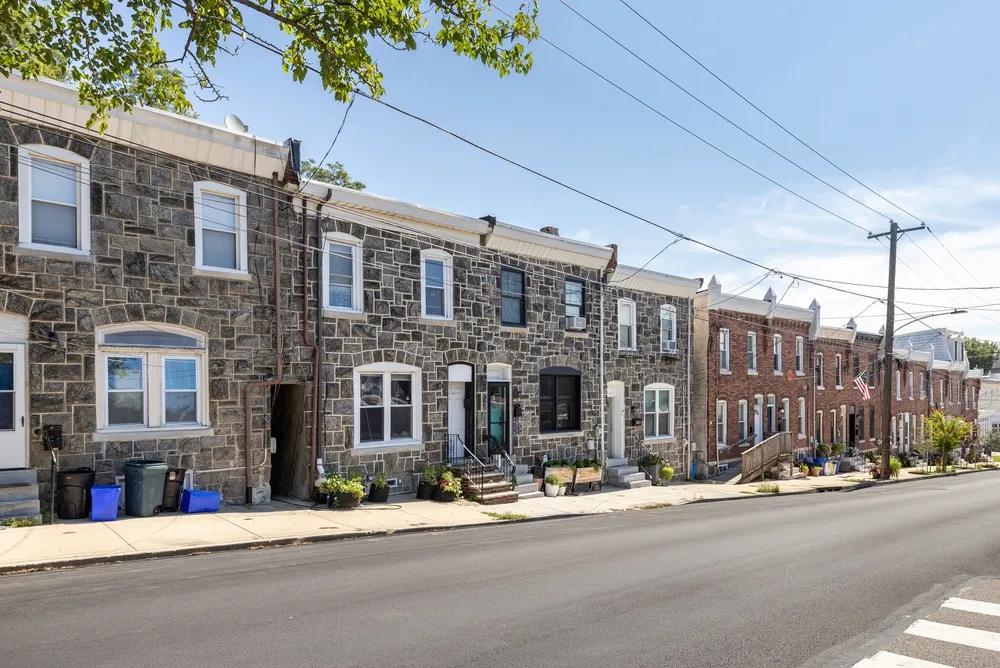
Homes in Philadelphia are taking longer to sell even though housing supply remains limited. The problem isn’t a supply glut. It’s a deepening mismatch between what buyers can afford and what sellers are asking. According to Alona Richardson, a Realtor at OCF Realty LLC, the disconnect is sharpest in the middle of the market, where demand exists but struggles to convert into closed transactions.
“Everything is sitting on the market longer than it should,” Richardson says. Properties priced between roughly $700,000 and above $1 million, however, are moving quickly. Many buyers relocating from New York carry higher salaries and stronger purchasing power. Below that threshold, economic uncertainty and affordability constraints are slowing activity.
The result is a two-speed market: luxury and upper-tier homes sell fast, while mid-range and entry-level listings stall despite limited supply.
Rate Lock Effect
One reason inventory looks tight is that many existing homeowners locked in low mortgage rates during the pandemic era and now have little financial incentive to sell. Richardson says these owners are choosing to stay in their homes, or rent them out, rather than re-enter the market at higher rates.
“A lot of those people that have those lower interest rates, as opposed to selling their home, they’re choosing to rent because the prices have stopped slightly, but they have such a low interest rate that they might as well just stay in it,” Richardson says.
The market appears undersupplied, but the shortage is partly artificial. It’s held in place by owners who are financially locked into their current properties. The homes that do come to market are increasingly subject to price reductions and seller concessions, a sign that demand at current asking prices is weaker than raw inventory numbers suggest.
Richardson says she has seen more price reductions recently than in prior years, along with an uptick in seller assists. “The market’s changing so quickly,” she notes. “You might price something two months ago, but it’s a little different now.”
For sellers, this means pricing based on comparable sales from a few months ago may overshoot what today’s buyers will pay.
Down Payment Gap
For buyers at the lower end of the market, the primary barrier isn’t the mortgage rate or the purchase price. It’s the upfront capital required to enter a transaction. Richardson identifies the down payment as the single biggest obstacle facing first-time buyers in Philadelphia.
“We’ve been seeing lots of buyers receiving, especially first timers, their inheritance from their parents upfront so they can purchase and use that as a down payment, because they’re making a great salary, but they just haven’t had the time in their career to save the amount of money that it takes to put down on a house,” Richardson says.
Entry-level homeownership in Philadelphia is increasingly dependent on intergenerational wealth transfer rather than individual savings, according to Richardson. For buyers without access to family capital, ownership is becoming structurally harder regardless of income level.
Richardson places the competitive core of the Philadelphia market at roughly $350,000 to $500,000. “You wouldn’t think that price point would have such competition, but it does,” she says. That competition, combined with longer days on market and rising seller concessions, describes a market where demand is present but fragile. It can be easily disrupted by economic uncertainty or buyer hesitation.
Cold Feet Risk
Beyond financing and inventory, Richardson has observed an uptick in buyers walking away from transactions mid-contract. She notes this is not the majority of deals but says the frequency has increased noticeably.
Philadelphia’s extended contract timelines, often 30 to 45 days, give buyers enough time to second-guess their decisions as economic and political uncertainty weighs on sentiment. Some buyers, Richardson suggests, are calculating that losing a deposit is preferable to committing in an environment that feels unstable.
“It’s a little bit tougher of a decision,” Richardson says, “especially when you have such a long contract period where someone has time to think, or the market has time to shift.”
For sellers, mid-contract fallout resets the listing’s market clock and often forces a deeper concession the second time around.
New York Buyers
Richardson says a significant share of current buyers are relocating from higher-cost cities, particularly New York. Direct access via I-95 and the Acela Express train makes commuting viable for hybrid workers who only need to be in the office a few days a week. The Acela trip from Philadelphia’s 30th Street Station to New York’s Penn Station takes roughly an hour and a half. These buyers benefit from lower property values and lower taxes while retaining New York-level salaries.
That purchasing power is one reason the upper tier of the market continues to move. Richardson notes that million-dollar properties are increasingly common in Philadelphia, drawing buyers who might be downsizing from suburban homes or simply seeking more for their money than New York offers.
For the mid-market segment, however, this influx offers limited relief. New York transplants with strong incomes tend to buy at higher price points, leaving the $350,000-to-$500,000 range to compete for a smaller pool of local buyers who face tighter financing constraints.
Richardson’s overall read on the market is that Philadelphia’s fundamentals remain sound. The city’s steadiness, she says, means it avoids the sharp dips and spikes that hit other major metro areas. But below the luxury threshold, the path to closing has grown more complicated at every step: tighter down payment requirements, longer marketing times, more concessions, and buyers who are increasingly willing to walk away before settlement day.
About the Expert: Alona Richardson is a Realtor with OCF Realty, an independent brokerage based in Philadelphia.
This article is intended for informational purposes only and does not constitute legal, financial, or investment advice. The views and opinions expressed herein reflect those of the individuals quoted and do not represent an endorsement of any company, product, or service mentioned. Readers should conduct their own due diligence and consult qualified professionals before making any investment decisions.