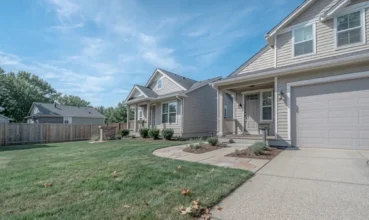
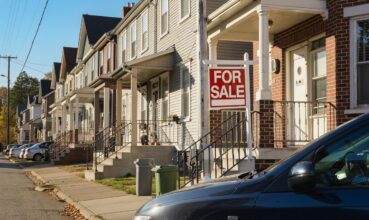
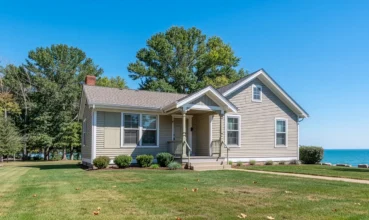
South Florida’s real estate market has changed sharply since the pandemic-driven price surge, presenting new challenges for buyers and sellers alike. Désirée Ávila, a board-certified realtor with NextHome Realty Professionals in Fort Lauderdale, has seen these shifts firsthand in her work across Oakland Park and greater Broward County.
South Florida’s housing market has become so complex that navigating it now requires more than a license. Agents working in the region today need to stay current on insurance regulations, aging infrastructure, flood zone reclassifications, and shifting buyer demographics — a continuing education in itself. Ávila came to real estate after doctoral studies in educational technology, and that instinct toward structured learning — she holds 9 certifications and designations, including the ABR, GRI, and SRS certifications and is one of only 32 Board Certified REALTORS® in Florida — reflects what the market increasingly requires of its practitioners.
The Seller’s Dilemma
A major challenge in today’s South Florida market is the gap between what sellers expect and what buyers are willing to pay. Many homeowners still anchor their expectations to the record-high prices of 2020 and 2021. Ávila says her job often involves resetting those expectations: “The most important thing right now is talking them off what I call the COVID ledge. Some people are so into the peak real estate prices, the tough conversation I have with them is your house is not worth what it was worth during COVID.”
This resistance to current market realities has become a defining feature of the region. Sellers who refuse to accept that the boom was an exception, not a new normal, are struggling to attract buyers. Ávila’s approach is direct — she declines to list homes she considers overpriced. “I do not take overpriced listings because that’s just a lot of work with no results and no sales,” she says.
Her refusal to chase unrealistic prices is rooted in a practical market assessment. Well-priced homes are still selling, while those clinging to last year’s numbers sit unsold. “If houses are priced correctly, they’re selling. If they’re not priced correctly, they’re not selling,” Ávila says. This pattern has persisted as rising interest rates and broader economic uncertainty have forced a market correction.
Educating First-Time Buyers
While sellers adjust to lower valuations, first-time buyers face their own learning curve — especially when it comes to the realities of Florida homeownership. The state’s environment and older housing stock present challenges unfamiliar to many newcomers.
Ávila is candid with buyers about what to expect. “Every house has termites or has had termites,” she explains. “You have to explain to them that this is something that we have here. The houses have either had it, or they’re going to have it. You just have to situate them in the reality of buying a home. There’s no perfect home, not even a new home.”
Beyond pest issues, buyers must confront potential infrastructure problems. Many older Florida homes have cast iron or polybutylene pipes, which can complicate insurance and financing. “If it’s polybutylene, those have to go. We have to work past that because you can’t get insurance with polybutylene pipes,” she says.
Ávila guides buyers to focus on four key home systems: roof, air conditioning, electrical, and plumbing. If a major issue arises with any of these, she helps clients weigh their options—negotiating repairs or deciding whether to move forward. This practical, systems-based approach helps buyers make informed decisions in a market where perfect homes are rare.
Insurance and Flood Risk
Insurance has become a growing concern in Florida real estate. Although Ávila has not yet had a deal collapse due to unobtainable insurance, she acknowledges that the risk is rising. “So far, knock on wood, I have not had any deal fall through because insurance was unobtainable, but it can happen. They can get it, but it’s so expensive that it makes the deal unviable,” she explains.
Flood zones now cover much of South Florida, a development that has added further complications for both buyers and sellers. “Almost all of South Florida is in a flood zone now,” Ávila says. “My neighborhood, for example, was not in a flood zone. Now, almost all of it is. What’s not a flood zone today, tomorrow it’s a flood zone.”
These changes have forced buyers to factor higher insurance premiums and flood risks into their financial calculations. Some deals fall apart when projected insurance costs push buyers over acceptable debt-to-income ratios. However, most buyers now recognize that flood insurance is a standard part of owning property in this region.
Oakland Park’s Changing Demographics
Oakland Park is experiencing notable demographic shifts. Ávila sees a rise in Hispanic households buying or looking to buy homes, reflecting broader trends in the area. “According to the 2020 census there’s a high Hispanic population in Oakland Park, and we’re starting to see these families that have come here looking for opportunity and to make a good life for themselves working hard and making enough money to buy their own homes,” she observes.
This movement from renting to homeownership among established immigrant families is reshaping the local market. In response, Ávila has tailored her marketing, including targeted outreach in Spanish, to serve this growing segment better. Her efforts reflect an understanding that effective service means meeting buyers where they are—linguistically and culturally.
Buyer Behavior and Market Power Shifts
Elevated inventory and slower sales have shifted negotiating power toward buyers. Ávila notes that buyers are now more demanding, seeking seller concessions and credits that were rare during the recent boom. “Buyers are definitely getting more and more demanding because it’s a buyer’s market. They’re asking for more credits, more contributions from the seller. Some of them are trying to take the seller for the jugular and ask for everything under the sun,” she says.
This increase in buyer leverage is a direct result of the post-pandemic market correction. With more homes available, buyers can afford to be selective and negotiate harder. Sellers who are unwilling to meet the market by adjusting prices or offering concessions often see their listings linger.
Market Outlook
Looking to the next year, Ávila expects a continued correction. She predicts that prices will decline further as the market works through the overpricing left from the pandemic surge. “I think housing prices will still come down a little bit to correct for overpricing,” she forecasts.
Interest rates remain a key variable. Recent rate hikes have reduced the number of active buyers, while brief declines temporarily boost activity. Ávila expects inventory to outpace sales for at least another year. “Right now, I think in the next year we will still have more homes for sale than we will have sales. I don’t foresee it changing so quickly. I think it will be at least another year, and then maybe after that, we’ll start to see an upswing,” she says.
What Success Looks Like Now
South Florida’s real estate market is no longer defined by rapid appreciation or bidding wars. Instead, it is a market where realistic pricing, clear-eyed education, and professional guidance determine who succeeds. Sellers who accept the new price reality and buyers who understand the region’s risks and requirements are the ones closing deals.
As the region continues to adjust, those who approach the process with patience, adaptability, and the right expertise will be best positioned to navigate South Florida’s new housing landscape. The days of easy sales and unchecked appreciation are gone. What remains is a market that rewards preparation, knowledge, and a willingness to meet reality head-on.
About the Expert: Désirée Ávila is a board-certified Realtor with NextHome Realty Professionals in Fort Lauderdale, where she works across Oakland Park and greater Broward County, helping buyers and sellers navigate South Florida’s evolving housing market. She holds 9 different real estate designations and certifications, is one of only 32 Board Certified REALTORS® in Florida and focuses on guiding clients through shifting pricing conditions, insurance complexities, and the region’s increasingly nuanced real estate landscape.
This article is based on information provided by the expert source cited above. It is intended for general informational purposes only and does not constitute legal, financial, or real estate advice. Readers should conduct their own research and consult qualified professionals before making any real estate or financial decisions.