The gap between perception and data in Tampa Bay’s housing market is wider than usual. With 3.8 months of inventory in Tampa and 4.1 in Orlando – figures that technically describe a seller’s market – the mood on the ground tells a different story, according to Tony Baroni, Founder & Team Leader of The Tony Baroni Team at Keller Williams Realty. Days on market have stretched from two weeks to 75 or 80 days, and that shift in pace has changed how both buyers and sellers behave, even if the underlying supply-demand balance hasn’t flipped.
Baroni tracks these numbers closely across central Florida. His team is on pace for roughly 400 transactions this year, with a client base split between relocation buyers and listing-side work. “The market has changed, so it feels like more of a buyer’s market to a lot of people,” he says. “People are still selling. It just takes longer.”
What’s Actually Selling
The properties moving in this market share a common trait: they arrive ready. Baroni identifies five factors that determine whether a listing sells – location, condition, marketing, pricing, and staging – and says sellers who cut corners on any of them are the ones watching their homes sit.
Pricing is where the most friction lives. Baroni says his team is selling homes that failed to sell on their second or third listing with a previous agent. “They contact us and we tell them the whole truth and nothing but the truth,” he says. Many of those sellers were receptive to honest advice – they simply hadn’t received it from prior agents.
The demand for move-in-ready homes connects directly to affordability pressure. With rates having roughly doubled from 3% to the 6–7% range, buyers carrying higher monthly costs are unwilling to layer renovation projects on top. “When you’re paying a lot more than what you normally would have, you really don’t want to have to take on a lot of projects,” Baroni says.
Sellers competing against nearby new construction face additional pressure. Baroni says buyers in those areas may request closing cost credits – concessions that sellers would not have considered two or three years ago. He coaches his sellers to focus on their net number rather than fixating on whether money comes off the price or goes toward buyer incentives.
Relocation Buyers
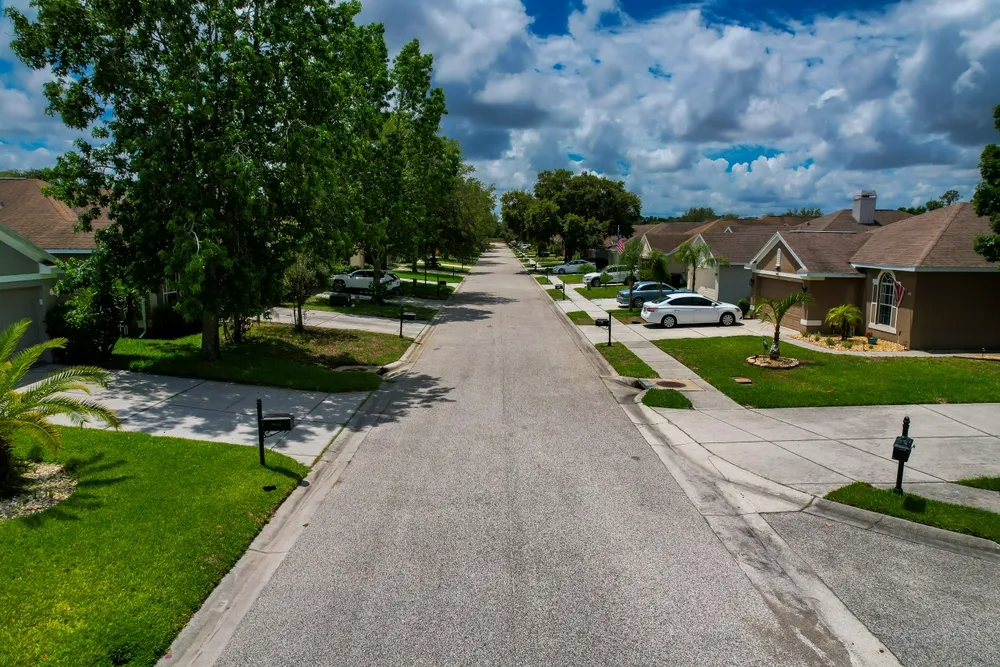
Tampa Bay covers an area roughly the size of Rhode Island, and the diversity across its communities creates a specific challenge for out-of-state buyers. Each beach town, suburb, and urban pocket has a distinct character, and Baroni says the most common mistake relocating buyers make is choosing a house before choosing a neighborhood.
“You may have the perfect house, but it’s in the wrong neighborhood and you’ll never be happy,” he says. His advice to relocation clients is to drive through areas, visit local restaurants, and spend time in the community before narrowing their search. Most of his team relocated to Florida from out of state themselves, which Baroni says helps them guide clients through the disorientation of choosing among unfamiliar communities.
About 90% of buyers in the Tampa and Orlando markets are financing their purchase, and interest rate sensitivity is acute. “If interest rates come down, our contracts will spike that week,” Baroni says. “If interest rates go up, contracts will go down.” That responsiveness applies equally to local buyers and relocation clients – anyone financing a purchase feels the same monthly cost pressure.
Hurricane Aftermath
Pinellas County, on Tampa Bay’s western shore, is seeing elevated inventory due to damage from the 2024 hurricanes. Homes that were never rebuilt and waterfront lots now available for new construction are creating opportunities – particularly for buyers seeking Gulf or Intracoastal properties.
“There’s a pretty good window of time right now where you can still get pretty amazing deals if you’re looking for a waterfront home,” Baroni says. He also sees opportunity in higher-end fix-and-flip projects, noting that many investors are being conservative and avoiding properties in the $700,000 range that need substantial work. “If you know what you’re doing and you know your numbers, there’s a lot of opportunity in the higher-priced homes because there’s so many that need work, but people just aren’t going to touch it.”
For buyers willing to take on that complexity – whether building on a vacant lot in Pinellas or renovating a neglected higher-end property – reduced competition from more cautious buyers is the advantage.
A Ballot Measure
Looking ahead, Baroni is watching a proposed homestead exemption increase that would raise the exemption from $50,000 to $250,000 for primary residents. The measure is expected to appear on the ballot later this year.
“I think that’s going to really help growth within Florida,” he says. Combined with no state income tax, the expanded exemption could strengthen Florida’s tax advantage for homeowners relocating from higher-cost states. “More and more people are going to figure out that’s a pretty good deal,” Baroni says.
Baroni already considers Tampa Bay undervalued relative to comparable markets. He points to a recent trip to the Midwest where prices in a college town in Indiana were similar to Tampa Bay – an area with beaches, no state income tax, and year-round outdoor living. If the homestead exemption increase passes, that gap between perceived value and actual cost of ownership narrows further, which Baroni expects will draw additional relocation demand.
About the Expert: Tony Baroni is Founder and Team Leader of The Tony Baroni Team at Keller Williams Realty, serving the Tampa Bay and central Florida markets with a focus on relocation buyers and residential listings across the region.
This article is based on information provided by the expert source cited above. It is intended for general informational purposes only and does not constitute legal, financial, or real estate advice. Readers should conduct their own research and consult qualified professionals before making any real estate or financial decisions.