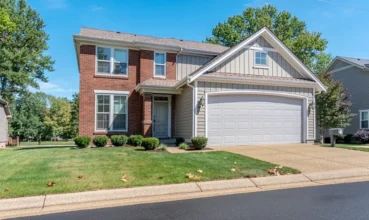
The conventional assumption is that downsizing seniors and young families shop in different price tiers. In Doylestown, Pennsylvania – the commercial center of Bucks County – those two groups are increasingly circling the same listings, according to Deana Corrigan of The Deana Corrigan Team at Compass. The competition is reshaping how homes get priced, how long they sit, and who ultimately wins.
Bucks County sits between Philadelphia and New York City, with commuter rail access to both. Average sale prices in the Doylestown area run between $650,000 and $700,000, with a significant share of transactions above the million-dollar mark. The area’s school districts draw steady inbound demand, particularly from buyers relocating from New York, New Jersey, California, and Florida. Corrigan says she receives regular referrals from agents in those states for clients moving into the area.
What makes the current market unusual is who’s showing up for the same properties.
Two Buyer Pools, One Price Band
Baby boomers in homes they’ve owned for decades are beginning to sell, often to downsize into townhomes or buy second homes in Florida or the Carolinas. Many have paid off their mortgages entirely, giving them flexibility younger buyers lack. At the same time, first-time buyers – often with parental help on down payments – are trying to enter the market at precisely the price points these older homes occupy.
“Baby boomers are competing with first-time home buyers,” Corrigan says. “It’s a little harder for the young people unless they have parent support.”
The competition is especially acute below the $650,000 line, where inventory is thin and multiple-offer situations persist. Corrigan describes significant buyer fatigue among younger purchasers who have lost out on several homes. Some stepped back from searching entirely during the late-summer months – a decision that may have cost them. Corrigan notes that late July and August offered a brief window when competition dropped as families settled into homes before the school year, and buyers who stayed active during that stretch found opportunities.
She points to one transaction as an example: a home listed at $625,000 that drew five offers. Her seller chose a young family with three children who had already lost five previous bids, even though a builder had also submitted an offer. The family’s buying power was tight – parents were helping with the down payment – but the seller decided to give them the opportunity.
The Million-Dollar Segment Has a New Demographic
Above the million-dollar threshold, the buyer profile has shifted. Corrigan sees dual-income couples in their 30s and 40s driving activity in the $1 million to $1.5 million range – many upgrading from condos or townhomes as they start families. Meanwhile, sellers in that bracket tend to be homeowners in their mid-50s to mid-70s looking to downsize.
The older sellers, Corrigan says, are often moving toward lower-maintenance living. “The 55- to 65-year-olds, they’re saying, we want a second home. We’ll downsize into something easy, maybe a townhome, shut the door, walk away.”
The result is a generational handoff concentrated in a specific price band, with equity-rich boomers exiting and leveraged younger families entering – a dynamic that keeps prices firm even as higher rates limit purchasing power elsewhere in the market.
Condition Is Doing More Work Than Location
Homeowners who refinanced at 2.5% to 3% have been reluctant to sell, but Corrigan says that reluctance is loosening. Life changes – a third child, a return to full-time office work – are overriding the math for some. The constraint now is less about whether sellers will list and more about the condition of what they list.
Homes in move-in-ready shape still sell quickly and at strong prices. Homes requiring substantial work sit longer. Corrigan attributes this to rising contractor costs and the limited financial capacity of younger buyers. “Not a lot of people are wanting to do the work,” she says. “They’re basically just saying, I’d rather pay more for something that’s move-in ready than do the work myself.”
She points to a recent listing – a home owned for 50 years by a 97-year-old seller – as representative. The property needed cosmetic updates, not a full renovation: paint, carpet removal to expose hardwood floors. Priced at $625,000, it sold. Had the seller asked $800,000, Corrigan says, it would not have. “Just because your neighbor got 800 doesn’t mean you’re going to, because your condition is much different.”
Sellers who still expect the 10% to 20% annual appreciation that characterized recent years are running into resistance, Corrigan says. Buyers, meanwhile, feel they have been on the losing end for too long. “A lot of them are just saying, I’m just going to wait a little bit,” she says. The risk of waiting, she adds, is that rising rates continue to erode purchasing power – buyers who could afford a $600,000 home a few years ago may now be limited to $450,000.
Where Investors Fit
For investors considering the central Bucks County market, Corrigan sees the clearest opportunity in the aging housing stock held by residents in their mid-80s to mid-90s – properties with deferred maintenance that need significant rehabilitation before they can attract financed buyers.
“So many of the younger folks who would love to have this home can’t afford what’s needed to get the house back up to snuff,” she says. Young buyers who need financing often cannot qualify for rehab or construction loans on top of a tight purchase budget. Investors with reliable contracting relationships can acquire these properties, renovate them, and either rent or resell to buyers who can now finance a move-in-ready home.
Corrigan says approximately 20% of her team’s transactions close without ever reaching the open market – sellers who prefer a private sale in exchange for strong terms. “If you want it before we go on the open market, you’ve got to give us an offer we cannot refuse,” she says.
For buyers and sellers navigating Doylestown’s current market, the deciding factors are specific and local: the condition of the home, the realistic price relative to comparable sales, and the willingness to act during windows when competition temporarily eases. The generational overlap in buyer pools means pricing discipline matters more than it did when each age group occupied a distinct tier.
About the Expert: Deana Corrigan leads The Deana Corrigan Team at Compass RE, covering Doylestown and the surrounding Bucks County, Pennsylvania, area.
This article is based on information provided by the expert source cited above. It is intended for general informational purposes only and does not constitute legal, financial, or real estate advice. Readers should conduct their own research and consult qualified professionals before making any real estate or financial decisions.