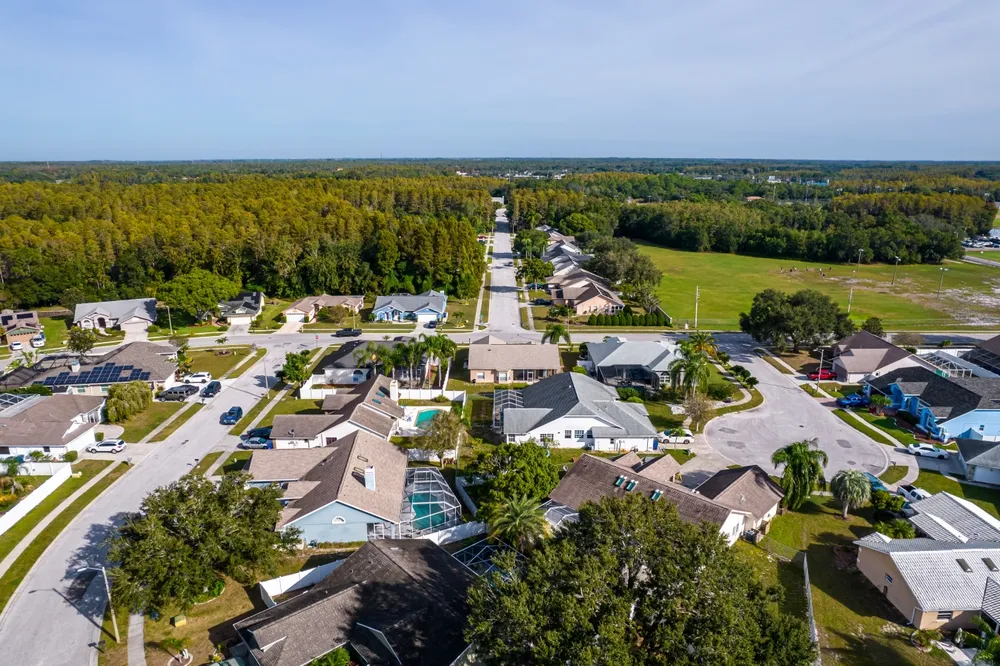
People still move to Florida expecting a bargain. No state income tax, warm weather, reasonable home prices – that was the pitch for decades. But buyers relocating to Tampa Bay in 2026 are discovering a cost structure that the listing price doesn’t reveal: insurance premiums driven up by hurricane risk, property taxes that run higher than expected, and elevation requirements that can add six figures to the cost of making a storm-damaged home livable again. According to Faith Walston, an agent and investor with TMWRK Brokerage LLC in Tampa Bay, the true cost of ownership has moved well past what most incoming buyers budget for.
Walston has spent two and a half years buying, renovating, and selling properties across the area. She has flipped eight houses in that period and watched the cost equation shift, particularly after the last major hurricane to hit the region.
Insurance and Elevation Requirements
Tampa Bay is surrounded by water, and recent storm activity has sent insurance premiums sharply higher. For buyers coming from inland markets, the insurance line item can add thousands per year that weren’t part of their original affordability calculation.
The less-discussed cost is elevation. Homes damaged in the last hurricane are now required to be raised 14 feet off the ground, according to Walston. “Not everybody can afford to do that,” she says. The result is a visible inventory of damaged homes sitting untouched – owners who can’t afford to comply and can’t sell in their current state. Walston confirms that many of those houses remain unrehabilitated years after the storm.
For a relocating buyer, this creates a deceptive landscape. An attractively priced property in a waterfront area may carry elevation requirements or insurance costs that effectively double the true cost of ownership beyond the purchase price.
The Affordability Shift
“Florida is not the cheap place to live anymore like it used to be,” Walston says. The no-income-tax advantage still exists, but property taxes, insurance, and home prices have risen sharply since the post-crash recovery. She notes that homes in the city now routinely list in the $300,000 to $500,000 range – numbers that don’t align with many buyers’ incomes, particularly once carrying costs unique to this market are layered on.
This affects anyone calculating whether they can afford a Tampa Bay home based solely on the mortgage payment. The true monthly cost includes insurance that may be multiples of what a buyer paid in their previous state, property taxes that surprise those accustomed to lower-tax jurisdictions, and potential maintenance costs tied to storm preparedness.
Walston also points to a broader slowdown in appreciation. Buyers who purchase now should expect to stay for several years before building meaningful equity. “It’s not like a year from now the house is gonna jump as far as profit,” she says. That reality changes the math for anyone treating a Tampa Bay purchase as a short-term hold.
What Relocating Buyers Should Watch For
The risk for someone moving to Tampa Bay from out of state is making a purchase decision based on incomplete information. The listing price tells one story. The insurance quote – which a buyer may not see until deep in the process – tells another. And older homes near the coast may carry elevation requirements or deferred storm damage representing costs far beyond any renovation budget.
Walston notes that Tampa Bay hadn’t experienced a major hurricane in many years before the recent one, and even that wasn’t a direct hit. “If we get a direct hit – if you’re moving to Florida, you best be ready to understand that’s just what it is,” she says.
The full affordability calculation in Tampa Bay now includes insurance, taxes, potential elevation costs, and a market that may not appreciate fast enough to build short-term equity. Buyers who account for all four before making an offer are the ones positioned to avoid the gap between what they expected to pay and what ownership actually costs.
About the Expert: Faith Walston is an agent and investor affiliated with TMWRK Brokerage in Tampa Bay, Florida, and a private money broker with Castle Rock Lending.
This article is intended for informational purposes only and does not constitute legal, financial, or investment advice. The views and opinions expressed herein reflect those of the individuals quoted and do not represent an endorsement of any company, product, or service mentioned. Readers should conduct their own due diligence and consult qualified professionals before making any investment decisions.