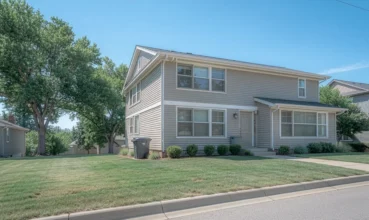
For much of the past several years, sellers in St. Paul, Minnesota, had the upper hand. Low inventory, intense buyer competition, and rapid price appreciation made it easy to list a home and attract multiple offers. That dynamic is changing. Listings in St. Paul are up roughly 12 percent over last year, according to Shawn Hartmann, who leads the Hartmann Team at RE/MAX Results in St. Paul. The Twin Cities absorption rate sits at three and a half months of inventory, and both figures, from both locations, are trending upward. The result is a market where preparation and pricing accuracy have become the dividing line between homes that sell in a week and homes that linger.
Hartmann, who has spent more than 20 years focused on residential resale in the city’s older, neighborhood-driven housing stock, says the shift is registering with sellers. “Properties are moving a little slower on the market compared to the last few years,” he says.
The Preparation Gap
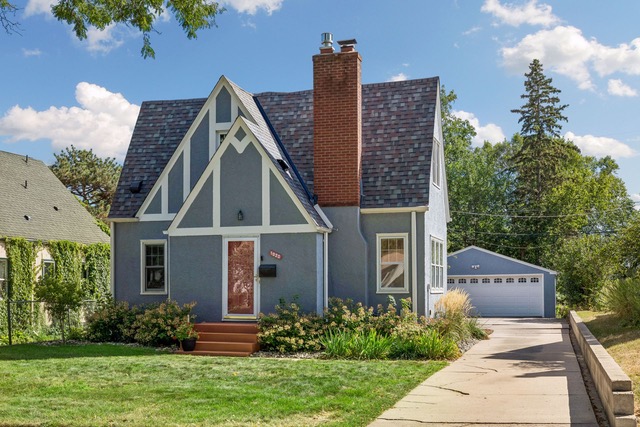
The clearest pattern in St. Paul’s current market is the widening gap between homes that are ready for buyers and homes that aren’t. Sellers who invest in preparation – deep cleaning, paint, flooring, and professional marketing – and price within the range supported by comparable sales are generating strong showing activity and offers within the first week. Those who price based on yesterday’s market or skip the preparation steps are sitting longer.
That split matters more now than it did a few years ago. With inventory climbing and buyers facing higher mortgage rates, insurance costs, and property taxes, the margin for error on a listing has narrowed. Hartmann frames the advice in terms of empathy: “To be a good seller, you kind of got to put your feet in the shoes of the buyer and understand what the buyers have.” Buyers today have more choices, higher carrying costs, and more information available through sites like Zillow and Realtor.com – a combination that constrains how aggressively a seller can price.
At higher price points, the preparation investment tends to be larger because buyer expectations scale with price. At lower price points, Hartmann recommends a lighter touch. “The expectations of the buyers in that category, relative to their selection, don’t require as much of an investment for fix-up,” he says.
Where Demand Is Concentrated
Within St. Paul proper, the strongest buyer demand remains in walkable urban neighborhoods: Mac-Groveland, Highland Park, Crocus Hill, and Como Park. These areas have historically performed well, and that pattern is holding. The draw is proximity to local restaurants, coffee shops, and amenities that suburban locations typically lack. In the spring market especially, when inventory is seasonally low relative to buyer activity, these neighborhoods still generate multiple offers and strong pricing.
The condo market, by contrast, has been underperforming. Hartmann describes it as creating good opportunities for buyers – a segment where selection is strong and competition is lighter. Downtown St. Paul in particular has well-priced condo inventory right now.
The suburban pull is driven primarily by school districts. Mounds View to the north, Roseville, and Mahtomedi to the east are drawing families out of smaller urban homes in premium St. Paul locations. District 196 on the south side is another destination buyers are considering. Families with children or plans to start a family are choosing newer, larger homes in districts with strong reputations, even when it means leaving a more walkable neighborhood. “We have a good number of customers that are selling smaller urban homes in really premium locations to go into some districts, mostly for the schools,” Hartmann says.
The Cost Stack Is Real
Property taxes in St. Paul are a recurring theme. Hartmann notes that tax rates have risen, potentially more so than in surrounding suburban areas or different counties. Combined with elevated mortgage rates and insurance costs, the total carrying cost of homeownership has increased. None of this is stopping the market, “it’s all baked into the price of the house,” Hartmann says, but it is tightening the range of what sellers can realistically ask.
Buyers, for their part, are more informed and more deliberate than they have been in years. The era of waiving inspections and bidding well over asking price is fading. “Those days are coming more and more to an end for most properties,” Hartmann says. Multiple-offer situations are becoming less common, particularly heading into the fall market, and buyers describe feeling relief at being able to search at a more relaxed pace.
Estate Sales and Senior Transitions
One segment where preparation matters differently is estate sales and senior transitions. Hartmann, who holds a Senior Real Estate Specialist designation, notes that the most common mistake families make is overestimating their readiness. Title issues, probate complications, and unclear property-holding structures can delay a sale if they aren’t resolved before listing.
For out-of-state heirs, the entire process can be handled remotely, from market preparation through closing. Hartmann recently completed a transaction with a seller who managed the full sale without traveling to the Twin Cities. For estate properties in high-demand locations, a quick refresh – cleaning, paint, flooring – can increase the final sale price, and the work can be completed quickly on an empty property.
Senior transitions require more patience. Families working with elderly sellers to move them into a new living situation operate on a different timeline than a standard listing, and Hartmann says experience with these transactions is important to keeping all the pieces on track.
A Market Finding Its New Tempo
Hartmann describes both buyers and sellers as “acting more in accordance with what a balanced market would look like.” Sellers are more patient and more willing to follow preparation and pricing recommendations. Buyers are more confident and less pressured. “We’re definitely trending towards a balanced market,” he says. “Buyers have more confidence to get out there and get a fair shake out of a good property right now.”
For sellers, the practical implication is straightforward: the homes that sell quickly and at strong prices are the ones where preparation and pricing were treated as non-negotiable from day one. The market still rewards well-positioned listings – it just no longer compensates for the ones that aren’t.
About the Expert: Shawn Hartmann leads the Hartmann Team at RE/MAX Results in St. Paul, Minnesota, focusing on residential resale in the city’s neighborhoods. He holds a Senior Real Estate Specialist designation.
This article is based on information provided by the expert source cited above. It is intended for general informational purposes only and does not constitute legal, financial, or real estate advice. Readers should conduct their own research and consult qualified professionals before making any real estate or financial decisions.