Silicon Valley’s real estate market is holding strong even as headlines report widespread slowdowns elsewhere. Linda Baker, founder of Milestone Realty and a 23-year veteran of the industry, offers a clear view of the current landscape in one of America’s most expensive and closely watched housing markets.
Tech Wealth Powers Home Buying
Silicon Valley’s housing market operates under conditions that few other regions experience. Baker says about 75% of her buyers use restricted stock units (RSUs), IPO proceeds, or company equity events to fund home purchases. “I see first-time buyers looking at $3 million homes,” Baker says. The comment underscores how tech compensation shapes purchasing power in the region.
The area’s economic foundation remains solid. Large employers like Apple, Google, and Microsoft continue to expand their presence, providing job security and career advancement opportunities that keep demand for housing high. Baker notes that this stability, combined with high incomes, sets Silicon Valley apart from most of the country.
Desirable Homes Draw Multiple Offers
While many U.S. housing markets have slowed, Silicon Valley still sees strong competition for desirable properties. “We are still seeing multiple offers on desirable properties,” Baker says. Homes that are well-marketed and well-presented typically sell for 5% to 10% above asking price. The median home price is near $2 million.
However, a pricing strategy can create confusion for first-time buyers unfamiliar with the market. Baker points to homes listed well below their true market value. For instance, a property priced at $1.9 million may sell for $2.5-$2.6 million based on comparable sales. This practice generates heavy interest but can frustrate first-time buyers unfamiliar with the market. “When a house is priced grossly under its value, that generates an excessive amount of activity, which is disingenuous,” Baker explains. Buyers may find themselves priced out before they can compete.
Condos Struggle to Compete
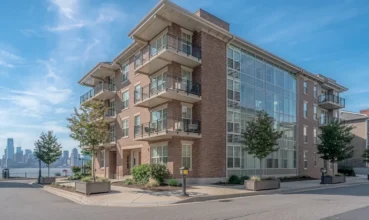
While demand for single-family homes remains strong, condominiums face longer days on market and price declines compared to the prior year. “Condo prices have come down a little, and even though it’s a more affordable entry point, it’s still struggling with longer days on market,” Baker says.
This underperformance mirrors a national trend in which condos lag behind single-family homes. Concerns about homeowners association (HOA) fees and building management often deter buyers, especially in a region where detached homes are the norm for wealthier households.
Rising Insurance Costs Disrupt Deals
A growing challenge for Silicon Valley buyers is the rising cost and limited availability of home insurance. Baker notes that lenders require insurance for financed purchases, and premiums can reach $6,000 or more per year. These costs can disrupt transactions, particularly for condos and townhouses, where HOA-related insurance requirements add complexity.
Foreclosures Remain Rare
Unlike markets that saw rapid appreciation followed by a correction, Silicon Valley has little distressed inventory. Homeowners facing financial strain can typically sell for a profit due to accumulated equity. “If you can no longer afford your mortgage payment, chances are high that you would still be able to sell your house and walk away with money in your pocket,” Baker says. Foreclosures and short sales remain rare as a result.
AI Supplements Agent Expertise
Artificial intelligence is entering real estate, but Baker sees it as a supplement rather than a replacement for professional judgment. She uses AI tools to scan HOA documents for basic information such as pet policies, but relies on her experience for more complex analysis. “I think of it as AI squared. I use artificial intelligence and actual intelligence together,” she says. For example, only a seasoned agent can recognize that two phases of a development differ in construction quality, a distinction AI alone cannot make.
Tax Policy Freezes Housing Supply
One of the most significant constraints on Silicon Valley’s housing supply is federal capital gains tax policy. The current exclusion, $250,000 for individuals and $500,000 for married couples, has not been updated in 23 years despite substantial home price appreciation. Baker notes that many longtime owners, particularly seniors, are effectively locked into homes that no longer suit their needs because selling would trigger large tax bills. “They’re waiting until someone dies before they sell the property. It’s freezing up the market,” she says. This policy reduces turnover and limits available inventory in an already tight market.
Relationships Drive Real Estate
Despite technological advances and the market’s sophistication, Baker stresses that real estate remains a relationship business. In Silicon Valley’s high-stakes market, agents who build long-term client relationships tend to serve buyers and sellers through multiple transactions over time.
In a high-stakes market, guiding clients through complex decisions requires deep local knowledge and experience, regardless of agency size. Baker describes the mindset she brings to each transaction: “We are not just selling a house, we’re selling your home. We’re selling the lifestyle and the livability of this home.” Most Silicon Valley buyers are owner-occupants focused on long-term living rather than speculation.
Reflecting on the broader importance of buyer representation in a competitive market, Baker says, “You need a good agent to help you buy well. If you buy well, you will sell well. If you buy poorly and it’s a down market, you will face obstacles you would not have had otherwise.”
What Silicon Valley Signals Nationally
Silicon Valley’s housing market shows how local dynamics can diverge from national headlines. While rising interest rates, economic uncertainty, and policy constraints affect markets across the country, tech-driven wealth, limited inventory, and strong employment continue to push demand and prices higher in Silicon Valley.
As the influence of technology companies spreads beyond traditional hubs, other high-income, employment-driven markets may begin to mirror some of Silicon Valley’s patterns, including affordability challenges, supply constraints, and the outsized role of tax policy. For now, Silicon Valley stands as both an outlier and a potential preview of what lies ahead in the most competitive U.S. real estate markets.
About the Expert: Linda Baker is the founder of Milestone Realty and a REALTOR® with more than 23 years of experience in the Silicon Valley market. Her practice focuses on residential transactions across one of the country’s most competitive and closely watched housing markets.
This article is based on information provided by the expert source cited above. It is intended for general informational purposes only and does not constitute legal, financial, or real estate advice. Readers should conduct their own research and consult qualified professionals before making any real estate or financial decisions.