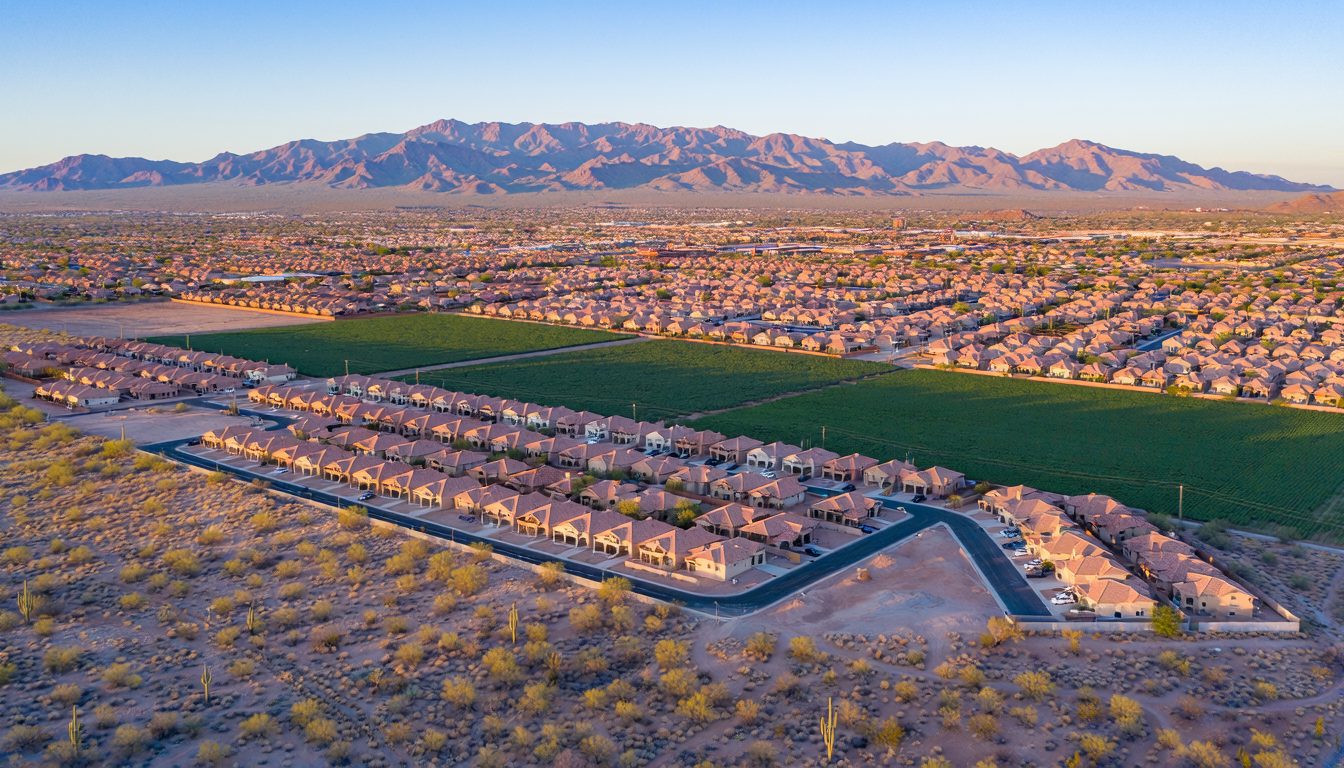
For years, Queen Creek was a small agricultural town at the far edge of Arizona’s East Valley – one road in, one road out, cotton fields stretching in every direction. Today its home values lead the Southeast Valley, ahead of Gilbert and Chandler, and new construction keeps pushing further east into San Tan Valley. What makes the market unusual right now is not just the growth. It is the gap between what 2021 buyers owe on their mortgages and what those homes are worth today – a gap that has put assumable loans on the radar of buyers looking for a way around current rates.
Kris Durbin, a real estate agent with Real Broker and co-founder of The Apex Initiative, has spent nearly 24 years in the business and has worked the East Valley since 2018. He has watched Queen Creek change from the inside: his parents lived there from the late 1990s on, once keeping horses on a five-acre lot.
Why Values Climbed, Then Stalled
According to Zillow, Queen Creek’s typical home value sits at roughly $635,000, compared with the mid-to-high $500,000s in Gilbert and the low $500,000s in Chandler. Much of that premium comes from large homes on large lots – acreage, horse properties, even private airplane hangars. In Pegasus Airpark, a gated community built around a private airstrip, an acre of land runs about $800,000, Durbin says, in line with recent lot listings there.
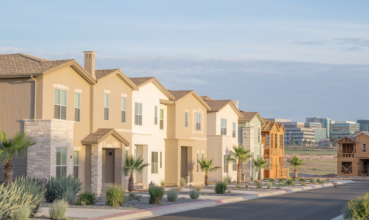
The typical tract home is still cheaper in Queen Creek than in most of the East Valley, Durbin says, and builder incentives are aggressive. Resale is another story. Many 2021 buyers overpaid, and mid-tier values – roughly $400,000 to $700,000 – have barely moved, leaving first-time buyers from that era outgrowing starter homes with little equity to trade up. “The inflation has not kept up with their growth,” he says.
That stagnation has a flip side. Many 2021 loans carry rates well below today’s, and government-backed FHA and VA mortgages can generally be assumed by a qualified buyer. With values flat, the gap between loan balance and sale price is often modest; Durbin’s team looks for assumable loans under 4% with an equity gap below $50,000 on homes priced under $600,000. Assumptions still require lender approval, and the buyer must cover the gap in cash or with secondary financing.
A Steady Eastward Migration
The dynamic driving Queen Creek’s growth is geographic. Gilbert and Chandler, the two large suburbs to its west, are largely built out, and most homes there are 20 to 25 years old. Durbin describes them as destination communities – places people stay once they are in. “More often than not, people aren’t selling those off unless they have to,” he says. With little room to build and limited resale turnover, demand has pushed steadily east.
Queen Creek is only 15 to 20 minutes from those established suburbs, close enough to feel connected but still offering a smaller-community atmosphere. That combination has drawn families looking for suburban life as Gilbert increasingly feels urban.
Development has followed at speed. Durbin recalls returning to one part of town after just two months away and finding a new neighborhood with homes framed and roads finished where his GPS had once shown nothing. The pace picked up shortly before COVID and accelerated after it, he says.
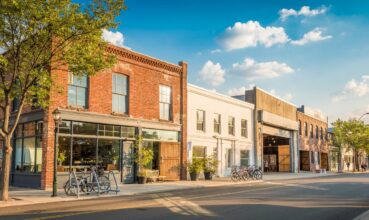
Commercial development has followed. Roughly 230,000 square feet of commercial space is under construction downtown, backed by about $200 million in private investment. New shopping centers have also opened on the town’s south side.
The Next Edge
Growth is already stretching into San Tan Valley, a newly incorporated city in Pinal County that Durbin calls the current tip of the East Valley. How far it can go may depend more on water than on roads. That fringe land leans hardest on groundwater, and in 2023 the state stopped approving new subdivisions that would rely on groundwater alone, including in parts of Queen Creek and San Tan Valley. A judge struck down those rules in June 2026, but what comes next is unsettled.
Queen Creek itself is better positioned after years of securing outside supplies; the town says only about 10% of its water comes from the Colorado River. Among Durbin’s clients, water comes up in only a couple of conversations out of every 25 or 30. “They have more things to complain about, like people moving in,” he says of current residents.
The resident reaction to Queen Creek’s growth has followed a familiar arc. Early resistance – what Durbin calls “get off my lawn” sentiment from homeowners who moved east to escape density – has gradually given way to appreciation for the convenience that commercial development brings. Residents now have five grocery stores within 10 minutes instead of one, he says, and several routes in and out of a town that once had a single road.
The cotton fields that once surrounded Queen Creek have largely given way to rooftops, and the single road in and out has become many. The forces that remade the town – built-out suburbs to the west, 2021 buyers outgrowing their first homes, and land to build on – are still in place, and they now point toward San Tan Valley. Whether that next edge fills in as quickly may come down to water as much as demand.
About the Expert: Kris Durbin is a real estate agent with Real Broker in Arizona’s East Valley and co-founder of The Apex Initiative, an AI platform for real estate professionals, where he works with buyers and sellers in Queen Creek and the surrounding Southeast Valley
This article is intended for informational purposes only and does not constitute legal, financial, or investment advice. The views and opinions expressed herein reflect those of the individuals quoted and do not represent an endorsement of any company, product, or service mentioned. Readers should conduct their own due diligence and consult qualified professionals before making any investment decisions.