Condominium projects originally designed for sale are converting to rental use across Quebec, adding inventory to a market where vacancy is already rising, and rents are falling. For small landlords who bought properties during the post-COVID boom, these conversions introduce competitors that national housing data does not capture until units are actually listed, according to Zach Hofland, Co-Founder of Rentack, a Montreal-based rental listing and marketing platform.
Condos Are Becoming Rentals
Canada’s housing market saw heavy condo development over roughly the past 16 years. In Quebec, developers built projects assuming strong buyer demand. But fewer buyers can now qualify or choose to purchase at current prices. Hofland says developers are shifting condo projects from sale to rental – sometimes mid-construction, because “fewer people are looking to buy or able to buy right now and they need to rent.”
Developers holding unsold inventory face a choice: sit on empty units or convert them to rentals and generate cash flow. Many are choosing the latter. Provincial and federal governments are also pushing for more rental construction, according to Hofland, adding policy support to a market-driven shift.
The Competitive Pressure on Existing Landlords
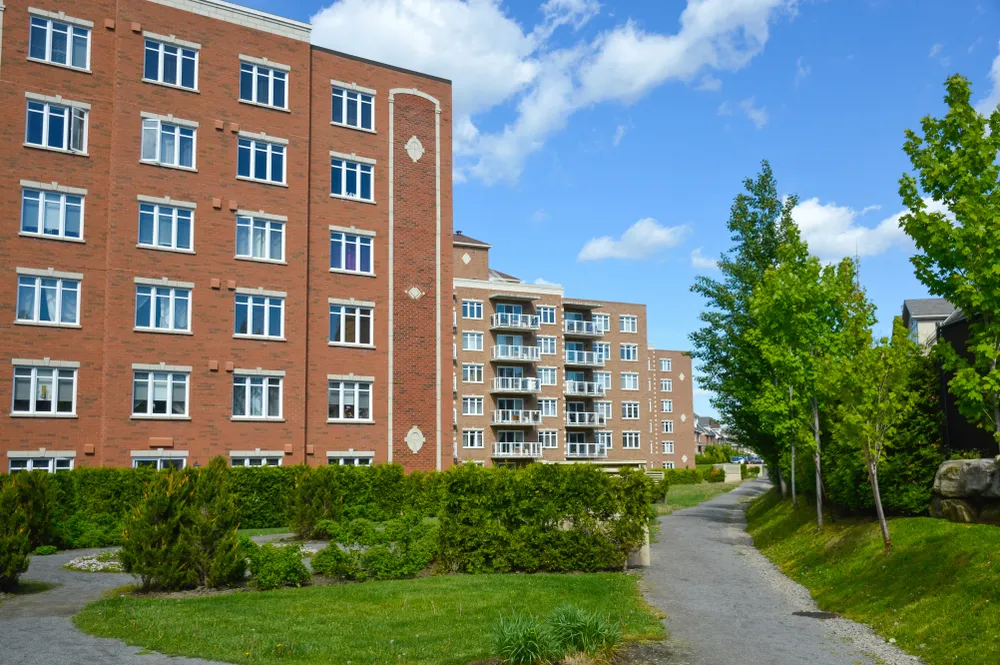
For a small landlord who owns a renovated triplex or a handful of units in Montreal, converted condo buildings represent a new class of competitor. Condo-grade finishes, building amenities, and professional property management give these projects advantages that a typical walk-up cannot match – often at comparable or lower rents, because the developer needs to fill the building quickly.
This arrives at a moment when existing landlords are already under pressure. Hofland says vacancy has increased significantly, driven by reduced immigration and changes in provincial and federal policy. Tenants are shopping more aggressively – taking their time, comparing options, and waiting for better deals. “Prices are coming down,” Hofland says. Adding large blocks of new rental supply that were never part of anyone’s market projections two years ago compounds the problem.
Why Some Units Sit While Others Fill
The impact is uneven by property type. Hofland identifies a specific segment that is struggling most: mid-range renovated units with a standard modern aesthetic. After the post-Covid boom, many smaller landlords bought buildings and applied the same renovation template – white and black modern finishes, standard layouts. “There’s just so much of it that people are looking for something a bit different,” he says.
Meanwhile, two categories continue to perform well. Large-scale developments with distinctive amenities attract tenants through differentiation and convenience. And older heritage buildings with original architectural character, what Hofland describes as “immaculate build quality and attention to design that you don’t find in new products,” retain demand because they offer something the renovated mid-range cannot replicate.
A landlord whose units look similar to what a converted condo building offers faces direct substitution from a competitor with deeper pockets and more patience for lease-up periods. A landlord in a heritage building with genuine character may hold occupancy even as new supply opens nearby.
Still Getting Worse Before It Gets Better
Hofland does not expect conditions to improve immediately. “It’s still getting a bit worse before it gets better,” he says, describing the current environment as a correctional period. Supply additions from condo conversions are still ramping up rather than tapering off. And because these projects tend to cluster in urban cores, the same neighborhoods where small landlords concentrate their holdings, the competitive pressure lands unevenly.
The seasonal patterns that once gave landlords predictable demand have also weakened. Montreal’s traditional July 1 moving surge has diminished as tenants realize they can find better deals by waiting. The decline in international students, previously a major source of summer demand, has compounded the slowdown, according to Hofland.
Inexperienced landlords face particular risk. Hofland describes two failure modes: dropping prices too aggressively out of panic, or refusing to adjust at all because vacancies feel temporary. “Some landlords think, oh, I’ve never had a vacant apartment before, it’ll rent, it’s always rented,” he says. “In reality, it’s not a time thing; it’s a product thing. Matching the product to the price is really the main hurdle to jump over.”
What the Conversion Pipeline Means for Buyers
For someone evaluating a rental property purchase in Quebec, the condo conversion pipeline is a variable that traditional rental supply statistics do not capture until units are actually listed. A building that appears as a condo project in planning documents today could open as a rental competitor within months.
Hofland says he sees “a bit of light at the end of the tunnel” but will not commit to a timeline. A buyer who assumes today’s vacancy rates represent the floor, rather than a point on a still-rising curve, may find that rents need to fall further before the market stabilizes.
About the Expert: Zach Hofland is a Co-Founder of Rentack, a Montreal-based rental listing and marketing platform.
This article is intended for informational purposes only and does not constitute legal, financial, or investment advice. The views and opinions expressed herein reflect those of the individuals quoted and do not represent an endorsement of any company, product, or service mentioned. Readers should conduct their own due diligence and consult qualified professionals before making any investment decisions.