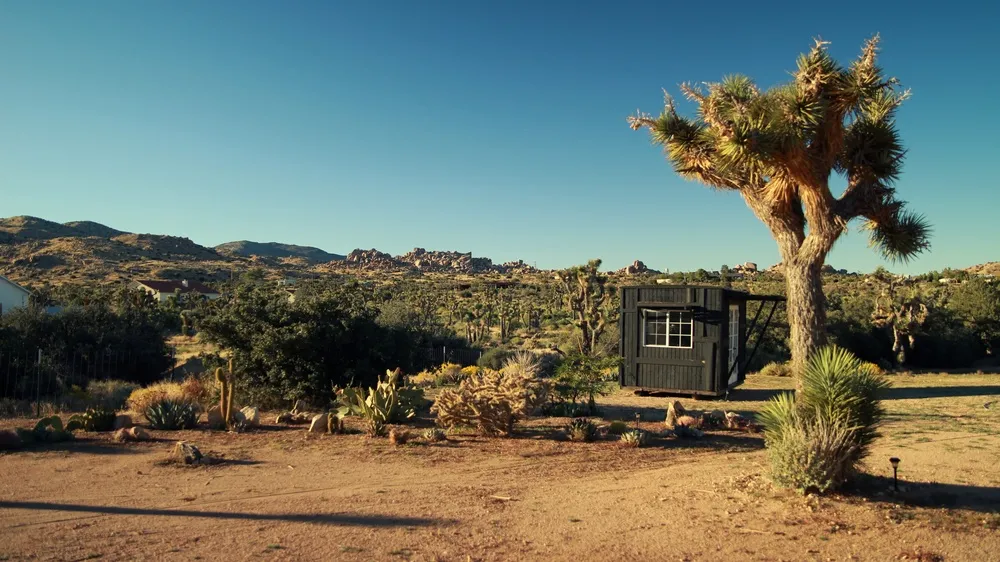
The common narrative around Joshua Tree is that the market is drowning in vacation rentals, too many Airbnbs chasing too few guests. But in a market that still draws over three million visitors a year, the vacancy problem may have less to do with how many rentals exist and more to do with what owners are charging per night, according to Madelaine Lavoie, owner and broker of Cherie Miller & Associates.
Lavoie has operated in the California high desert since 1988. Her brokerage spans five offices across Yucca Valley, Joshua Tree, Twentynine Palms, Morongo Valley, and Palm Springs, an area she estimates covers roughly 80 to 85 square miles. She pushes back against the overbuilt narrative directly.
Not Oversaturated, Overpriced
Lavoie’s reasoning starts with the traditional resale market. If the area were truly flooded with short-term rentals to the point of oversaturation, inventory available to regular buyers would be scarce. That is not what she sees. There are plenty of homes on the market for people who want a primary residence or a second home.
Her read on the rental side is equally direct: “If they’re asking too much a night, they’re not going to rent.” Properties priced reasonably for what they offer are filling up. The ones sitting empty are the ones where the nightly rate does not match the property.
This distinction matters for anyone considering a vacation rental purchase near Joshua Tree. Demand from visitors is not the issue. But owners who set nightly rates based on what the market was paying a few years ago may find their calendars empty.
Two Markets That Barely Overlap
Outside observers often assume short-term rental properties and traditional homes compete for the same inventory. In the high desert, Lavoie says, they are serving different buyers entirely.
Homes built or converted for Airbnb use were designed with guests in mind, not residents. “A lot of them don’t have big closet situations; they tend to not have garages,” Lavoie said. Storage is minimal because “people are coming with a suitcase and then they leave.”
A full-time resident wants the opposite: closets, a garage, a storage shed, room for belongings that accumulate over years. Even though both buyer types are shopping in the same zip codes, they are rarely looking at the same properties.
For buyers searching for a place to live in the Joshua Tree corridor, the wave of short-term rental inventory is unlikely to crowd out homes that suit their needs. For investors eyeing a rental property, the competition comes from other rental operators, not from families looking for a permanent home.
What Drives Sales
Across the broader high desert, newer homes are selling faster, according to Lavoie. But condition alone does not explain what moves. Location, topography, and views carry significant weight, and many of the newer homes are being built on lots that offer those features, which partly explains their faster absorption.
Properties with strong natural settings that are already owner-occupied tend to stay off the market for decades. “Sometimes people are in a house for 30 years, then you have to wait for it to go on the market,” Lavoie says.
Buyer preferences in the high desert also vary more than in a typical suburban market. Some buyers want pavement and nearby neighbors. Others want a five-acre lot on a dirt road with no one in sight. Lavoie says the range of available settings – from half-acre subdivisions to remote desert parcels – is part of what draws such a varied buyer base, including second-home buyers, retirees, military families from the Twentynine Palms base, and a smaller share of full-time residents she estimates at about 25 percent of total buyers.
The Real Headwind
The genuine risk in this market is not oversupply. It is the gap between today’s financing costs and the rental income needed to cover them. Lavoie identifies elevated interest rates as the single biggest headwind in the high desert right now. “That is the reason we’re having a lull in the market,” she says.
If financing costs are higher than they were a few years ago and nightly rates need to come down to stay competitive, the math tightens quickly. Lavoie also notes that low appraisals have been a recurring issue, meaning an investor could agree on a purchase price only to have the property appraise for less, a gap that typically requires more cash from the buyer to bridge.
On the seller side, pricing expectations have not fully adjusted. Lavoie says sellers are “still trying to get yesterday’s glory” and need to be educated that the market has changed. Most sellers, 99 percent, by her estimate, are still paying the buyer’s agent compensation and, in many cases, contributing to buyer closing costs.
For investors considering the Joshua Tree rental market, the question is not whether demand exists. It does. The question is whether a property can be priced competitively enough to fill a calendar while still covering carrying costs at today’s rates. That calculation, not the number of competing listings, is what separates the rentals that work from the ones that sit empty.
About the Expert: Madelaine Lavoie is a real estate agent with Cherie Miller & Associates, covering California’s high desert region around Joshua Tree National Park.
This article is intended for informational purposes only and does not constitute legal, financial, or investment advice. The views and opinions expressed herein reflect those of the individuals quoted and do not represent an endorsement of any company, product, or service mentioned. Readers should conduct their own due diligence and consult qualified professionals before making any investment decisions.