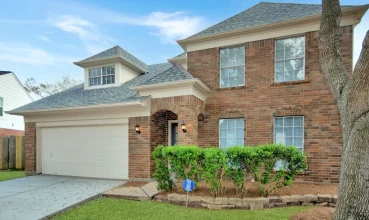
Selling a home is supposed to be the exit strategy. But for a growing number of homeowners in Las Vegas, the math on a sale does not work right now, and the result is a wave of reluctant landlords entering a rental market that punishes inexperience.
Corinne Gordon, a Realtor and co-owner of Hive Real Estate Group and Property Management in Las Vegas, says she is seeing more single-family homeowners arrive with this problem. They purchased or refinanced during a period of elevated rates and have not built enough equity to sell at a profit. Rather than taking a loss, they are converting their homes into rentals and waiting for the numbers to improve. Gordon says these owners are “stuck in an area where they wouldn’t be able to cash flow if they were to sell their property.” The move is logical on paper. In practice, it carries risks that many first-time landlords do not anticipate.
The Dual-List Strategy
Some of these owners are trying what Gordon calls a dual-list approach, putting the property up for sale and for rent simultaneously, then seeing which one lands first. In the current Las Vegas market, Gordon says, “the rental side has brought a lot better sales and cash flow for our owners.” The sales side has been volatile enough over the past several months that many properties are not moving at the prices owners need.
The strategy works as a hedge. If the home sells, the owner exits. If it does not, rental income covers some or all of the carrying costs while equity builds. Gordon notes that some owners plan to rent for a couple of years specifically to reach a point where a future sale becomes viable.
But the owner is now a landlord, responsible for maintenance, tenant relations, legal compliance, and the financial exposure that comes with an occupied property. Many of these owners have never managed a tenant before. They are entering a role they did not choose, in a market that does not forgive mistakes.
The Pricing Trap
The biggest risk for these accidental landlords is pricing. Gordon describes a market where supply is elevated, tenants have more choices, and overpriced listings sit. She says “properties that are priced correctly and presented well absolutely still can move” – but properties priced incorrectly do not, and the penalty for sitting empty compounds quickly.
For an owner whose entire reason for renting is to cover a mortgage they cannot escape, the temptation to set rent high is strong. They need the income to make the math work. But Gordon warns against chasing an extra hundred or two hundred dollars a month in rent, because if a property sits vacant for even one month, the lost income erases the gain. The strategy that was supposed to buy time instead accelerates the financial pressure.
Gordon says her firm’s own portfolio used to turn rentals in under two weeks. That average has stretched to about 30 days. Across the broader market, she sees listings from other firms sitting for 60 days and in some cases up to 124 days, numbers that would be devastating for an owner renting out of necessity rather than choice.
What First-Time Landlords Often Miss
Gordon says presentation matters more than many new landlords realize. Staging, responsiveness, and overall property condition all determine whether a rental listing attracts a qualified tenant quickly or lingers. Owners accustomed to thinking of their home as a personal space may not instinctively treat it as something that needs to compete against dozens of similar listings for the same tenant.
There is also the question of what happens at the end of the rental period. The owner’s plan may be to sell in two years, but that timeline depends on market conditions no one controls. If rates remain elevated or Las Vegas inventory continues to climb, the equity math may not improve on the owner’s preferred schedule.
Gordon says her firm has responded to these dynamics by offering tenants incentive packages, move-in specials, cash-back rewards for on-time rent payments, and in some cases rent-to-own arrangements where a portion of rent is placed in escrow toward a future purchase. Those programs can attract tenants who are more invested in caring for the property and more likely to stay longer, which reduces turnover costs for owners.
The shift Gordon describes – owners asking what value they can offer tenants rather than simply what maximum rent they can charge – reflects a market where leverage has moved toward renters. Owners who treat their rental as a commodity competing on price alone are the ones whose properties sit longest. Those who invest in condition, presentation, and tenant retention are still filling units, but the effort required is substantially greater than it was even two years ago.
For homeowners weighing whether to rent rather than sell at a loss, the calculation is not just whether rental income covers the mortgage. It is whether they are prepared to operate as a landlord in a market where tenants have options and empty months are expensive.
About the Expert: Corinne Gordon is a Realtor and permitted property manager who co-owns Hive Real Estate Group & Property Management in Las Vegas, Nevada.
This article is intended for informational purposes only and does not constitute legal, financial, or investment advice. The views and opinions expressed herein reflect those of the individuals quoted and do not represent an endorsement of any company, product, or service mentioned. Readers should conduct their own due diligence and consult qualified professionals before making any investment decisions.