Portland set a goal of adding 6,000 housing units per year through 2032. Last year, the city managed 1,652. That shortfall has created space for development models that don’t follow the conventional acquire-permit-build sequence. One emerging approach skips the land acquisition step entirely by partnering directly with existing landowners who have buildable space but no development expertise.
Amika Development, a Portland-based firm co-founded by Kadoh Swiatkowski and Amirah Fattom, has built its business around this gap. The firm specializes in missing middle housing infill – multiple small homes on a single parcel – and structures deals in which landowners contribute their land while Amika handles design, permitting, and construction. Profits are split on arrangements ranging based on the type of help the landowner needs from Amika.
Why Landowners Say Yes
The people reaching out to Amika aren’t a single demographic. Swiatkowski describes the inquiries as roughly split between younger professionals – an anesthesiologist, an Nvidia employee, entrepreneurs with full-time jobs – and older homeowners sitting on inherited or underused property. What connects them is a shared realization.
“The end goal for everyone who has reached out is: I know I have something, but I don’t know what to do with it,” Swiatkowski says.
Many of these landowners purchased homes with large backyards or hold parcels they acquired years ago. They recognize the equity locked in that land but lack the time, knowledge, or capital to develop it themselves. A family with children and full-time jobs isn’t going to navigate Portland’s permitting process, hire architects, or manage a construction timeline. The partnership model gives them a path to monetize an asset that would otherwise sit idle.
Swiatkowski says inquiries are not limited to Portland. The firm is receiving calls from landowners across different cities in the state, and the common thread is that these owners are in established areas looking to add density – not in rural locations.
The Misconception Problem
The biggest barrier to these deals isn’t just financial – it’s also informational. Landowners consistently underestimate what current zoning allows them to build. Portland’s residential zoning reforms have enabled significantly higher density on parcels that still look, from the street, like single-family neighborhoods.
“People think about the minimum of what they can build,” Swiatkowski says. “We come in thinking about the maximum use of their land.”
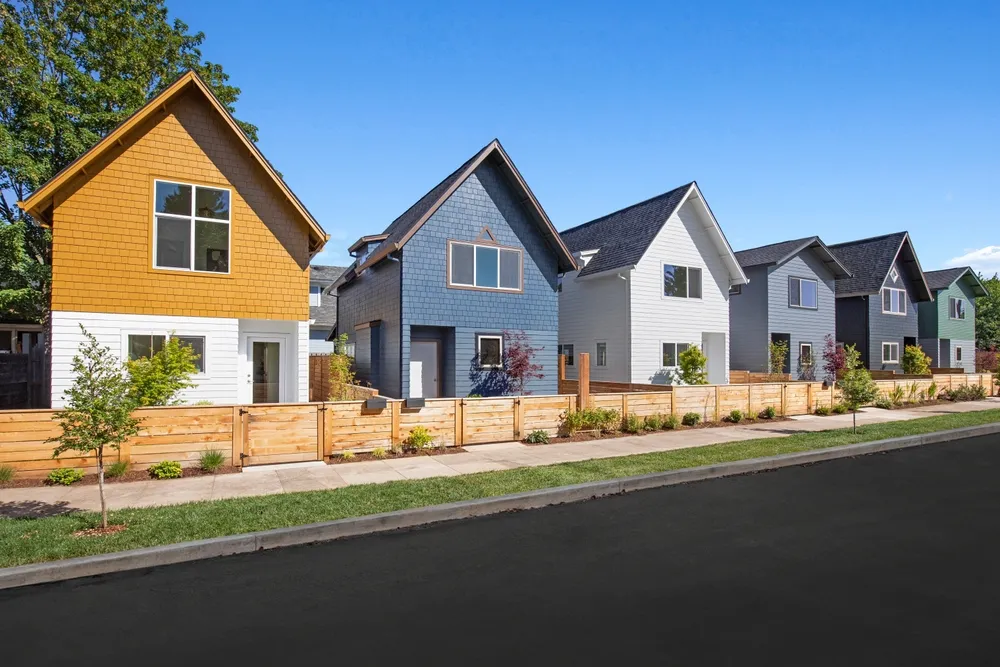
A homeowner looking at a block of detached houses naturally assumes only another single house can go on their lot. Amika’s pitch often begins with showing that the same parcel could support six cottages or a set of townhomes. Swiatkowski notes that this education process requires overcoming an initial layer of distrust – particularly among older landowners who may assume a developer is trying to take their property for nothing in return.
“We come in like, hey, if you don’t want to work with us, we’ll just walk away,” Swiatkowski says. “You can keep your land. We’re okay.”
That distrust compounds the information gap. Even once landowners are willing to engage, Fattom says there are layers to work through before they accept that the zoning rules have changed and that their parcel can support more than what their neighbors have built.
Portland’s Cost and Timeline Realities
Development in the Portland metro area carries specific friction that shapes which projects move forward. Permitting alone takes six to eight months, according to the Amika co-founders, and pre-permit costs – architecture, surveying, engineering – can run into a few hundred thousand dollars before a shovel hits dirt. For landowners paying a mortgage on that property during the wait, those months add carrying costs that eat into eventual returns.
One recent policy change has meaningfully altered the math. Portland has temporarily waived system development charges (SDC fees) through September 2028, removing what had been a significant cost barrier. Before the waiver, developers building cottage clusters had to keep unit prices below $450,000 to qualify for SDC relief, which forced units down to 700 or 800 square feet to remain profitable. With the blanket waiver in place, Amika now builds cottages between 1,200 and 1,500 square feet – a size that sits between low-priced condos and million-dollar historic homes in the same neighborhoods.
“We’re offering a product that’s more attainable while also having space that allows you to live in an area that you love without having to sacrifice space or cost,” Swiatkowski says.
The SDC waiver effectively widened the range of projects that pencil out financially. Before the waiver, the affordability threshold compressed what developers could build. Now, units can be large enough to attract buyers who want more than a condo but cannot afford a full-size single-family home in Portland’s established neighborhoods.s who want more than a condo but cannot afford a full-size single-family home in Portland’s established neighborhoods.
Filling the Density Gap
The firm’s focus on cottage clusters places it in the second-highest category of housing being built in Portland, behind apartments. Amika recently broke ground on a four-cottage project in Southeast Portland. The partnership model also extends beyond the city, the firm is in conversations with a landowner in Minnesota who owns land free and clear and wants to contribute the parcel in exchange for a profit split.
The gap between Portland’s 6,000-unit annual target and the 1,652 units built last year means the city still needs substantially more housing than it is producing. Cottage clusters represent one format that can add multiple units per parcel without the scale or financing complexity of apartment buildings. For landowners who already hold the land, the partnership model removes the largest single cost of development – acquisition – and replaces it with a shared-equity arrangement where both parties benefit from the finished project.
Swiatkowski says the firm is looking ahead to 2027 with plans to expand its team while keeping cottage clusters as the core focus. “We’re always thinking ahead,” she says. “We’re always looking at what’s happening in the market, what we want to
About the Expert: Kadoh Swiatkowski and Amirah Fattom are co-founders of Amika Development, a Portland-based firm specializing in cottage cluster infill development through landowner partnerships, with projects in the Portland metro area and expanding to other markets.
This article is based on information provided by the expert source cited above. It is intended for general informational purposes only and does not constitute legal, financial, or real estate advice. Readers should conduct their own research and consult qualified professionals before making any real estate or financial decisions.