Year-round outdoor living gives South Florida a clear advantage in how mixed-use projects are designed, built, and marketed, according to Nicolas Pinzon, Associate Principal at RSP Architects. Pinzon, with 25 years of experience designing projects in Europe and Latin America, says this climate advantage is not just about lifestyle; it directly influences the economics and design strategies of new developments.
“South Florida has a great thing, and it’s the weather, because mainly, most of the time you can be outdoors,” Pinzon says. “You have this advantage that you can be mostly 80% of the year, if not 90%, doing outdoor activities.”
This reality, he argues, fundamentally sets South Florida apart from northern markets such as New York and Chicago, where developers must plan for extended periods of cold or inclement weather. After joining RSP’s Miami office four months ago, Pinzon has seen firsthand how year-round outdoor accessibility is shaping both the physical form and financial performance of new projects.
How Climate Shapes Development Models
South Florida’s mild winters and long warm seasons allow developers to design projects that maximize outdoor space while reducing the need for costly indoor amenities. In northern cities, developers must allocate a significant budget to climate-controlled interiors and year-round indoor attractions to keep properties viable through harsh weather.
“In places like Alaska, or cities like New York or Chicago, weather makes outdoor programming much harder,” Pinzon says. Developers there must rely on indoor amenities to drive traffic and revenue, which increases construction and operating costs.
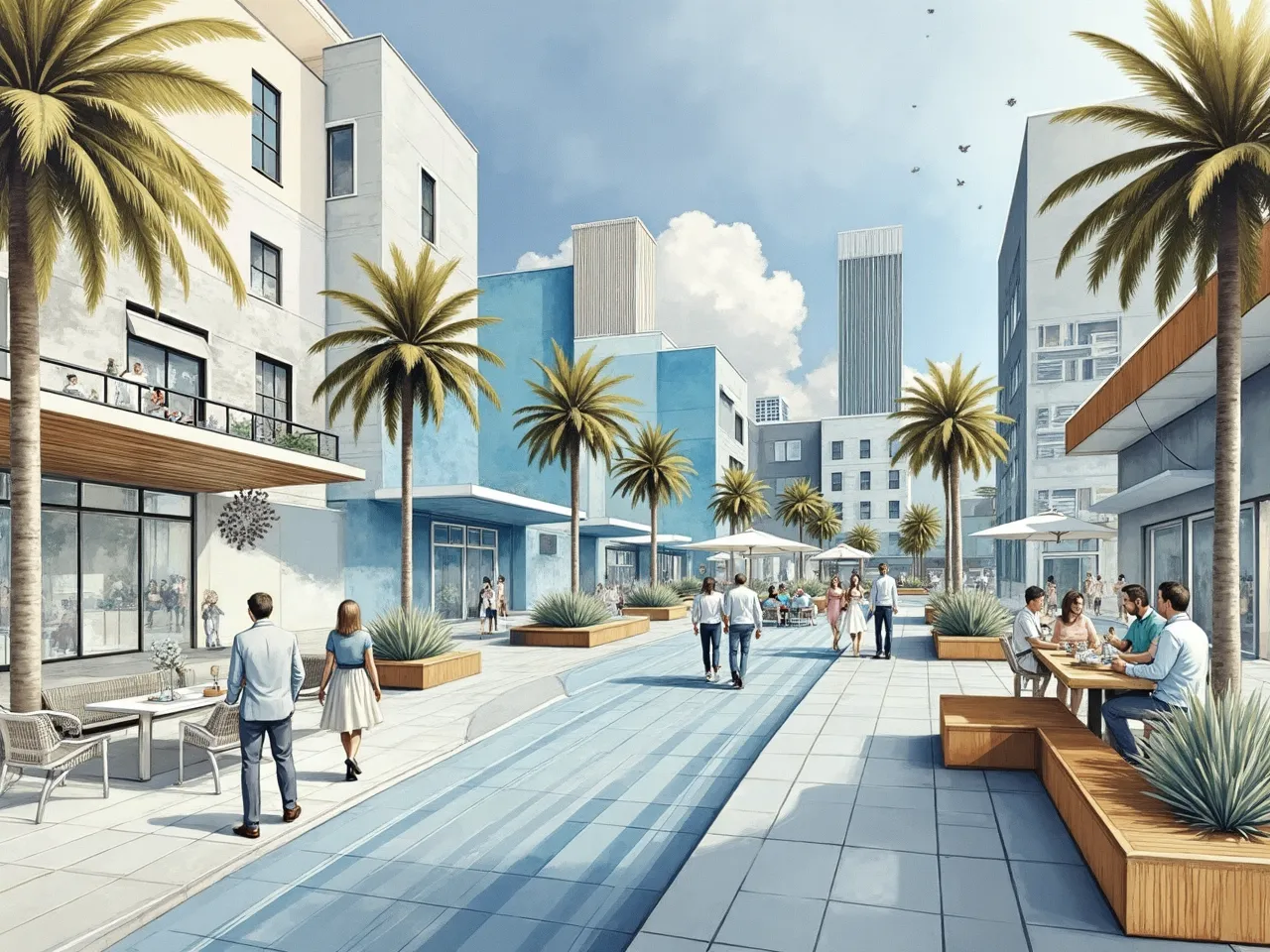
By contrast, South Florida developers can prioritize open-air plazas, outdoor dining, and active public spaces as key project features, often at lower cost. This shift in strategy has only accelerated since the COVID-19 pandemic, as both residents and visitors now prioritize the ability to gather and socialize outdoors.
“Open-air projects have become more important in the post-pandemic era,” Pinzon observes. He believes the pandemic made clear that access to outdoor activities and experiences is no longer optional. It is a primary driver of demand.
Drawing Lessons from Latin America
Pinzon’s experience in Latin American markets, where similar climates prevail, provides a blueprint for how South Florida can use its weather advantage. In many Latin American cities, mixed-use developments center on outdoor plazas, shaded walkways, and flexible public spaces that support both social events and daily routines.
He notes that while security is a more prominent concern in Latin America, the core design principle — leveraging outdoor accessibility — remains the same. “People in South Florida also want to go to places where they can socialize, and they can find a lot of things happening, where they can spend their time,” Pinzon says.
This creates an opportunity to adapt proven outdoor-oriented design strategies to the South Florida context, with a greater focus on lifestyle and less on security infrastructure. Developers can draw from Latin America’s emphasis on communal, flexible outdoor spaces to create environments that appeal to both residents and visitors.
Global Concepts, Local Advantage
While international design trends now flow more freely between markets, Pinzon argues that South Florida’s climate creates a unique advantage when adopting global best practices. Concepts that are seasonal or limited elsewhere, like year-round outdoor dining, public gardens, or open-air entertainment, can become permanent, central features in South Florida developments.
“Some years ago, you could find specific projects for specific places,” Pinzon says. “What I’ve seen is that now you can relate things or kinds of spaces that you had in one country to another.” However, he points out, the ability to program outdoor experiences all year gives South Florida a distinct edge. Projects can offer experiences and amenities that are not feasible in markets with harsh winters or short outdoor seasons.
Pinzon sees this advantage as especially relevant for the new generation of experience-driven mixed-use projects. “What I find is that it’s common to South Florida and other Latin American markets, it’s this need for experiences,” he says. These projects put people, nature, and a variety of social activities at the center, rather than relying solely on retail or office anchors.
Competitive Implications for South Florida
The result, Pinzon argues, is a structural advantage in attracting both developers and residents. Designing around year-round outdoor experiences is not just aesthetic; it directly affects project feasibility, construction costs, and long-term returns.
He notes that while cultural preferences and local habits always play a role, the economic benefit of maximizing outdoor programming sets South Florida apart from northern competitors. “Even though you have to take into account that cultural aspect of architecture and that each place has its own particularities, the ability to maximize outdoor programming creates opportunities that simply don’t exist in the same way in northern markets,” Pinzon says.
Looking Ahead: Market Positioning and Future Trends
The extent to which South Florida can maintain and expand this advantage depends on how effectively developers and architects incorporate outdoor experiences into new projects. Pinzon’s firm is currently designing several developments in which outdoor amenities are not just add-ons but core features, including Live Local Act projects that place outdoor gathering spaces at the heart of the community.
As climate awareness grows and post-pandemic preferences persist, South Florida’s unique weather may play an even larger role in attracting both investment and new residents. For developers, the year-round usability of outdoor spaces is emerging as a defining factor in project success, setting the region apart from markets where outdoor living is a seasonal luxury rather than a daily reality.