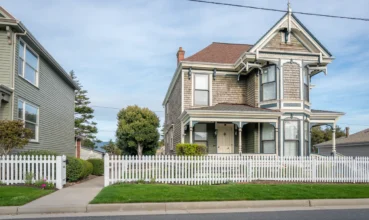
As residential markets across the Southeast cool in 2026, one small coastal community in South Carolina is posting sharply different results. Pawleys Island, situated between Myrtle Beach and Charleston, is seeing a year-over-year appreciation of 15.6%, a figure that stands in sharp contrast to broader regional softness. The reasons lie in the area’s physical constraints, its buyer demographics, and demand patterns that operate largely independent of national conditions.
Mariah Johnson, Team Lead at the Coastal Real Estate Legacy with Coldwell Banker Sea Coast Advantage, has spent 36 years in this market. Her read on current conditions is direct: “We are completely bucking the national trend here.”
A Market Defined by Geography and Lifestyle
Pawleys Island’s strength starts with its physical limitations. Bordered on the east by the Atlantic Ocean and on the west by the Intracoastal Waterway, the area has virtually no room left to build. That geographic bottleneck creates a supply ceiling that keeps inventory tight regardless of broader economic conditions.
“We don’t have any more room. We don’t have any more places to build new things,” Johnson explains. “It’s not a matter of people being unwilling to sell. It’s a matter of geography.”
The demand side is equally distinctive. The market attracts early retirees and second-home buyers rather than residents tied to local employment. That demographic skews 55 and above and tends to transact in cash. According to Johnson, roughly 60% of her team’s business comes from full-time residents relocating for lifestyle reasons, with the remaining 40% split between second-home and vacation buyers.
That cash-heavy buyer pool provides a natural buffer against interest rate sensitivity. While markets dependent on financed buyers have felt the squeeze of elevated borrowing costs, Pawleys Island has remained relatively insulated. Buyers typically arrive from more expensive markets or are entering early retirement with significant liquid assets.
Where the Market Is Moving and Where It’s Sitting
Even within a generally strong market, segments are performing unevenly. The $450,000 to $750,000 price range is taking longer to move. Johnson attributes this partly to the rate lock-in effect: owners in that segment who secured low interest rates during the pandemic era are weighing renovation against selling, given how much their next purchase would cost at today’s rates.
At the upper end, properties priced at $1.1 million and above continue to perform well. Johnson notes that individual properties with dated aesthetics or poor presentation still linger. “There are properties that have the pretty factor, and properties that have the ugly factor. And ugly still sits.”
The condo segment tells a more layered story. Resort-facing and oceanfront units remain in demand, particularly at higher price points. But the lower-tier condo market, properties under $450,000, has gone flat, weighed down by rising HOA fees, increased insurance costs, and higher capital expenditure requirements.
Insurance and Climate Costs
Beyond price-tier differences, one of the more significant forces reshaping this coastal market is the rising cost and complexity of insurance. Flood insurance costs in the area have roughly doubled over the past two years, and the distinction between flood zones and evacuation zones is now something buyers must understand before making an offer.
Johnson says insurance has moved from an afterthought to a central line item in buyer decision-making. “I wouldn’t say insurance is a deal killer, but factoring in the cost of insurance is more prevalent than it ever was before.”
On the seller side, her team increasingly advises clients to address insurance-related issues proactively before listing. Roof age has become a particular sticking point, insurers in the area are often unwilling to cover properties with roofs more than 15 years old. Johnson describes a recent deal where, before listing, the team identified the roof as a constraint and replaced it preemptively, eliminating what would have become a concession during negotiations.
The Investor Opportunity
For investors considering Pawleys Island, Johnson offers a perspective that runs counter to conventional rental property logic. In a market where borrowing costs are high and investment properties are taxed at roughly 40-50% more than primary residences, she advises against leveraged acquisitions. “Borrowing money to invest in real estate is a loser,” she says. “Be a cash buyer if you’re going to be an investor.”
Her preferred opportunity is equity-driven rather than income-driven. She points to a specific example: an oceanfront condo in a private Litchfield enclave listed at $1.6 million. In comparison, a comparable updated unit four buildings away recently went under contract for over $2 million. The gap represents a clear renovation opportunity for a cash buyer willing to upgrade the property. “It’s built-in equity,” Johnson says. “That property may or may not cash flow as a rental, but all day long you’re building equity.”
Migration Patterns
The profile of who is moving to Pawleys Island also reflects broader national migration trends. The traditional feeder markets, the Northeast and the Atlanta metro, remain active. But Johnson’s team has recently seen an uptick in buyers arriving from Washington, D.C., and from Austin, Texas.
“I think that is very interesting to see that sort of migration coming from the Sun Belt to the Sun Belt,” Johnson observes. Relative affordability compared to other desirable coastal markets remains a draw, particularly for buyers who have built equity in higher-priced cities and are looking to redeploy it in a lower-cost, lower-tax environment. South Carolina’s property tax structure is notably favorable for permanent residents and those who qualify for the homestead exemption at age 65. However, second-home and investment buyers face the higher assessment rate.
Looking Ahead
Despite strong local fundamentals, the broader economic picture is not lost on practitioners here. High-net-worth buyers, a core segment of this market, are paying close attention to global economic conditions and geopolitical uncertainty, which can slow decision-making even when local conditions are favorable.
“We still have all eyes on the national economy and the global political effect that is trickling down,” Johnson says. “That is where we are like the rest of the country, holding our breath for what’s coming next.”
For a market defined by geographic scarcity, cash-rich buyers, and lifestyle-driven demand, the near-term outlook remains strong. But the question facing Pawleys Island is whether national economic headwinds, or continued increases in insurance costs, will eventually erode the insulation that has kept it ahead. So far, the fundamentals suggest resilience. How long that holds depends on forces well beyond the Intracoastal Waterway.
About the Expert: Mariah Johnson is the Team Lead of Coastal Real Estate Legacy with Coldwell Banker Sea Coast Advantage, alongside her son and partner, Hampton Roberts, covering the Pawleys Island market in South Carolina. She has 36 years of experience in the local market, working across residential sales, including primary residences, second homes, and vacation properties.
This article is based on information provided by the expert source cited above. It is intended for general informational purposes only and does not constitute legal, financial, or real estate advice. Readers should conduct their own research and consult qualified professionals before making any real estate or financial decisions.