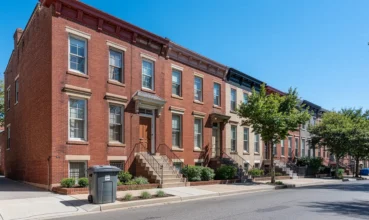
The Queens housing market occupies a distinctive position in New York City real estate. Sitting at the intersection of the five boroughs and Long Island, it offers a range of property types and price points that few neighboring markets can match. But for buyers, sellers, and investors who approach it with assumptions borrowed from Manhattan or Brooklyn, the ground-level reality can be surprisingly different.
Karen Skala, Associate Broker at Prime Realty, has spent her career working across southern, middle, and northern Queens, with a strong presence in the Little Neck and Bayside Bay Terrace corridors. Her work spans single-family homes, condominiums, and co-ops, with the latter making up roughly half of her business volume. That balance gives her a practical view of how different segments behave and who is actually buying.
A Market Built on Accessibility and Connectivity
Part of what makes Queens appealing is straightforward geography. The borough sits roughly 20 minutes from both Long Island and Manhattan, with easy access to bridges, major roadways, and some of the highest-rated school systems in the country. Waterfront property adds another dimension. “You’re 20 minutes to Long Island, 20 minutes to Manhattan,” Skala notes. That combination of urban access and suburban character has long drawn a diverse mix of residents, from young first-time buyers to families looking for more space without leaving the city.
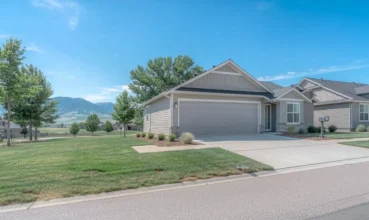
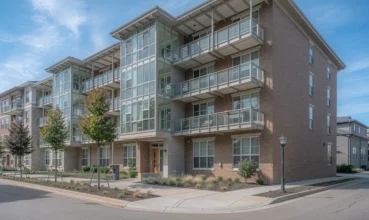
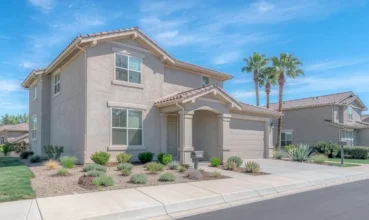
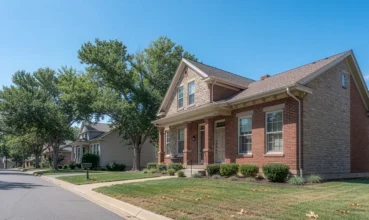
The co-op segment plays a central role in that accessibility. While a single-family home in Queens typically starts around $800,000, a two-bedroom co-op in the same neighborhood can be found for around $350,000. For buyers who want to enter a desirable area without the price tag of a detached home, co-ops represent a meaningful entry point.
The Significantly Demanding Co-op Process
That lower price point comes with a more complex qualification process, and this is where Queens diverges sharply from how it is sometimes portrayed in broader conversations about New York City affordability.
Mortgage approval alone does not guarantee acceptance into a co-op. Boards require strong credit, verifiable income, and down payments that have been documented in a bank account for at least three months. Gift funds for down payments are generally not accepted. “Just qualifying for a mortgage does not guarantee passing the boards,” Skala explains. “Everything has to add up.”
Co-op boards conduct extensive background checks that can reach back 20 to 25 years. A bankruptcy that has technically fallen off a credit report may still be visible to a board. A recent transaction Skala handled illustrates how precise the requirements are: a married couple was purchasing a unit, but the husband chose not to appear on the application or the stock certificate. The wife’s income alone did not meet the board’s threshold. Despite the couple qualifying together financially, the application was rejected.
Dishonesty on applications is the most common disqualifier. “The dominant reason you won’t get into a co-op is that you’ve lied on an application due to finances,” Skala says.
For buyers who cannot meet co-op board requirements, condominiums offer an alternative path. Skala points to a client who had filed for medical bankruptcy and was unable to qualify for a co-op. By shifting focus to a condominium, which carries fewer ownership restrictions, the buyer secured a mortgage and purchased a property at a higher price point than the co-op she had originally been considering.
Overpricing Stalls Listings
After years of inflated expectations following the pandemic, asking prices in Queens have come closer to aligning with what buyers will actually pay. “It took a long time after COVID,” Skala observes. “People were overpricing homes like crazy. We have finally come into more accurate pricing, and homes are selling closer to what they are asking now.”
Concessions remain relatively rare. The five boroughs have never been a market where seller concessions were common practice, and that has not changed despite broader national trends. When listings sit without activity, the reason is usually straightforward: unrealistic pricing. “They want a million dollars for a $500,000 home, and they just don’t know it,” Skala says.
Repeat and experienced buyers, meanwhile, are raising their standards. Where buyers once accepted minor deficiencies in exchange for a favorable price, that tolerance has narrowed. Homes need to be up to code and free of deferred maintenance. Buyers are willing to pay fair value, but they expect issues to be resolved before closing.
Investor Caution in a Tenant-Friendly Environment
For investors considering Queens as a place to deploy capital, the picture is more complicated than New York City’s reputation for strong rental demand might suggest.
Skala advises smaller investors to think carefully before buying rental property in Queens. New York is a tenant-friendly state, and individual landlords with one or two units can face significant legal and financial exposure in disputes. “A small-time investor can get hurt very, very easily,” she says. Her preference for those investors is to look at waterfront properties in areas like Long Beach or short-term rental opportunities upstate, where the regulatory environment is less restrictive.
For those with deeper resources, larger multifamily acquisitions of 10 to 15 units may make more sense, given the legal infrastructure required to manage tenant relations. But for the individual investor expecting straightforward returns from a small Queens rental, the risk is higher than it might appear from the outside.
Local Law 97 Could Reshape the Co-op Landscape
One regulatory development on the horizon could put significant financial pressure on Queens co-op owners. New York City’s Local Law 97 mandates that buildings above a certain size transition from gas boilers and gas appliances to electric systems. The law is still working its way through legal challenges, but if implemented as written, the cost burden on co-op shareholders could be substantial.
Skala expects the law could trigger a wave of co-op sales as owners try to avoid those costs. “You might have a big rush to the market, which will deplete prices,” she says. “The cost of all this is going to be very hefty to the shareholders.”
The concern extends beyond co-ops alone. A decline in co-op values and demand could ripple into the broader Queens market, affecting condominiums and single-family homes as well. It is a development that local agents, buyers, and building boards are watching carefully.
The Bigger Picture
Queens does not fit neatly into the narratives that often dominate coverage of New York City real estate. It is not simply a pressure release valve for buyers priced out of Manhattan, nor is it a straightforward investment opportunity for those chasing rental income. It is a market with its own rules, its own buyer profile, and its own regulatory pressures.
For buyers willing to navigate those nuances, the combination of price accessibility, geographic convenience, and housing diversity still makes Queens a practical place to buy. The key, as Skala sees it, is working with someone who knows the difference between what the market looks like from a distance and what it actually takes to close a deal on the ground.
About the Expert: Karen Skala is an Associate Broker at Prime Realty, covering Queens and extending into Nassau and Suffolk counties in New York. Her practice spans co-ops, condos, and single-family homes across residential sales and investment properties.
This article is based on information provided by the expert source cited above. It is intended for general informational purposes only and does not constitute legal, financial, or real estate advice. Readers should conduct their own research and consult qualified professionals before making any real estate or financial decisions.