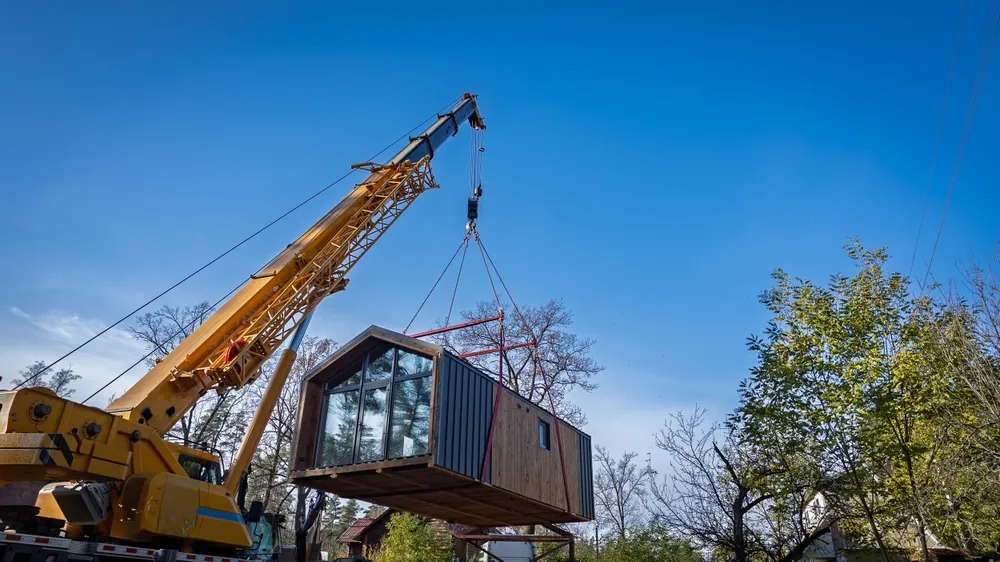
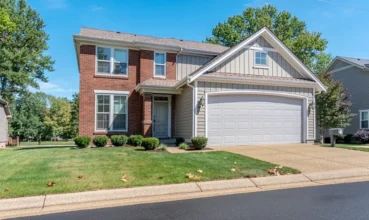
The common assumption about modular construction is that it exists to serve one purpose: cheap housing for cost-constrained developments. That framing is outdated. Modular systems are increasingly showing up in five-star hotels, commercial buildings, and resort developments – applications where finish quality and design matter as much as cost savings. The shift is being driven not by a single breakthrough but by a maturing market in which developers, designers, and fabricators are finally working from the same knowledge base.
Matt Young, General Director and Founding Member of studio3eight, a Vietnam-based multi-disciplinary design firm working internationally across architecture, interior design, and urban planning, has watched that shift play out on the ground. “I would have said five to 10 years. Now I’m saying three to five,” he says of the timeline for broader U.S. acceptance.
Why the U.S. Is Building Factories
The economics of offshore modular fabrication have shifted. Transport costs are high, and policy emphasis on domestic production has created an incentive to localize. According to Young, one modular fabricator his firm has worked with – originally operating out of Vietnam – is now looking at opening a factory in the United States, a move he describes as part of a broader pattern among offshore fabricators.
The labor argument reinforces the move. Modular construction originated in economies with low labor costs – China, Vietnam, Indonesia, Thailand – and was exported globally. In higher-cost labor markets like the U.S., the appeal is different: speed, precision, and independence from a constrained construction workforce. “Particularly with the changing labor market in the U.S., having something that can be delivered everywhere around the world” makes factory production attractive, Young says. He expects automation in factories to increase in the coming years to compensate further for the shortage of skilled tradespeople.
Suppliers are also beginning to cluster geographically around factories, reducing the number of individual shipments. Instead of components shipping to job sites across the country, they ship to one factory, and the finished house ships once.
What Gets Traded Off – and What Doesn’t
Design flexibility is constrained by transport dimensions – modules need to fit on a road, which means working within roughly 30-foot-by-12-foot envelopes. Finish quality is often a major concern on any construction project, and craftsmanship remains incredibly valuable. However, Young says, “With skilled on-site trades becoming harder to find, moving more work into a controlled factory environment allows greater investment in training, quality control and repeatable processes, leading to more consistent outcomes.” The controlled environment also eliminates weather-related delays and produces tighter tolerances than field construction typically achieves.
Young argues the consistency case is practical rather than theoretical: he points to a case in which two identical designs produced different outcomes across two U.S. cities because of variable labor quality – one leaked and one didn’t, in his account. Factory production, he says, removes that kind of variability, since every unit comes off the same line under the same conditions regardless of where it’s installed.
For developers, the timeline advantage extends beyond construction speed. Because factory fabrication runs concurrently with site preparation – foundations, plumbing pre-lay, services – the total project duration shrinks. That compresses holding costs: less time paying bank financing while waiting for a building to go up. “If you’re building the factory while you’re still working out your financing and then you take hold of the site and the buildings are almost built already, you’re not paying as much,” Young says.
Breaking away from simple rectangular boxes is one of the design challenges modular teams are working through as the market matures. Young describes it as similar to building with Lego – working within standardized pieces but assembling them in unexpected configurations, using separate facade panels to create varied exterior forms while keeping interior modules efficient.
Young also emphasizes that modular construction should not be confused with standardized architecture. While the manufacturing process benefits from repeatable components, the finished architecture can still be highly bespoke. The efficiency comes from standardizing the manufacturing process, not necessarily the architectural outcome.
One structural constraint on offshore modular: U.S. building codes require inspections at multiple stages of assembly – base plate, empty walls, first fix wiring, second fix wiring, testing. Those inspections must be done by a U.S.-registered compliance officer, and very few are based overseas. “Certainly in Vietnam, we’re flying people in from the U.S.,” Young says. This adds cost and logistical complexity to any offshore fabrication strategy, which further strengthens the case for domestic factory investment.
The Misconception Holding Back Adoption
The biggest barrier to adoption, according to Young, is perceptual. “They think it’s only for row housing in outer suburbs to put people in that are struggling,” he says. The real estate industry tends to treat modular as a budget solution, when in practice it has already been used, in his firm’s experience, for five-star hotel bathrooms and commercial buildings.
Social media has reinforced the narrow perception by popularizing shipping-container conversions, which Young distinguishes sharply from true modular construction. Shipping containers involve stripping and renovating an existing structure. Modular builds from scratch and delivers a complete, factory-finished product – a fundamentally different process.
Hotels illustrate the range. A 350-room hotel might have 250 nearly identical rooms – same bathrooms, same kitchenettes, same bedrooms – making it a natural fit for modular production. Larger spaces are created by removing walls between modules. “When you look at it, you wouldn’t know it’s modular,” Young says.
Early Adoption, Closing Knowledge Gaps
Developers who pursue modular work have typically already done their research, Young says. “It’s very rare that we can convince someone they want it if they haven’t already heard a little bit about it,” he says. The market remains in early adoption, but the knowledge gap between developers and fabricators is closing.
Young describes the early period of modular development as one where only the contractor understood how the system worked – developers, designers, and project managers were playing catch-up. That dynamic is changing. “As that maturity comes into being, it’s just much easier for everybody to work together because the level of expectations is set, so there’s not time wasted going down rabbit holes that are ultimately fruitless,” he says.
For developers evaluating modular, the decision no longer hinges on whether the finished product can meet quality expectations. The question has shifted to whether their project type – repetitive room layouts, standardized units, flat sites – fits the system’s strengths. Projects with high repetition and predictable configurations benefit most. Bespoke work on irregular terrain, where every structure adapts to unique site conditions, still favors conventional construction.
About the Expert: Matt Young is General Director and Founding Member of studio3eight, a Vietnam-based multi-disciplinary design firm working internationally across architecture, interior design, and urban planning.
This article is based on information provided by the expert source cited above. It is intended for general informational purposes only and does not constitute legal, financial, or real estate advice. Readers should conduct their own research and consult qualified professionals before making any real estate or financial decisions.