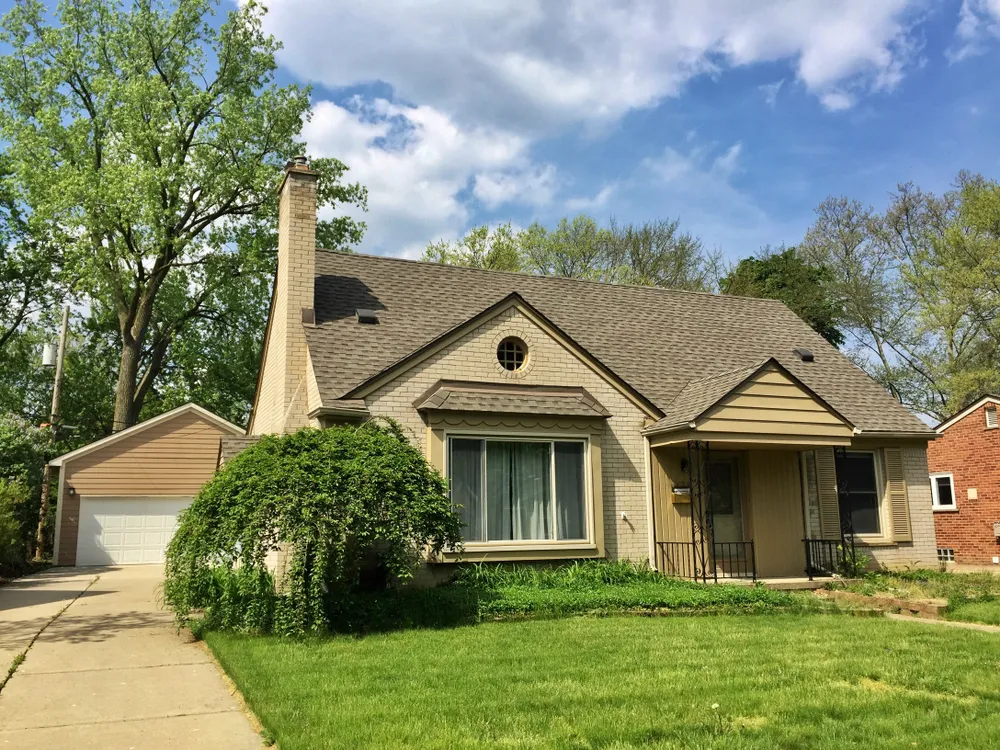
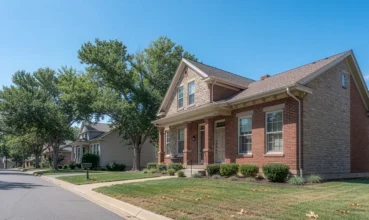
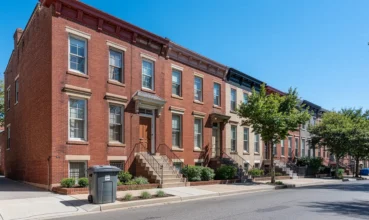
Michigan has long marketed itself on affordability, and for good reason. Home prices across the Lansing and Grand Rapids markets remain well below national averages, drawing first-time buyers, investors, and move-up purchasers alike. But with a November ballot measure that could eliminate property taxes now on the horizon, the state’s cost advantage is facing its most direct challenge in years. Jeff Burke, Associate Broker and Coach at Jeff Burke & Associates (eXp Realty), has spent nearly three decades watching this market evolve, and says rising carrying costs are quietly pricing buyers out of the very market that was supposed to be accessible.
A Market Built on Affordability
Michigan’s appeal has always been straightforward: four seasons, proximity to the Great Lakes, outdoor recreation, and home prices that stretch further than in coastal markets. Burke’s team operates across roughly three-quarters of the state, with offices in the Greater Lansing area and Grand Rapids. Over the past five years, the team has closed more than 1,200 transactions, with roughly 170 to 180 closings projected for the current year.
The buyer pool is broad: first-time buyers, investors, university-adjacent renters near Michigan State, move-up buyers, and some luxury purchasers all participate. But the defining characteristic across nearly every segment right now is the same: low inventory is driving fast decisions and competitive offers.
“If the home is priced right – condition, location, all that stuff – it’s gone within a matter of days,” Burke notes. “Buyers have to be ready when a home hits the market.”
Multiple Offers Are Still the Norm
The competitive conditions that defined 2021 and 2022 have not fully unwound. Burke described fielding three offers on a single property just hours before the interview, ultimately locking in one above asking price. Escalation clauses remain a common tool, with buyers sometimes offering $1,500 over the highest competing bid up to a ceiling, though Burke noted cases this year where buyers escalated as much as $32,000 above list price and still didn’t win.
Alongside price, buyers are finding other ways to strengthen offers: limiting inspection repair requests to major items above a set threshold, offering sellers 30 days of free post-close occupancy, and structuring clean contracts without contingencies. The goal is to give sellers certainty alongside price.
For buyers who do secure a property, interest rates remain a meaningful constraint. Rates that tripled roughly two and a half years ago have come down modestly but still shape what buyers can afford. “Buyers are coming in looking at a certain monthly payment and trying to stay in that comfort zone,” Burke explains.
When Deals Fall Apart
In a low-inventory environment, deals that collapse carry a particular cost, not just for the parties involved, but for the broader market. Burke’s view is direct: most failed transactions stem from property issues, not negotiation failures, and walking away rarely solves anything.
The example he returns to is a foundation problem. If a buyer walks over a structural issue and the seller relists, the next buyer will face the same inspection finding. The practical outcome is a longer time on market and the same negotiation, just delayed. Burke’s preference is to work through the issue with the first buyer, use earnest money as leverage if needed, and only move on when a resolution genuinely isn’t possible.
He also draws a distinction that shapes how he talks to buyers from the start. Properties that trigger a genuine emotional response are rare enough in a tight market that it’s worth fighting to keep a deal together when one surfaces. “I don’t sell houses,” he says. “The house sells itself. When a buyer walks in and gets that gut feeling, the house just sold itself.”
Finding Inventory
For investors looking at the Lansing and Grand Rapids area, access matters more than analysis. The fundamentals are relatively transparent. What separates successful investors is knowing about opportunities before they’re widely listed.
Burke’s team runs an active outreach operation, 40,000 mailers, hundreds of daily phone calls, and systematic searches of homeowners who listed and withdrew three to five years ago. The goal is to surface off-market or pre-market inventory before it reaches the MLS and triggers a bidding war.
“Getting around agents who have more at-bats is going to be good for an investor,” Burke says. Volume creates visibility, and visibility creates deal flow that isn’t available to buyers working with lower-activity agents. Student housing near Michigan State is one area he flagged as particularly active for investment.
The Tax Question
Perhaps the most significant factor hanging over this market is structural rather than cyclical. Property taxes in Michigan have risen to the point where they represent a meaningful barrier for first-time buyers, the very group the state’s affordability is supposed to attract. A ballot measure expected to go before voters in November would eliminate property taxes. A parallel proposal to remove the state and county transfer tax is also under consideration.
“Affordability was the one thing,” Burke says, “but property taxes are getting in the way of true affordability.”
The irony is clear: the market’s primary selling point is being eroded by carrying costs that don’t show up in the list price but hit buyers every month. If both measures pass, the effect on purchasing power could be substantial, freeing up monthly cash flow and potentially expanding the buyer pool at the entry level, where inventory pressure is already most acute.
Training as a Market Multiplier
Burke’s coaching and training program reflects his view on what separates high-performing agents from the national average of roughly four transactions per year. His team’s agents close far more – one reached 63 closings last year – and Burke attributes that gap largely to structured training rather than individual talent.
The program runs three weeks and is designed to move new agents into production quickly. Three of the last five cohorts have produced Rookie of the Year agents, all reaching six-figure earnings. Burke frames scripting not as performance but as consumer protection: “Scripting isn’t necessarily all for the agent; it’s actually for the consumer, so that you know you’re telling them the right things.”
What Comes Next
As the Lansing and Grand Rapids markets head into the second half of 2026, the fundamentals remain intact: tight inventory, competitive offers, and a buyer pool that still finds Michigan prices attractive relative to other markets. But those fundamentals rest on an affordability premise that rising taxes are steadily undermining.
Whether the November ballot measures pass will determine whether Michigan’s cost advantage strengthens or continues to narrow. For now, the agents and investors positioned to move quickly – with strong local networks and access to off-market inventory – are the ones finding room to operate in a market that rewards speed and preparation over capital alone.
About the Expert: Jeff Burke is an Associate Broker and Coach at Jeff Burke & Associates (eXp Realty), serving the Greater Lansing and Grand Rapids markets in Michigan for nearly three decades. His team has closed more than 1,200 transactions over the past five years and operates across roughly three-quarters of the state.
This article is based on information provided by the expert source cited above. It is intended for general informational purposes only and does not constitute legal, financial, or real estate advice. Readers should conduct their own research and consult qualified professionals before making any real estate or financial decisions.