
Delaware Builders' Affordable Homes Start at $300,000, Pricing Out Essential Workers


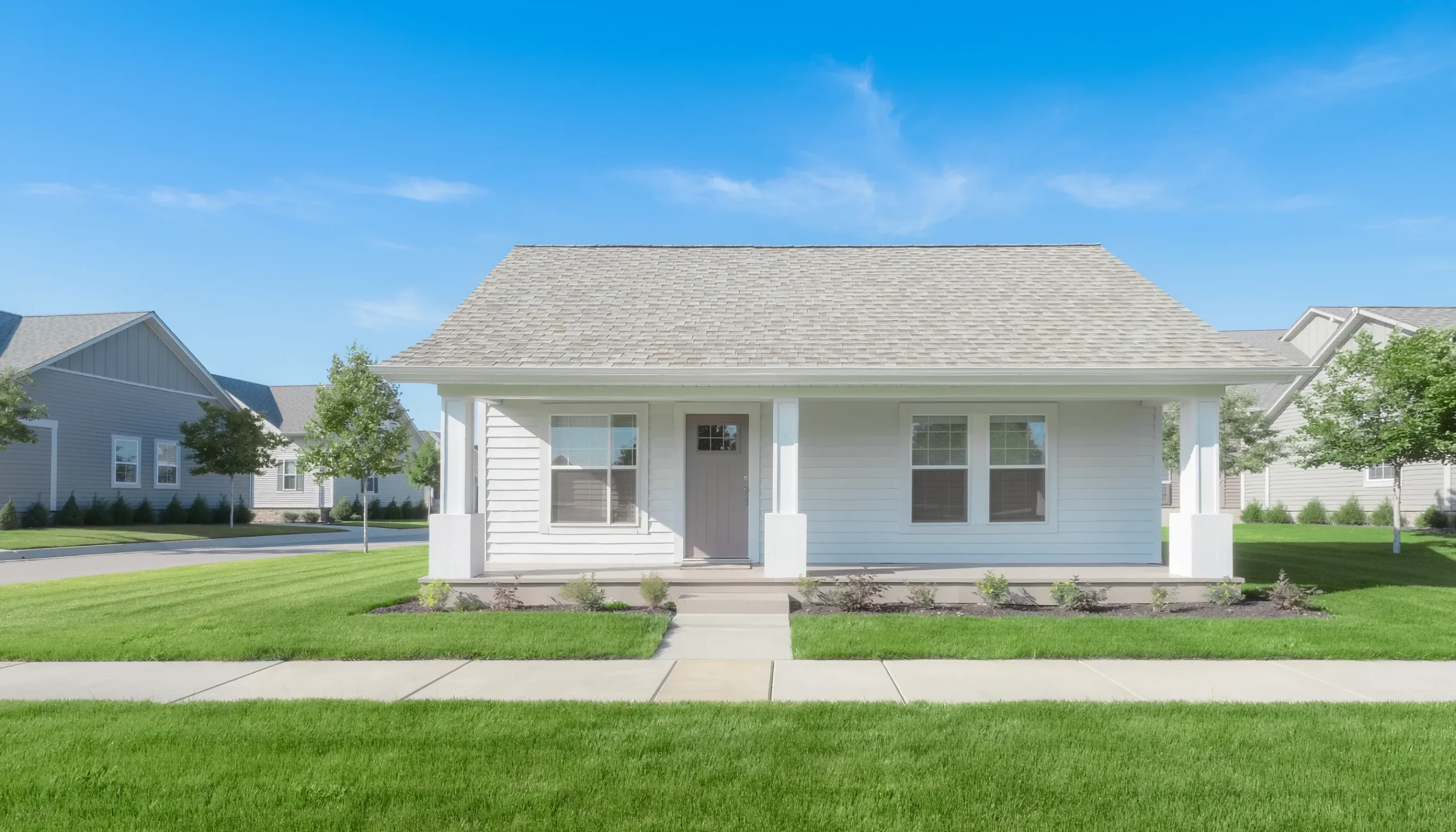
When developers in Delaware claim to build affordable housing, their prices often don’t match what nurses, grocery store clerks, and hospital aides can pay.
According to George Meringolo, founder of Little Living, major builders price their lowest-cost homes at $300,000 to $350,000. That is well beyond the reach of workers earning $35,000 to $70,000 a year. Meringolo argues the gap is wide enough to threaten how entire communities function.
Developers Redefine Affordability
Meringolo argues that large developers have redefined “affordable” to serve their own interests rather than the workers who need housing most. In his account, builders don’t label homes affordable out of a commitment to workforce housing. They do it because local governments offer zoning concessions in exchange for including a minimum share of lower-priced units in new developments.
“The big builders are using the term affordable because some counties are giving them concessions on areas they want to develop that were turned down before,” Meringolo says. “If they make that development 20% affordable, they can build on it.”
Under this arrangement, developers may price a portion of units at $300,000 to $350,000 and classify them as affordable. The rest of the development sells for $500,000 to $575,000. In Meringolo’s view, for workers earning 40% to 80% of the area median income (the midpoint household income in a given region), a $300,000 home is just as out of reach as a $500,000 one.
Workers Left Behind
The people being left behind are not on the margins of the economy. Meringolo points to nurses, hospital support staff, convenience store workers, supermarket employees, and service industry workers. Their incomes fall within that 40% to 80% range in many Delaware markets.
Before founding Little Living, Meringolo spent nearly five years cooking meals twice a week for a group of people classified as homeless in Delaware. Over that time, the group grew from 40 to 85 people. The group’s members did not lack jobs or families. They were working adults who could not afford local rents and lived in single-room hotel accommodations with no kitchen access.
“This is not America,” he says. “It shouldn’t be that way.”
His warning is direct. If the people staffing hospitals, stocking shelves, and running service businesses cannot afford to live nearby, those institutions lose the workforce they depend on.
“All of these other developments won’t have anybody to service them,” Meringolo says. “Nobody for the hospitals, nobody working in the supermarkets. It’ll create a spiraling problem if somebody doesn’t address it.”
The Income Gap
A household earning $60,000 a year sits near the middle of Meringolo’s target income range. Under standard lending guidelines, that household cannot comfortably carry a $300,000 mortgage. It would also struggle to cover the down payment, closing costs, and ongoing maintenance that homeownership requires.
The problem extends beyond buying a home. The workers Meringolo met could not afford even basic rental housing. In his view, the market has created a gap between what gets built and what this income group can pay. Developer-defined “affordability” is not closing it.
“Talk is cheap,” he says. “Very few people are doing anything about it.”
Pricing for Workers
That shortfall led Meringolo to form Little Living, Inc., a 501(c)(3) nonprofit that builds cottage communities. These homes range from 500 to 900 square feet and are priced for the workforce income group that major builders are not serving.
The organization’s first project is Market Street Village, a 20-home community in Georgetown, Delaware. Target rents are $950 per month for a one-bedroom, $1,100 for a two-bedroom, and $1,200 for a three-bedroom. Rent includes all utilities, including water, sewer, and internet.
Meringolo says the all-in cost to tenants is closer to $650 to $900 per month once utilities are included. This places the housing within reach of workers in the $35,000 to $70,000 range. Because the organization is a nonprofit, rents do not carry the profit and overhead costs that would otherwise push them higher.
For larger developments, Little Living also plans to sell homes for $115,000 for a one-bedroom and up to $135,000 for a three-bedroom. The organization will keep ownership of the land through long-term leases that can transfer to future buyers. Meringolo says Little Living has already approached major lenders with first-time buyer programs to help residents get financing.
Georgetown Pilot Project
Meringolo sees Market Street Village as a test case. He expects that once the Georgetown community is built and occupied, much of the local resistance to affordable cottage housing will fade. He attributes that resistance to misconceptions about density, traffic, and property standards.
The Georgetown project will cost more than $5 million for 20 homes, or about $250,000 per unit. Every home is built on-site with traditional framing rather than prefabricated. Meringolo says the construction standards equal or exceed those of major builders.
He acknowledges that community pushback is real. Some residents hear “affordable housing” and assume overcrowding or neglect. Little Living addresses those concerns with strict occupancy rules and requires residents to maintain their homes and surroundings.
Little Living has already received inquiries from Pennsylvania, Virginia, and Maryland. Meringolo says expansion depends on finding donors willing to contribute land or money to a nonprofit that pays no executive salaries and returns no profit.
“We’re only limited by how much money we can raise,” he says.
About the Expert: George Meringolo leads Little Living, a Delaware-based 501(c)(3) nonprofit developing cottage-community housing.
This article is intended for informational purposes only and does not constitute legal, financial, or investment advice. The views and opinions expressed herein reflect those of the individuals quoted and do not represent an endorsement of any company, product, or service mentioned. Readers should conduct their own due diligence and consult qualified professionals before making any investment decisions.
Similar Articles
Explore similar articles from Our Team of Experts.


So you’re moving to a new city, and the research has already begun. You can learn a metro’s prices, tax rates, and school ratings from a thousand miles away. What the research can’t show you is which neighborhood fits the life you’ll actually lead there. Helping you close that gap is now central to a ...
The Department of Veterans Affairs has narrowed the list of property conditions that can hold up a VA-backed purchase. Under an update to the VA’s Lender’s Handbook, appraisals ordered from May 1, 2026, no longer require repairs for peeling paint on homes built in 1978 or later, or for defects in detached sheds and garages. ...
When 60 to 70 percent of buyers in a market are spending accumulated real estate wealth rather than current earnings, the market operates by different rules than national economic indicators suggest. In Santa Barbara, that disconnect between price levels and income-based affordability is not a temporary distortion – it is the market’s defining feature, according ...
In most of Bucks County, Pennsylvania, the housing market runs on familiar suburban logic: limited inventory, competitive bidding, and first-time buyers stretching to qualify. In Pipersville, at the county’s northern edge, the math works differently. Farms outnumber listings, acreage is measured in dozens rather than fractions, and the buyers who show up are coming from ...
Prospective homebuyers waiting for mortgage rates to fall may be waiting for conditions that only a major global crisis would create. Current 30-year fixed mortgage rates of about 7.25% are not an anomaly, according to Jason Huerkamp of Huerkamp Home Group in the Twin Cities. That figure matches the historic 50-year average. The low rates ...