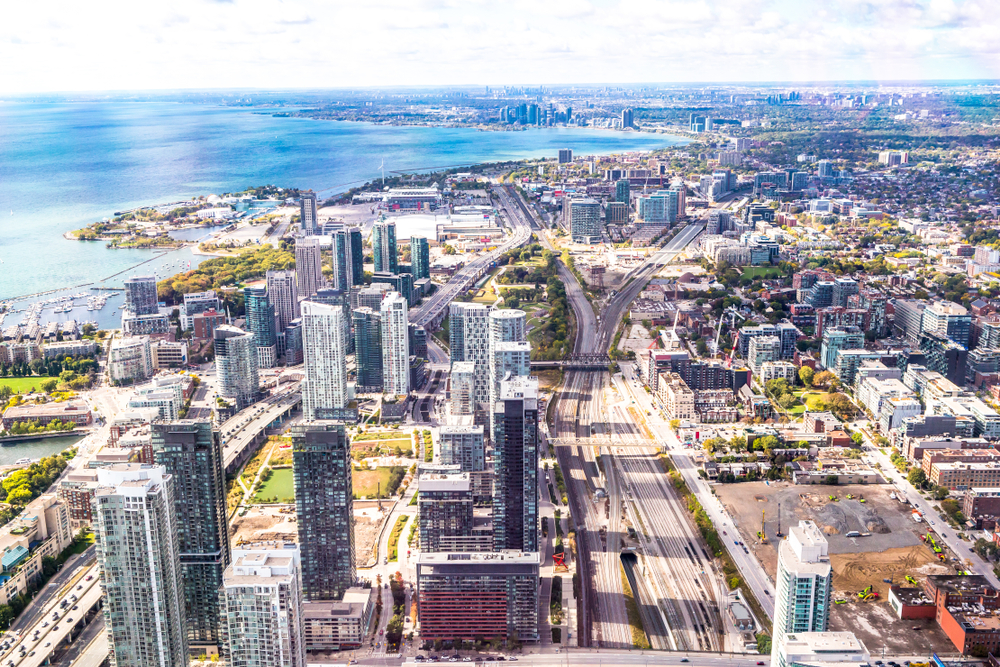
Toronto’s luxury condo market has slowed as expected this spring, but the bigger surprise is the steep drop in mid-market condo values. While high-end units have softened by about 10%, mid-market condos have fallen as much as 30% from their pre-construction highs. For buyers searching in the $1 million to $3 million range, the current landscape offers more choices and less competition than at any time in recent years.
What the Numbers Show
Luxury condos priced above $5 million have slipped roughly 10% from their 2023 levels. For example, a unit at the Ritz Carlton that would have sold for $2,100 per square foot three years ago recently traded at $1,800 per square foot.
The mid-market segment — condos priced between $1 million and $3 million — has seen a more dramatic decline. Units that sold for $1,600 per square foot at the peak are now closing closer to $1,200 per square foot, a drop of about 30%.
The slowdown in demand has also virtually stopped new condo development. Toronto went from building about 35,000 new units per year to just 500 currently. The pipeline for future inventory has dried up as developers wait for market conditions to improve.
What’s Driving the Divide?
The difference between luxury and mid-market performance comes down to the motivations of buyers and sellers.
At the top end, sellers are typically not under financial pressure. Many are listing because they are relocating, downsizing, or moving to more tax-efficient regions, but they can wait for the right buyer. Andy Taylor, Senior Vice President of Sales at Sotheby’s International Realty Canada, explains that luxury sellers “understand where the market’s at and that they have to offer good value.” These sellers are realistic about pricing, but are not forced to accept steep discounts.
In contrast, the mid-market is dominated by investors who bought during Toronto’s condo boom, often at pre-construction prices that assumed ongoing appreciation. The federal non-resident buying ban has sharply reduced international demand, and higher mortgage rates have made financing more expensive for all buyers. As a result, many investors who purchased units at $1,600 per square foot now face a market that values those same condos at $1,200 per square foot. Some are selling to avoid further losses or negative cash flow, increasing the supply of available units and pushing prices down further.
The collapse in pre-construction activity compounds the effect. With only 500 new units expected this year, the flow of future inventory has all but stopped. Developers are holding back, waiting for demand to return and for pricing to stabilize before launching new projects.
How It Plays Out on the Ground
Consider a recent example in Toronto’s downtown core. Last year, a two-bedroom condo was listed at $1.8 million, with the seller expecting a quick sale based on 2023 prices. Instead, the unit lingered on the market for six weeks with little interest. The seller eventually reduced the price to $1.5 million and offered to cover closing costs, finally closing the deal after substantial concessions.
Meanwhile, a luxury penthouse in the same building, priced at $5.5 million, sold within three weeks at full asking price. The buyer was a domestic purchaser relocating from Vancouver, and the seller was moving to Europe. Both had clear reasons to transact, and demand at the luxury level was sufficient to support the price without deep discounts.
For Buyers and Sellers
If You’re Buying Mid-Market:
You have time and leverage. Multiple-offer situations are rare, so compare several properties and negotiate on price, repairs, or closing credits. Sellers are more flexible now than they have been in years. If you were previously priced out, this is an opportunity to buy at a substantial discount.
If You’re Buying Luxury:
Act decisively. The luxury segment is softer, but properties still move faster than in the mid-market. Bring a strong offer and be ready to negotiate, but don’t expect sellers to accept lowball bids. Most luxury owners are informed about market conditions and will hold firm unless the terms make sense.
If You’re Selling Mid-Market:
Set a realistic price from the start. Overpricing can cause your unit to sit, which may signal to buyers that you’re desperate. Emphasize move-in readiness, recent upgrades, and unique features to stand out. Consider incentives like covering closing costs or including high-value appliances to attract buyers.
If You’re Selling Luxury:
Stay firm but reasonable. You don’t need to slash your price, but you must demonstrate value. Highlight your property’s views, finishes, and location. Be prepared to negotiate on terms, such as closing dates or inclusions, rather than on price.
What This Means
Toronto’s condo market has flipped its usual script. The greatest price declines are in the mid-market, while luxury condos are proving more resilient. For investors or buyers waiting for an entry point, the current mid-market discounts represent a rare window of opportunity. As Taylor puts it, “It’s a good time to be collecting assets, especially if you’re an investor.” Once pre-construction activity resumes and the non-resident ban is lifted, the supply of new units will increase, and prices are likely to rebound.
For now, buyers and sellers who understand their specific segment — and adjust their expectations accordingly — are best positioned to take advantage of today’s market dynamics. The gap between luxury and mid-market performance is unlikely to last forever, and those who act strategically now may benefit most when conditions shift again.
About the Expert: Andy Taylor is Senior Vice President of Sales and Broker at Sotheby’s International Realty Canada in Toronto. A founding member of the firm’s Toronto office in 2006, Taylor specializes in luxury residential real estate and portfolio management for high-net-worth clients. He is a member of Sotheby’s Market Leaders Group, representing the top 50 agents globally.
This article is intended for informational purposes only and does not constitute legal, financial, or investment advice. The views and opinions expressed herein reflect those of the individuals quoted and do not represent an endorsement of any company, product, or service mentioned. Readers should conduct their own due diligence and consult qualified professionals before making any investment decisions.