The bidding wars in northern New Jersey have migrated away from the places most people expect. Downtown Jersey City – long the default destination for buyers priced out of Manhattan – has softened in recent months, while suburban towns surrounding it continue to generate multiple-offer scenarios. The competitive energy has moved outward, to places where space and price intersect, according to Amanda De Aragao Pereira, a Realtor with Prominent Properties Sotheby’s International Realty who has worked the Jersey City market for over a decade.
De Aragao Pereira says downtown prices have dipped, putting buyers in a stronger negotiating position there. But the suburbs – towns where buyers can get a yard, a full house, and a stronger school district – are still attracting competing bids. The split reverses a long-standing hierarchy. For years, proximity to the PATH train and the Hudson River waterfront commanded premiums. Now, she observes, “a lot of people now instead of buying the smaller apartment in the urban area, they are moving straight to the suburbs.”
Why Buyers Skip Downtown
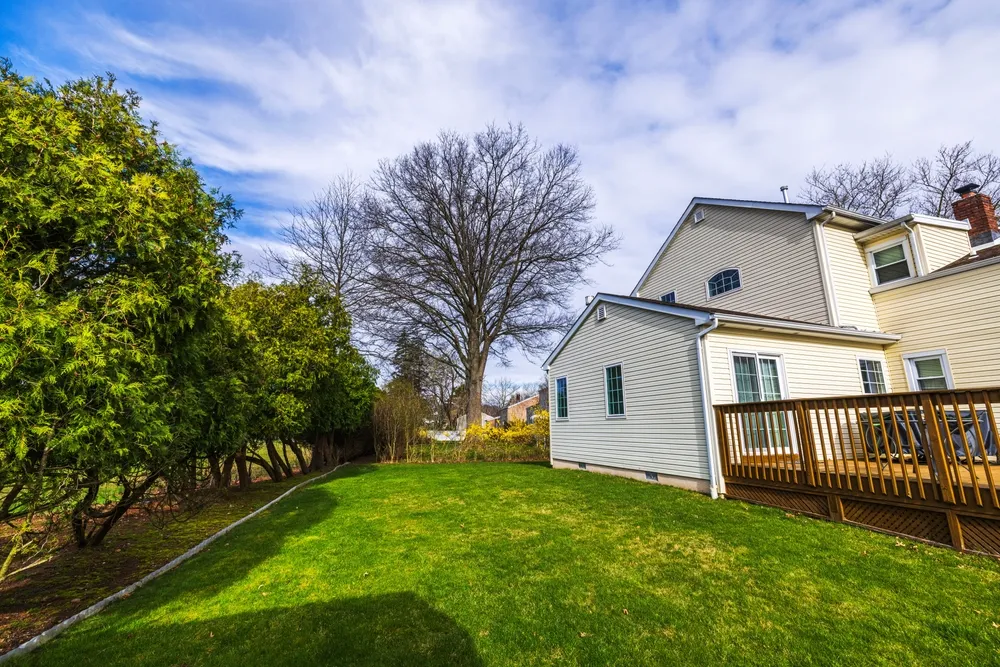
The math is straightforward. A buyer spending $700,000 downtown gets a tight one-bedroom or modest two-bedroom condo. That same budget in a suburban town buys a three-bedroom house with outdoor space. Remote work made that tradeoff viable for buyers who once needed to be steps from a train station.
De Aragao Pereira notes the condition that makes suburbs work: “As long as there is a train, as long as you work from home sometimes.” Buyers aren’t abandoning transit access entirely. They’re willing to accept a bus or a slightly longer commute a few days per week in exchange for dramatically more square footage.
The result is a two-speed market. “You still see highest and best. You don’t see highest and best in Jersey City so much, but you see in a suburban area for sure,” she says.
Downtown Prices Benefit Buyers
For buyers still drawn to urban living – walkability, shorter commutes, density – this split is good news. Jersey City’s downtown has become more negotiable. De Aragao Pereira notes that “Jersey adjusted the price down a little bit the last couple of months,” and the absence of bidding wars means buyers can take their time and negotiate on price rather than compete under multiple-offer deadlines.
But a softer downtown does not mean cheap housing. A buyer paying $700,000 downtown still gets far less space than a suburban buyer at the same budget. The tradeoff is negotiating leverage versus square footage – and right now, buyers can only get one or the other.
The Suburban Tradeoff
Suburban strength comes with pressure. When markets are still generating multiple offers, buyers face the classic seller’s-market dynamic: stretching budgets, waiving contingencies, or overpaying under competitive pressure. Buyers in the suburbs surrounding Jersey City do not enjoy the negotiating room that downtown buyers now have.
De Aragao Pereira says affordability is a broad challenge across both markets. Interest rates remain high relative to recent years, and insurance costs in particular are compounding the problem. “Affordability is a big problem in America today,” she says. “It has to be addressed in different directions. It has to be the insurance, it has to be interest rates, and it has to be the taxes.”
New Construction Shifts Balance
De Aragao Pereira notes that Journal Square – a neighborhood positioned between downtown and the Heights – is seeing heavy new construction. Towers are going up that she expects will attract young professionals and small families. The Heights, meanwhile, developed rapidly during COVID as buyers sought new-construction townhomes with rooftop space and multiple bedrooms at prices below what downtown commanded.
Whether Journal Square’s new inventory draws demand away from farther-out suburbs or simply adds another competitive layer to the market depends on how those units are priced and absorbed. For now, the pattern De Aragao Pereira describes is clear: buyers who prioritize space over proximity are driving suburban competition, while buyers who prioritize location over size have, for the first time in years, room to negotiate downtown.
About the Expert: Amanda De Aragao Pereira is a Realtor with Prominent Properties Sotheby’s International Realty, with over 13 years of experience serving the New Jersey market and also working in South Florida.
This article is intended for informational purposes only and does not constitute legal, financial, or investment advice. The views and opinions expressed herein reflect those of the individuals quoted and do not represent an endorsement of any company, product, or service mentioned. Readers should conduct their own due diligence and consult qualified professionals before making any investment decisions.