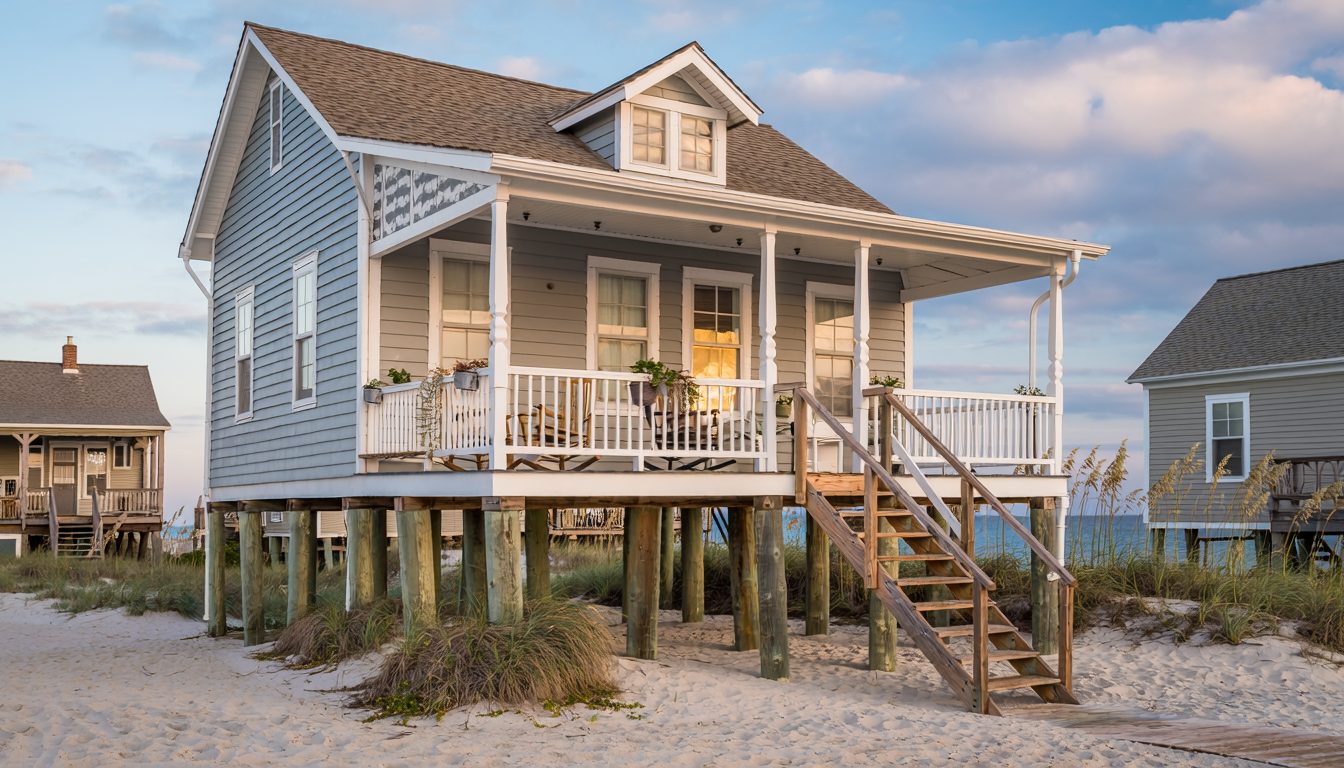
Homeowners insurance base rates in the beach areas of five North Carolina coastal counties rose about 16 percent in each of the past two years, yet buyers keep coming to the coast. For buyers, the bigger risk is usually not the premium itself but estimates built on the wrong numbers, according to Jeff Lesley, broker and managing partner at Century 21 Vanguard in Wilmington, North Carolina. Most buyers in his market know the coverage is coming. “Very rarely does it come up because most of the time people are warned,” he says. The trouble starts when the professionals on a deal are unfamiliar with coastal requirements.
Lesley tells buyers to expect wind and hail coverage anywhere in the region’s 18 coastal counties. Premiums drop farther inland and off the islands, but the cost doesn’t disappear. Many of his clients are retirees relocating from New England, and while North Carolina’s lower property taxes appeal to them, he cautions that higher insurance offsets part of that savings.
When Lenders Miss Insurance
The most damaging insurance surprises tend to come from professionals outside the local market. Lesley describes a deal from roughly 10 to 12 years ago in which a lender based about two hours inland never factored wind and hail insurance into the buyer’s debt-to-income calculations. “Literally as the lady’s driving in town from her two-hour drive, she called me and says, Jeff, I was just told that I can’t buy the house anymore,” he recalls. The loan officer didn’t catch the missing cost until the closing attorney placed it on the closing disclosure.
The deal ultimately closed. Lesley and the attorney advised the buyer to bind a policy, and when the lender called a week later to require coverage, it was already in place. The episode illustrates a structural risk in coastal transactions: lenders accustomed to inland numbers can miss a mandatory cost that affects whether a buyer qualifies.
Lesley tries to get real numbers in front of buyers early. “If I know it’s going to have to have flood insurance or something like that, we go ahead and pull a quote up front,” he says. He does the same for wind and hail on most listings, so buyers and their agents work from real quotes rather than guesses.
The goal hasn’t changed: replace assumptions with actual numbers. “Everybody assumes the worst,” Lesley says. “They’re going to assume it’s a $5,000 a year policy when it might only be 800.”
Smaller Premiums Than Expected
Insurance on a beach home runs roughly 20 to 30 percent more than on a comparable inland home, Lesley estimates. But the insured value is often well below the purchase price, because land, which doesn’t need to be rebuilt, makes up a large share of coastal property values. Once that land value is set aside, the gap between coastal and inland premiums narrows more than most buyers expect.
Lesley believes insurance pricing may have already peaked. He notes the area has avoided a major storm recently and that smaller carriers have been returning. “That competition is providing lower pricing,” he says. “We probably peaked in insurance pricing last year or ’24, somewhere in that time frame.”
Regulated base rates tell a more complicated story. Beach-area base rates have climbed in each of the past two years under a statewide settlement, which also blocks further increases until mid-2027. What buyers pay in practice also depends on how many carriers are competing for their business.
Misreading the Flood Risk
The most persistent misconception among out-of-state buyers involves where flood risk comes from. After Hurricane Florence in 2018, Lesley fielded years of questions from buyers who assumed ocean surge caused most of the damage. Florence did bring surge, but its most widespread damage came from rivers. According to the National Weather Service, record river flooding developed over the following days along the Cape Fear and other rivers, destroying roads and damaging thousands of homes and businesses.
Heavy rain can also flood properties far from any mapped risk. Lesley describes an unnamed, nor’easter-like storm that dropped extreme rainfall in a short window on a nearby beach community. Neighbors said one property had not flooded in more than 40 years, and it sat outside a designated flood zone. It still took on about 2 feet of water downstairs. “There’s just nowhere for it to go,” he says.
Such events are not hypothetical. In September 2024, Carolina Beach received 18 inches of rain in 12 hours, according to the National Weather Service.
Demand Holds, Mix Shifts
Despite insurance costs, buyers aren’t retreating inland to avoid them. Escaping wind and hail requirements entirely would mean driving about 45 minutes from Wilmington, Lesley says, so buyers who want to be near the beach still buy near the beach. “I would say for the most part that definitely it doesn’t detract anybody from purchasing here,” he says.
A large retiree population supports that demand, and Lesley estimates roughly 40 percent of his buyers come from out of state. Homes take longer to sell than during the post-Covid rush, though the pace has picked up again recently.
First-time buyers are increasingly moving toward the outskirts and into Brunswick County, where cheaper land and lower insurance make the numbers work while keeping them close to Wilmington and the beach.
Lesley contrasts Wilmington with markets like Las Vegas and Miami, which boomed during Covid and have since corrected, and with inland North Carolina towns where prices have fallen further. Wilmington’s steady flow of retirees and relocating buyers has kept prices roughly flat, with some softening.
Insurance is having its clearest effects in two segments. Along the coast broadly, Lesley says high-rise condominiums feel it most “because they’ve got to set aside all the reserves,” though Wilmington has relatively few of them. Investors are also pulling back, as higher insurance, higher prices, and inflation have eroded cash flow compared with five years ago. “It’s a combination of everything, interest rate, price tag, and insurance altogether,” he says.
For buyers weighing a coastal purchase, insurance costs are real but quantifiable, and often smaller than assumed. The risk that’s harder to price is working with professionals who don’t know local requirements well enough to account for them from the start.
About the Expert: Jeff Lesley is a broker and managing partner at Century 21 Vanguard in Wilmington, North Carolina, which he co-founded in 2022 with Greg Harrelson. He has closed approximately 1,300 transactions over 15 years.
This article is based on information provided by the expert source cited above. It is intended for general informational purposes only and does not constitute legal, financial, or real estate advice. Readers should conduct their own research and consult qualified professionals before making any real estate or financial decisions.