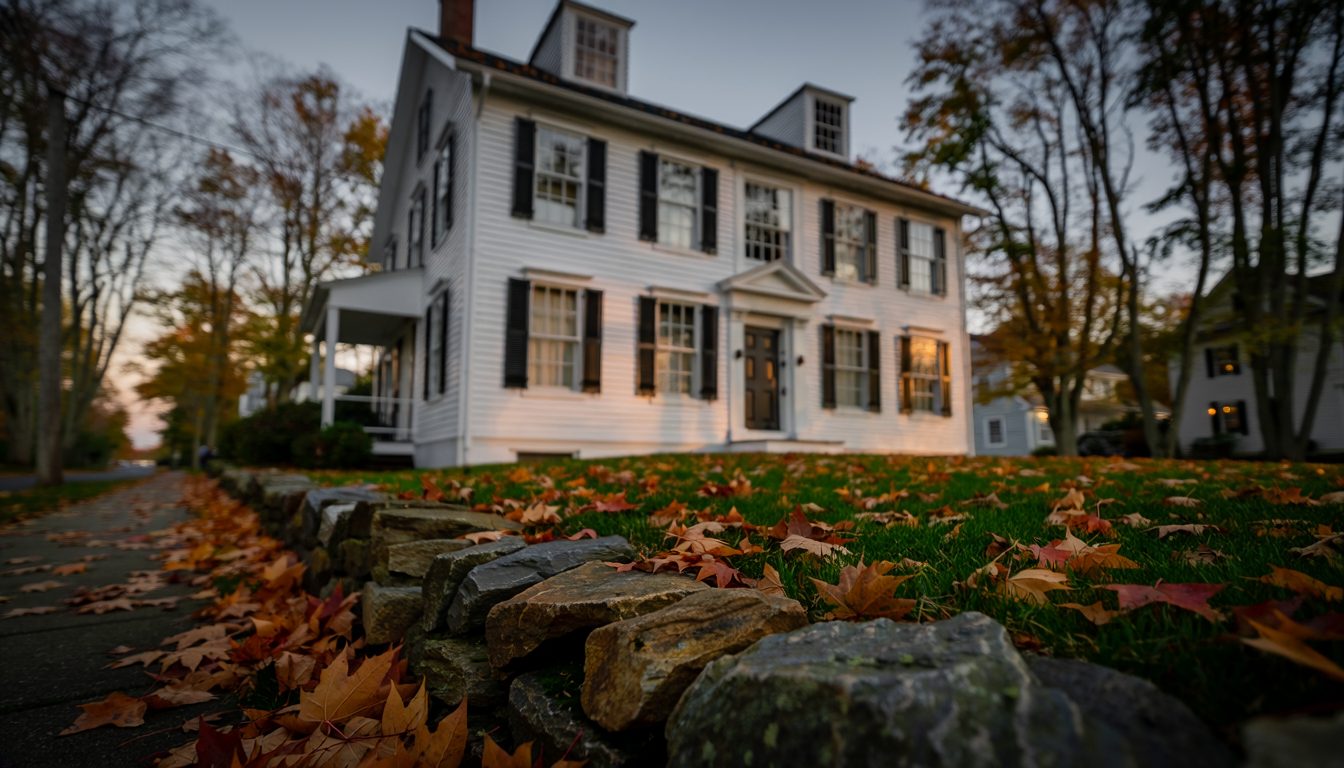
In most housing markets, the cycle is predictable: one generation buys in, one generation sells out. In Fairfield County, Connecticut, that cycle has broken down. David Krasnoff, a residential agent with DK Homes Team at Compass Connecticut, says roughly three generations of buyers are competing for homes, many of them searching since before the pandemic, while only about half a generation is selling. The result is a shortage severe enough that even strong offers routinely lose.
Krasnoff estimates the county is operating at between 10 and 30 percent of normal inventory, depending on the town. Even if supply returned to historical norms, he believes it would take at least two years to absorb the buyer demand that has built up.
Why Sellers Aren’t Moving
The bottleneck starts with homeowners who would normally be listing. Many hold low mortgage rates or have no mortgage at all, and trading into a new home at today’s rates and prices doesn’t work, so they stay put. “People don’t really know where to go,” Krasnoff says.
Downsizers face a particular bind. Many have homes that have become more than they want to manage – stairs they’d rather not climb, lawns they’d rather not mow. But selling and buying at the same time has grown harder. Krasnoff says offers with Hubbard clauses, which make a purchase contingent on selling an existing home, rarely succeed here. “In most cases you would not get your offer accepted,” he says. Sellers who want to move need more creative sequencing, and many are choosing to wait.
While many markets around the country are stabilizing or softening, Krasnoff says nearly every good home in Fairfield County still draws multiple offers within a short window.
What Competition Actually Looks Like
Krasnoff says cash buyers, once fairly rare at higher price points, are now active even in the $2 million to $3 million range. Broader data reflects the same pressure. According to Brown Harris Stevens’ April 2026 market report, 64.2 percent of houses in Lower Fairfield County sold above asking that month, and the median house price rose 10.7 percent year over year to $1.45 million.
One recent client had been searching for some time, found a home within budget, and offered 15 percent over asking. Nine offers came in, and the client didn’t finish in the top four. “That’s, I would say, a similar story to a lot of the clients we have here now,” Krasnoff says.
Yet the market still punishes overpricing. Two to four months on the market used to be fairly normal, he says. Now, “anything that’s over a month, people start to question either what’s wrong with it, or is it just price too high?” With this many active buyers, an unsold home signals a problem.
Older Homes, New Builds, Insurance
Fairfield County’s housing stock ranges from 1950s and 1960s homes to large new builds, and Krasnoff says new construction has compounded price increases in some towns. Separately, he points to Southport north of the Post Road. The village was long associated mainly with the area south of the road, but the northern side has taken off, and homes he has sold there recently are bringing far more than they did five to seven years ago.
Older homes present a different calculation. Some are bought by builders who plan to expand or rebuild, and homes needing significant work still sell when priced right. Builders find ranches easier to work with, while raised ranches are difficult to reconfigure.
Roof condition matters more than it used to. Krasnoff says a home without a roof at midlife or newer can face difficulty getting insurance. Whether buyers can negotiate that cost depends on competition for the listing. “It really depends on the house and the price of the house,” he says.
Investing Is Harder to Navigate
On the multifamily side, Krasnoff says rents and property values are both high, and acquisition costs often don’t line up with rental income. Quite a few owners are trying to unload parts of their portfolios. Seasoned investors still find deals by running the numbers, but he also sees less experienced buyers “paying numbers that just don’t mathematically make sense.”
On the development side, Connecticut’s affordable housing appeals law, known as 8-30g, lets developers challenge local zoning denials for projects that include income-restricted units, putting the burden on the town to justify its decision. “If you’re willing to have a component of affordable housing, there are ways to do projects that normally you wouldn’t be able to do,” Krasnoff says. Not every town welcomes these projects.
His longer-term view is shaped by the supply gap. He expects mortgage rates to ease at some point, though not necessarily within the next six months, and notes that falling rates have typically pushed prices higher in supply-constrained markets.
What to Expect Next
Krasnoff says buyers are more knowledgeable and patient than a few years ago, partly because many have been searching long enough to understand the competition. They come from California, New York and closer to home, and range from young families to grandparents looking to downsize.
He rarely advises clients to waive inspections or write inspection-for-information-only clauses. Instead, he recommends being upfront that the buyer is looking for major items – mechanical, safety and structural issues – so both sides know what will be raised.
The rules have shifted, too. A state law that took effect Oct. 1, 2026, requires residential listings to be marketed to the public at the same time they are marketed anywhere else, unless the seller signs an opt-out. Krasnoff says he generally isn’t keeping listings private without a reason, and that this and earlier changes, including to commissions, have changed how agents work more than the market itself.
Looking ahead, he is watching whether more inventory arrives for the spring 2027 market. A mild winter tends to extend the busy season, and now that the election has passed, he is curious whether the varied concerns that kept people on the sidelines begin to fade. Still, the structural shortage dominates, and even a return to normal inventory would take at least two years to satisfy the demand that has built up.
About the Expert: David Krasnoff is a residential real estate agent with DK Homes Team at Compass Connecticut in Fairfield County, where he works with buyers, sellers, and investors in towns including Fairfield, Southport, and Weston.
This article is intended for informational purposes only and does not constitute legal, financial, or investment advice. The views and opinions expressed herein reflect those of the individuals quoted and do not represent an endorsement of any company, product, or service mentioned. Readers should conduct their own due diligence and consult qualified professionals before making any investment decisions.