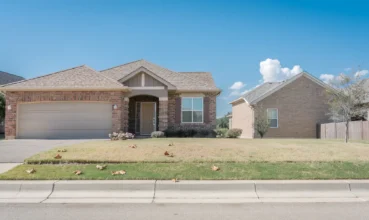
For years, Indianapolis appeared on national “best places to invest” lists largely because of one simple ratio: buy a house for $100,000, rent it for $1,000. That arithmetic attracted capital from California, New York, and as far away as Canada and Germany. The ratio still draws attention, but the numbers underneath it have shifted. Purchase prices in neighborhoods that once reliably cash-flowed have climbed, interest rates have reset higher, and tenant expectations have risen alongside inventory. Investors still buying in Indianapolis are doing so with a different calculation – one built less around monthly cash flow and more around mortgage paydown, rent growth, and five-to-ten-year appreciation.
Gloria Gear, an investor-focused agent with Gear RE Group in Indianapolis, has spent a decade helping out-of-state buyers acquire rentals, flips, and BRRRR properties across the metro. She also owns six rental properties herself, giving her a direct view of both sides of the transaction.
The Cash-Flow Window Has Narrowed
The gap between what a property costs and what it earns each month is tighter than it was even a few years ago. Higher interest rates on traditional and DSCR loans, combined with property management fees running about 10 percent, mean many deals no longer pencil out for investors expecting immediate positive cash flow, according to Gear.
But Gear argues the calculation should not stop at month one. Properties she purchased five years ago for $100,000 are now worth $200,000 to $225,000, appreciation she would have missed had she waited for better monthly numbers. “It’s not an Instapot, it’s a long-term crock pot,” she says. “As long as you’re paying your bills, hopefully we can get two to three hundred a month. And then let’s look at the long term and see what it’s going to do in five to 10 years.”
Indianapolis has historically appreciated at 3 to 5 percent annually, a pattern Gear says has held consistently for decades with the exception of a spike in 2021–2022 when appreciation reached 13 to 20 percent. That steadiness, no dramatic run-ups, no dramatic corrections, is part of the pitch to investors recalibrating their expectations.
Where the Numbers Still Work
Not every Indianapolis neighborhood supports a rental strategy at current prices. Gear says one of the most common mistakes out-of-state investors make is misunderstanding how much price varies within the metro. “They look at Indianapolis, and they see the suburbs – Carmel – and they’re like, I want to buy in Carmel. Well, you can’t buy in Carmel for under $450,000.”
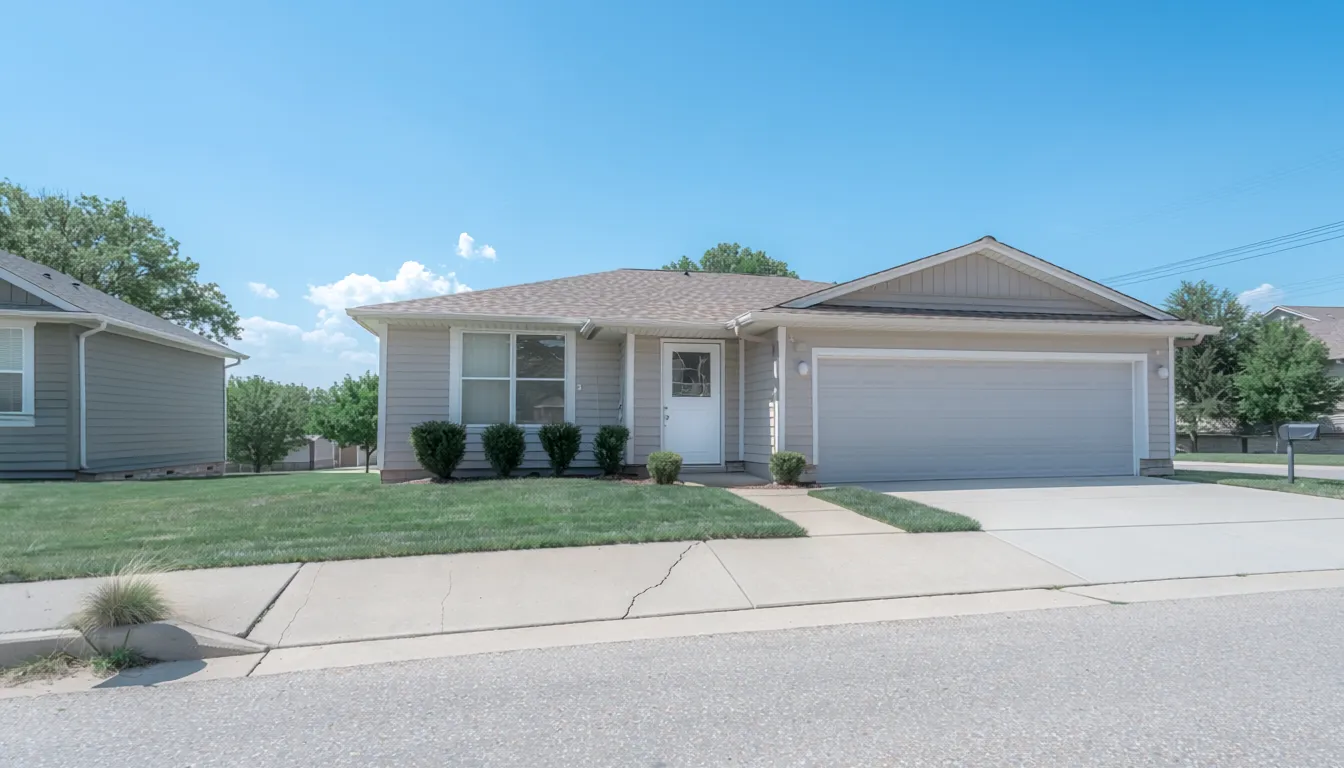
The B-class neighborhoods investors often target now carry median prices around $350,000, renting for $2,000 to $2,200, a ratio that leaves little room for cash flow after debt service and management fees. Gear steers many of her clients instead toward what she describes as C and C-plus neighborhoods, where purchase prices run $125,000 to $180,000 and rents land between $1,300 and $1,700.
Her preferred example is Eagledale, a neighborhood just north of the Indianapolis Motor Speedway filled with ranch homes built in the 1950s and 60s on concrete slabs. She owns four properties there herself. The homes are small, typically three bedrooms, one or one-and-a-half baths, and structurally straightforward, which keeps renovation costs manageable. After-repair values currently run around $200,000. “You’re not going to have to worry about the older houses that have knob and tube wiring or lead-based pipe,” she says.
Rental demand in the area remains strong. While working on one of her own renovation projects, Gear says four neighbors approached her to ask when the home would be available to rent.
A Flat Market Creates Negotiating Room
The broader Indianapolis market has slowed noticeably. Days on market are stretching to 30, 60, and 90 days, a sharp change from the post-COVID period when properties sold the first weekend, often $15,000 to $20,000 over list price. Gear says she has lost roughly 16 deals this year, most to inspection issues. In one case, a home under contract for $90,000 required $72,000 in foundation work. In another, buyer and seller were $5,000 apart and could not close the gap.
Some of her sellers who cannot move properties at current prices are pulling listings, renting for a year, and planning to relist later. On the rental side, tenants have more options and are using that leverage. Younger renters in particular are gravitating toward apartment buildings with amenities – gyms, pools, parking – rather than single-family homes, at least until life circumstances change.
For buyers, the same dynamics that frustrate sellers create opportunity. Longer days on market mean more motivated sellers and more room to negotiate on price. “This is a great time for investors to buy,” Gear says.
What Out-of-State Buyers Get Wrong
Gear says many investors arrive with outdated assumptions about what Indianapolis costs. Some expect to buy a house for $60,000 or $70,000 and place a tenant immediately. At that price, according to Gear, the property will need substantial work before it is rentable. Others fixate on suburban zip codes without realizing that a single zip code can contain both a $50,000 teardown and a $2 million home.
Her team’s onboarding process is built around correcting those misconceptions early. After an initial call to establish a buyer’s strategy – rental, flip, or BRRRR – Gear walks them through specific neighborhoods, sets up targeted property searches, and runs numbers on individual listings. When a property draws interest, her team videos the home, researches the street-level conditions, and reports back on what online listings cannot show.
That street-level knowledge matters because Indianapolis is, in Gear’s words, “very, very street by street.” One block may show signs of active reinvestment, houses being renovated, yards maintained, a mix of renters and homeowners, while the next block tells a different story. Gear says she sometimes has to drive a neighborhood herself before she can give a client a clear read. For investors who have never set foot in the city, that ground-level detail is the difference between a functioning rental and a costly mistake.
The investors succeeding in Indianapolis right now are the ones treating it as a five-to-ten-year hold rather than a monthly cash-flow play. The entry prices remain lower than coastal markets, rents still cover core expenses in the right neighborhoods, and appreciation – while modest – compounds steadily over time. The immediate returns are smaller than they were a few years ago, but the underlying math still favors patient capital.
About the Expert: Gloria Gear is an investor-focused agent with Gear RE Group in Indianapolis, who has spent a decade helping out-of-state buyers acquire rentals, flips, and BRRRR properties across the metro.
This article is based on information provided by the expert source cited above. It is intended for general informational purposes only and does not constitute legal, financial, or real estate advice. Readers should conduct their own research and consult qualified professionals before making any real estate or financial decisions.