Distress hasn’t disappeared from Chicago’s housing market. Cook County recorded more foreclosure filings than any other county in the country in the first quarter of 2026, and nationwide foreclosure filings were still running double digits higher year-over-year through the middle of the year, according to ATTOM Data Solutions. But rising foreclosure filings don’t automatically translate into a rising flow of bank-owned properties hitting the open market at the same pace. Federal loan-servicing rules require lenders to walk borrowers through a structured loss-mitigation process, repayment plans, forbearance, loan modification review, and, in many cases, a formal appeal process for denied applications, before a foreclosure can be completed. Each of those steps adds time between a borrower’s first missed payment and the point at which a property becomes bank-owned and reaches a listing.
That distinction between distress that exists and distress that’s actually reaching the market as REO inventory is reshaping who can participate in Chicago’s distressed housing segment and what it takes to close a deal once a property does become available.
Tamika Marks, owner and managing broker at Trademarks & Associates in Chicago, has spent 23 years focused on corporate-owned asset disposition – REO sales, reverse mortgage liquidations, and bank-owned properties across the city’s South Side and surrounding suburbs. Her read on the current environment matches that structural picture: distress hasn’t gone away, but the path from default to listing has gotten longer. “There’s certainly a distress factor there,” she says. “It’s just the amount of assistance that’s available is what’s slowing it from hitting the actual market.” Her day-to-day work involves managing multiple institutional clients simultaneously, each operating under a different set of disposition rules – covering occupant communication, required postings, and notification timelines – which adds its own layer of complexity on top of the broader pipeline delay.
The Buyer Mismatch
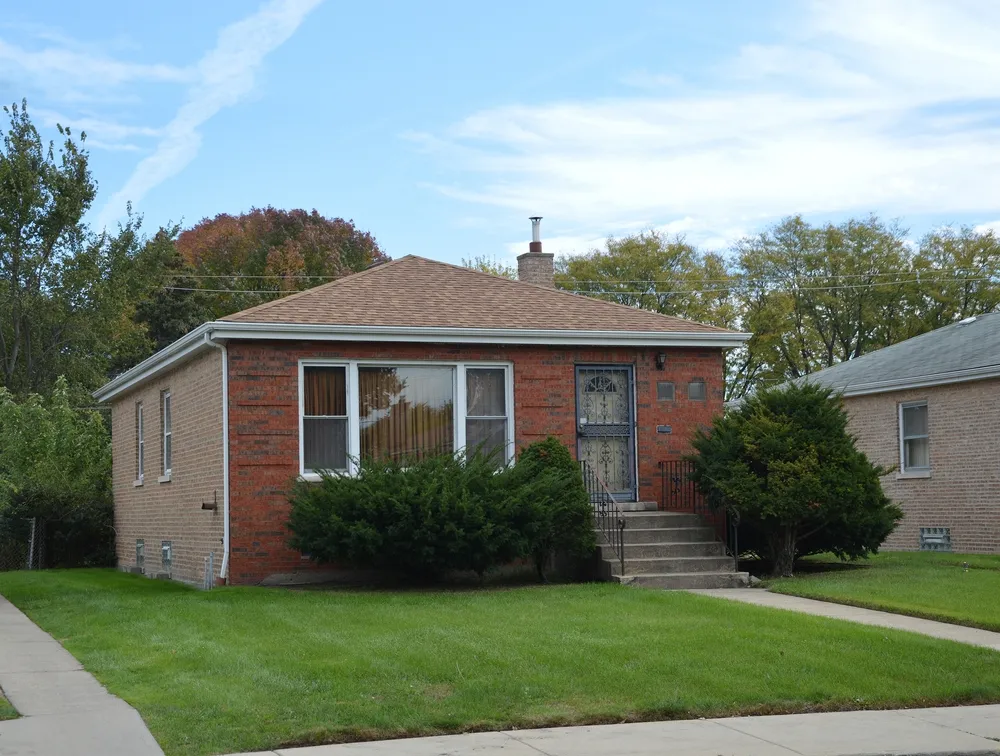
When distressed properties do reach the market, they tend to draw initial interest from owner-occupant buyers who then discover the gap between what they can afford to repair and what the property actually needs. Most REO and bank-owned inventory goes well beyond cosmetic fixes; structural damage and years of deferred maintenance are common, conditions that push out buyers relying on financing that requires move-in-ready condition.
Marks estimates that roughly 95 percent of her listings end up going to investors or buyers comfortable with significant construction work rather than owner-occupants. “You very rarely find something that’s move-in ready,” she says. “You have to put some work into them.” That filtering narrows the buyer pool considerably; properties in desirable neighborhoods can still generate real interest, but condition alone disqualifies most conventional, non-investor buyers before financing even becomes a factor.
Why Deals Fall Apart
Even once a buyer is found, transactions frequently collapse after going under contract. The pattern, according to Marks, tends to follow a few predictable failure points: buyers underestimate what it will cost to make a distressed property habitable, financing falls through due to poor communication with lenders, or most commonly, a buyer who overbid in a multiple-offer situation later asks for a price reduction that the bank, as seller, typically won’t grant.
Bank-owned properties are usually sold strictly as-is, with buyers asked to confirm their offer as highest and best before it’s accepted. When a buyer who overbid later requests a reduction, that request runs directly against the commitment already made. “Once you determine that this is your highest and best offer, you have to be ready to stand by it,” Marks says. In multiple-offer situations on desirable distressed properties, it isn’t unusual for an initial buyer to fail on exactly this dynamic, with the property ultimately going to a second buyer from the same offer pool who’s willing to hold the original terms.
Underlying all of this is a timing pressure most buyers never see: servicers and the government-backed entities behind many of these loans generally operate within a window to dispose of a foreclosed asset before losing reimbursement eligibility, after which the servicer absorbs ongoing carrying costs directly. That deadline pressure shapes pricing and marketing strategy from the moment a listing goes live, how a property is priced, positioned, and marketed to the right buyer pool from day one.
Interest Rates and the Shrinking Entry Point
Rate conditions are compounding the buyer mismatch nationally, not just in Chicago’s distressed segment specifically. Thirty-year mortgage rates have hovered in the mid-6 percent range through much of 2026, and the National Association of Realtors’ first-time buyer affordability index, where 100 represents a median-income household able to qualify for a median-priced home, has sat around 70, a considerably wider gap than the overall market’s. First-time buyers’ share of home purchases nationally has fallen toward record lows as a result.
Marks sees that squeeze directly in her own buyer pool: clients approved at price points where little to no inventory currently exists, qualified on paper but effectively priced out of what’s actually available. “They’re already competing for some spaces that they’re just not going to be able to get in,” she says. For those buyers, she’s begun exploring for-sale-by-owner opportunities as an alternative channel, though she’s candid that even that path is limited by the same pricing gap. “Most of the properties are still priced at a point that they are not able to be approved for,” she says. In some cases, the honest conversation with a client is simply about timing rather than possibility. “It’s not a no, it’s just a not right now,” she says.
Reverse Mortgage REOs Are Not a Special Case
One segment of the distressed market that carries outsized stigma is reverse mortgage REOs. Marks sees little practical difference between disposing of a reverse mortgage property and a standard bank-owned sale from a buyer’s perspective, and federal guidance on Home Equity Conversion Mortgages backs that up. HECM foreclosures are generally triggered not by the loan structure itself but by a borrower’s failure to maintain the property or keep up with taxes and insurance, a condition issue, in other words, not something inherent to reverse mortgages as a loan type. The defining characteristic of these properties, in Marks’s experience, is the same severe deferred maintenance found across other REO categories. “If nothing else, the neighbors would be appreciative of someone taking the home and putting it back into functionality,” she says.
What the Current Market Adds Up To
The distressed pipeline in Chicago hasn’t dried up; if anything, foreclosure filings have been trending upward through 2026. What’s changed is the length of the road between a filing and a property actually reaching the open market, as federal loss-mitigation requirements extend the review and appeal process before a foreclosure completes. When properties do arrive on the market, most require the kind of work that pushes out all but experienced investors, and rate-driven affordability pressure is squeezing out much of the remaining owner-occupant buyer pool. Deals that do get under contract fail at a meaningful rate, largely over overbidding and unrealistic repair expectations.
About the Expert: Tamika Marks is owner and managing broker at Trademarks & Associates in Chicago, focused on corporate-owned asset disposition.
This article is based on information provided by the expert source cited above. It is intended for general informational purposes only and does not constitute legal, financial, or real estate advice. Readers should conduct their own research and consult qualified professionals before making any real estate or financial decisions.